
Pocket Hole Jig Buying Guide: C-Clamp or Bench-Mounted?
The short answer
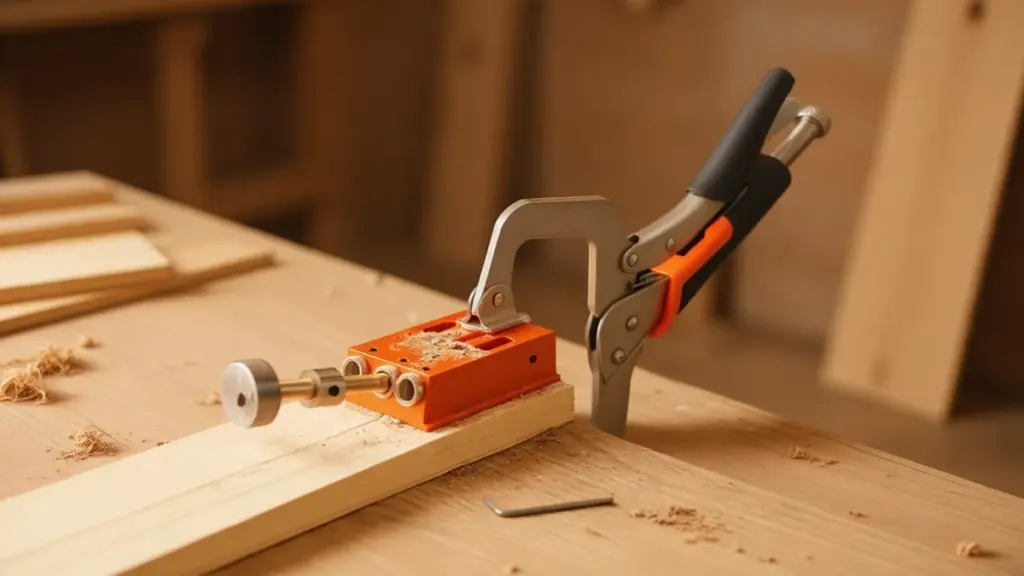
A pocket hole jig makes strong, hidden joints fast by drilling an angled hole and joining boards with screws. Choose a kit that covers the joint types you build, with a clamp that holds the work securely. For most DIY furniture and carpentry, a complete kit with a C-clamp, step drill bits, and stops is all you need.
What a pocket hole jig does
It drills a stepped, angled hole near the board edge so a special screw pulls two boards together into a tight joint. Unlike dowels or mortise-and-tenon, pocket joinery needs no glue clamping time and is easy for beginners to get right the first time.
Match the jig to your projects
Think about the material thickness you join most: 3/4 inch boards are the most common, and most jigs handle 1/2 to 1-1/2 inch stock. If you build cabinets, frames, or furniture, a kit with multiple hole settings covers more joint angles than a single-purpose guide.
C-clamp or bench-mounted jig
A C-clamp jig is portable and works on a workbench or sawhorse, which suits most home shops. Bench-mounted jigs hold the work more rigidly for high-volume runs but take up permanent space. Start with a quality C-clamp kit and upgrade only if you build in volume.
What should be in the kit
A complete kit includes the jig, step drill bits, a clamp, drill stops, driver bits, and a case. Drill stops set a consistent depth so every hole is the same, and good step bits stay sharp on hardwoods. Buy the full kit instead of assembling parts separately.
Common mistakes to avoid
- Clamping loosely: movement ruins the hole angle and the joint.
- Using the wrong screw length: pocket screws must reach the second board without poking through.
- Forgetting the stop collar: inconsistent depth makes wobbly joints.
- Drilling into knots: brittle grain splits at the pocket.
Recommended pocket hole jig
- VEVOR 34-piece pocket hole jig kit – includes the jig, C-clamp, step drills, stops, and driver bits in a toolbox
Browse the woodworking collection for more carpentry tools.
Related guides
Build your workshop step by step with our power tools buying guide and the material handling guide for lifting and moving gear.
It drills an angled, stepped hole near the board edge so a special screw pulls two boards into a strong hidden joint. It is a beginner-friendly alternative to dowels and mortise-and-tenon for furniture and frames.
Most jigs handle 1/2 to 1-1/2 inch stock, and 3/4 inch boards are the most common. If you work outside that range, check the jig settings before buying.
A C-clamp jig is portable and works on a bench or sawhorse, which suits most home shops. Bench-mounted jigs are more rigid for high-volume runs but take up permanent space.
A complete kit includes the jig, step drill bits, a clamp, drill stops, driver bits, and a case. Drill stops set consistent depth, and good step bits stay sharp on hardwoods.
Related Articles


Browse Related Products
Products covered by these guides.
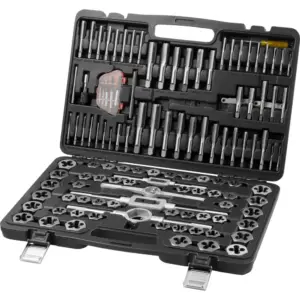
VEVOR Tap and Die Set, 116-Piece Include Metric and SAE Size, Bearing Steel Taps and Dies
Original price was: $88.90.$80.01Current price is: $80.01.Shop now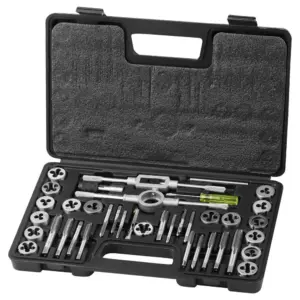
VEVOR Tap and Die Set, 40-Piece Include Metric Size M3 to M12, Bearing Steel Taps and Dies
$29.90Shop now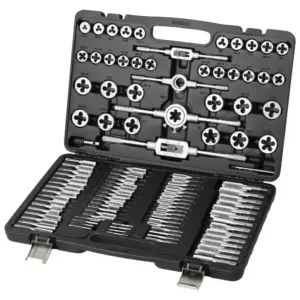
VEVOR Tap and Die Set, 110-Piece Include Metric Size M2 to M18, Bearing Steel Taps and Dies
$79.90Shop now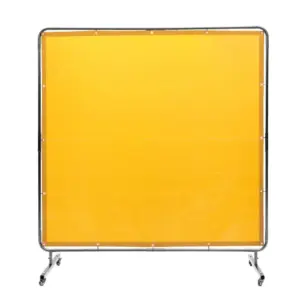
VEVOR Welding Screen with Frame, 6' x 6' Welding Curtain Screen, Flame-Resistant Vinyl Welding Protection Screen on 4 Swivel Wheel (2 Lockable)
$49.90Shop nowGet new guides first
New buying guides, size guides and restock alerts — one email a week.