
Firewood Rack Size: How Much Wood Really Fits? (4ft, 8ft, 16ft)
The short answer
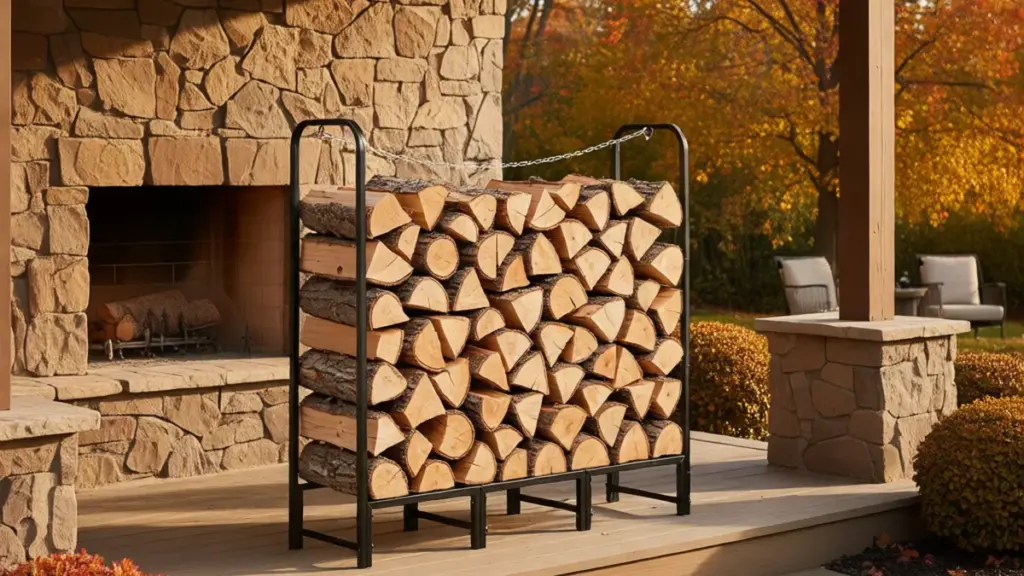
A 4-foot rack holds roughly a quarter cord of firewood, an 8-foot rack holds about half a cord, and a 16-foot run holds a full cord. The math behind that: a full cord is 128 cubic feet of tightly stacked wood, which works out to a stack 4 feet tall, 4 feet deep, and 8 feet long. If you burn through a cord in a winter, plan for about 16 feet of rack space, not one 8-foot rack.
What a cord actually means
The cord is the only unit of firewood you should trust. A full cord is 4 x 4 x 8 ft, or 128 cubic feet. A half cord is 64 cubic feet, and a quarter cord is 32 cubic feet. That is the measurement rack capacity should be compared against.
A face cord is a different story. It is usually 4 feet high and 8 feet wide, but the depth is whatever the logs happen to be: 16 inches, 18 inches, or 24 inches. A face cord of 16-inch logs is about one-third of a cord, while a face cord of 24-inch logs is about half. This is why two sellers can call the same pile a face cord and mean different amounts of wood. When in doubt, ask for the volume in cubic feet or the log length.
How much firewood do you actually need?
- Occasional fireplace, a few fires a month: a quarter cord, or one 4 ft rack.
- Weekend fires through the winter: a half cord, or one 8 ft rack.
- A wood stove that runs most of the winter: 2-3 cords, so plan for several racks.
- Full-time heating: 3-5 cords. Set up the storage space before the season starts.
Rack length vs cord capacity
| Rack length | Approximate capacity | Typical use |
|---|---|---|
| 4 ft | 1/4 cord (32 cu ft) | Occasional fires, patio season |
| 8 ft | 1/2 cord (64 cu ft) | Regular weekend burning |
| 12 ft | 3/4 cord (96 cu ft) | Longer burn season |
| 16 ft | 1 cord (128 cu ft) | One fireplace through a typical winter |
These numbers assume logs around 16-24 inches long stacked about 4 feet high. Fill the rack loosely and the real capacity drops, so leave a little headroom when you size.
Features worth paying for
Ground clearance
Wood that touches the ground picks up moisture and rots faster. A rack with feet keeps the bottom row above the dirt, so air can move under the stack and the wood stays drier. That one detail matters more than the color of the paint.
Load capacity
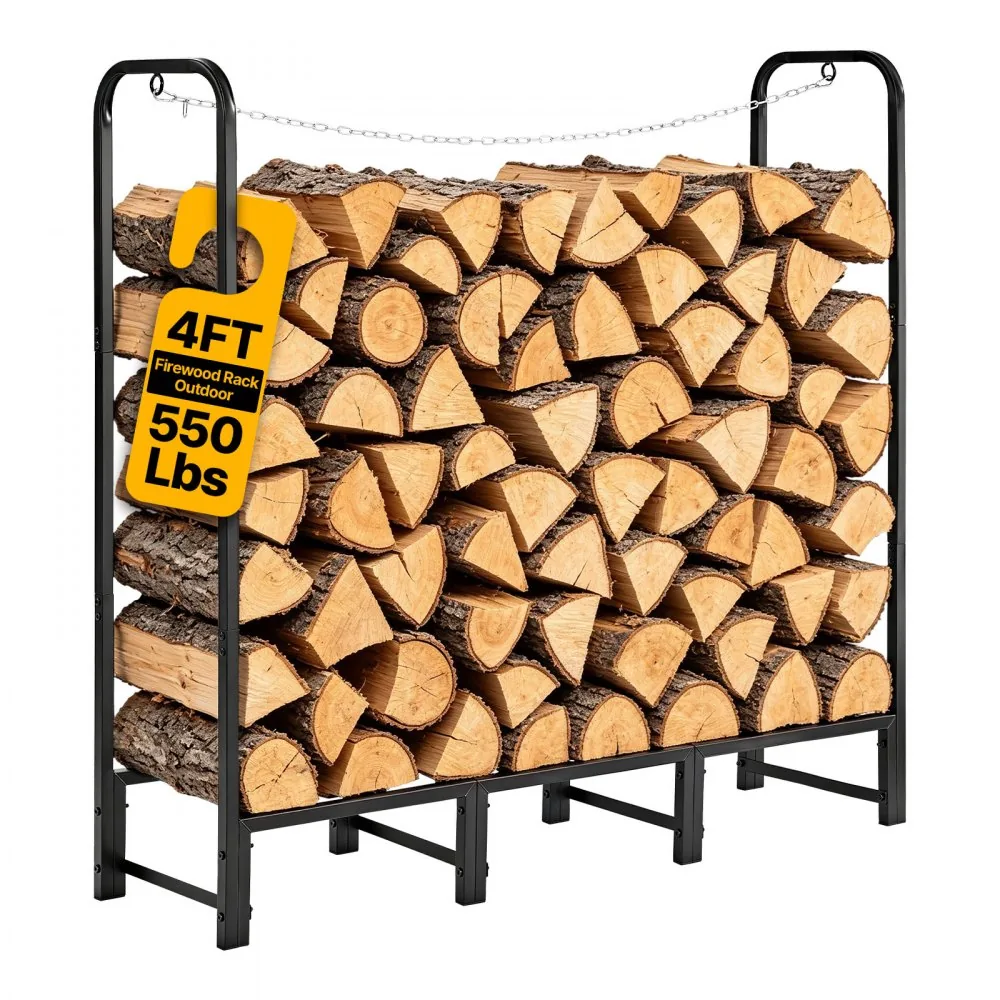
Green wood is heavy. A full 4 ft rack of freshly split oak can be a few hundred pounds, so check the load rating instead of guessing. A rack rated at 550 lbs gives a solid margin for a quarter cord, but do not stack it higher than the design height.
Cover
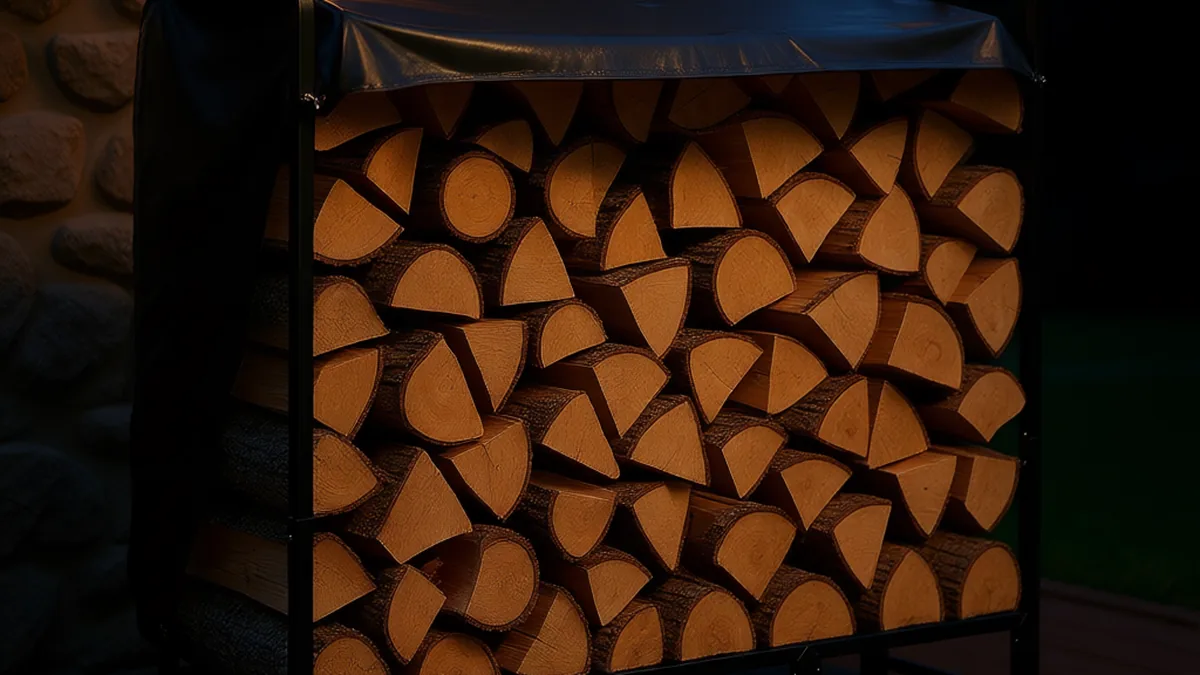
A cover keeps rain and snow off the top of the stack, but it should not wrap the rack like a bag. Sealed covers trap moisture and turn the bottom rows into a termite buffet. Look for a cover that sheds water while leaving the sides open.
Placement
Keep the rack a few inches off exterior walls so air can flow behind it, and put it on level ground. Gravel, pavers, or concrete beat bare soil every time.
A rack that fits this guide
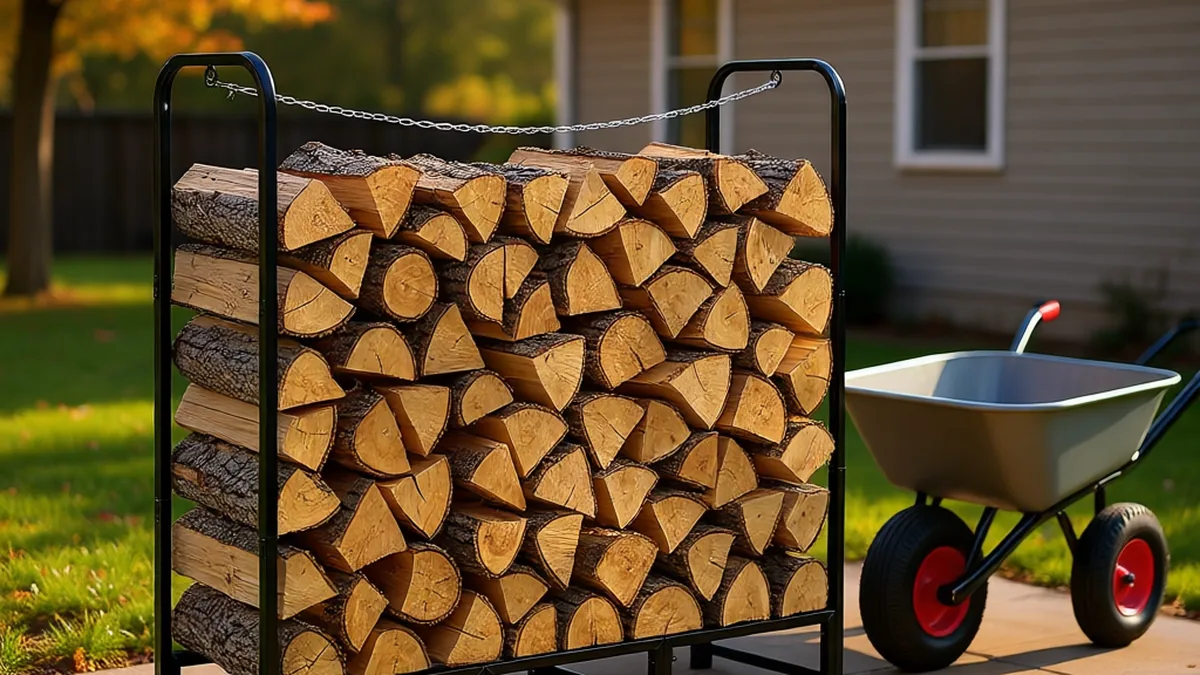
The VEVOR 4 ft firewood rack is built from carbon steel with a 550 lb load capacity and is sized for about a quarter cord of firewood. It suits a patio, a deck, or a garage wall for occasional burns. If you burn regularly, two of them side by side give you a practical half-cord setup.
Quick sizing checklist
- Count your fires per month, then choose the cord size, not the rack size.
- Use cubic feet to compare racks from different sellers.
- Leave the bottom row off the ground.
- Keep the cover open at the sides so the wood can dry.
- Buy 20-25% more space than you think you need.
Frequently asked questions
About a quarter cord, or 32 cubic feet, when logs are 16-24 inches long and the rack is filled about 4 feet high. The VEVOR 4 ft rack carries up to 550 lbs.
A face cord is 4 feet high and 8 feet wide, but its depth is the log length, which is why it is not a standard measurement. A face cord of 16-inch logs is about one-third of a cord.
About 16 feet of rack space when the stack is 4 feet high with 16-24 inch logs. Eight feet holds about half a cord.
Yes, a cover keeps rain and snow off the top, but it should not wrap the whole rack. Leave the sides open so moisture can escape and the wood can dry.
It can work, but gravel, pavers, or concrete are better. Keeping the rack off bare soil helps the bottom rows stay dry and last longer.
Frequently Asked Questions
How much firewood fits on a 4 ft rack?
A 4-foot rack holds roughly a quarter cord, or about 32 cubic feet, which suits occasional fireplace use.
What is a full cord of firewood?
A full cord is 128 cubic feet: a stack 4 feet tall, 4 feet deep, and 8 feet long. A half cord is 64 cubic feet and a quarter cord is 32.
How many cords of firewood do I need for a winter?
Occasional fires: about a quarter cord. Weekend fires: a half cord. A wood stove running most of the winter: 2-3 cords. Full-time heating: 3-5 cords.
How much rack length do I need for one cord of wood?
About 16 feet of rack space holds a full cord, assuming logs around 16-24 inches long stacked about 4 feet high.
Related Articles



Browse Related Products
Products covered by these guides.
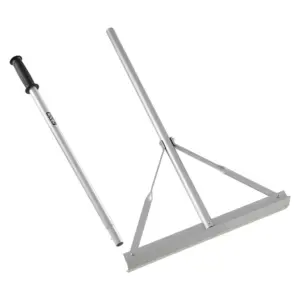
VEVOR Landscape Rake, 60 inch Handle 20 inch Wide Head, Large Heavy Duty Aluminum Landscaping Level, Asphalt Rake Tool for Asphalt & Land Leveling
$35.90Shop now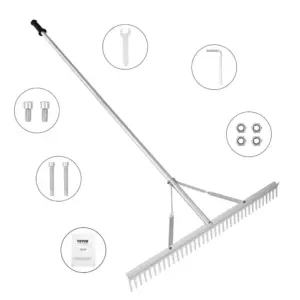
VEVOR Landscape Rake, 36" Head Aluminum Landscape Rake, Lake Weed Rake with 75" Long Handle, for Loosening Soil, Lawn Care, Weeding Lake, Garden, Pond
$39.90Shop now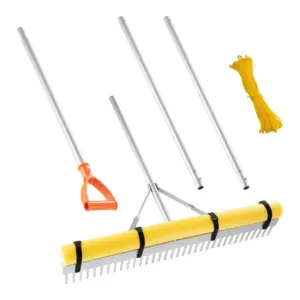
VEVOR Landscape Rake, 36 inch Wide Head 102 inch Handle, Large Heavy Duty Aluminum Landscaping Leaf Rake Tool, Asphalt Level for Loosening Soil
$50.90Shop now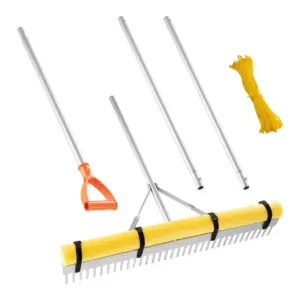
VEVOR Landscape Rake, 36 inch Wide Head 133 inch Handle, Large Heavy Duty Aluminum Landscaping Leaf Rake Tool, Asphalt Level for Loosening Soil
$51.90Shop nowGet new guides first
New buying guides, size guides and restock alerts — one email a week.