
Is a 12-Inch Gas Chainsaw Enough for Home Use? (VEVOR 25.4CC Review)
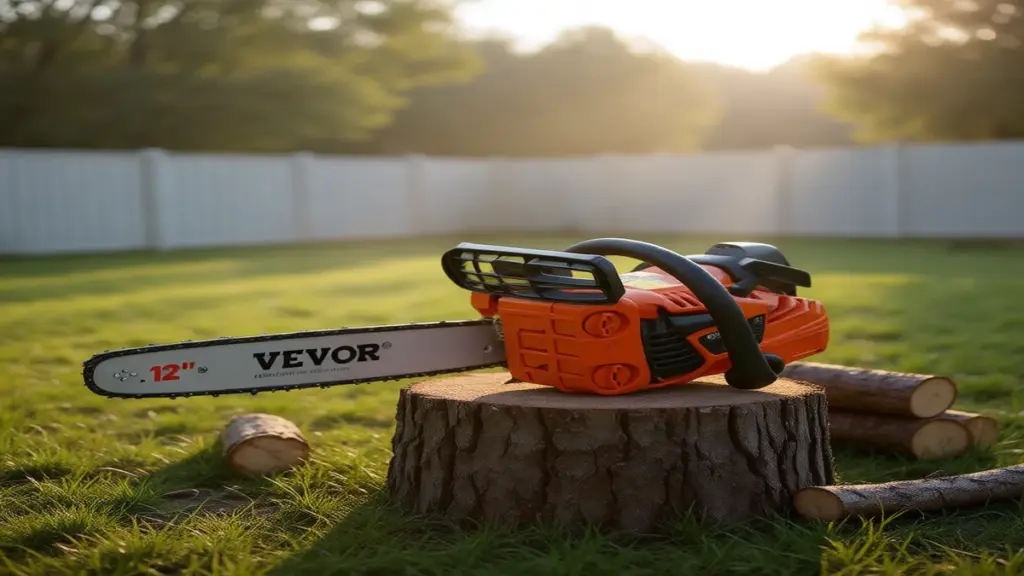
A 12-inch gas chainsaw is enough for most home jobs: storm cleanup, branch trimming, and firewood up to roughly 10 inches thick. The limit is not power so much as bar length. The VEVOR 25.4CC 12-inch handheld handles those jobs with one hand, and you only need to move up to a 16 or 18-inch model when you regularly cut bigger logs or fell trees.
The short answer
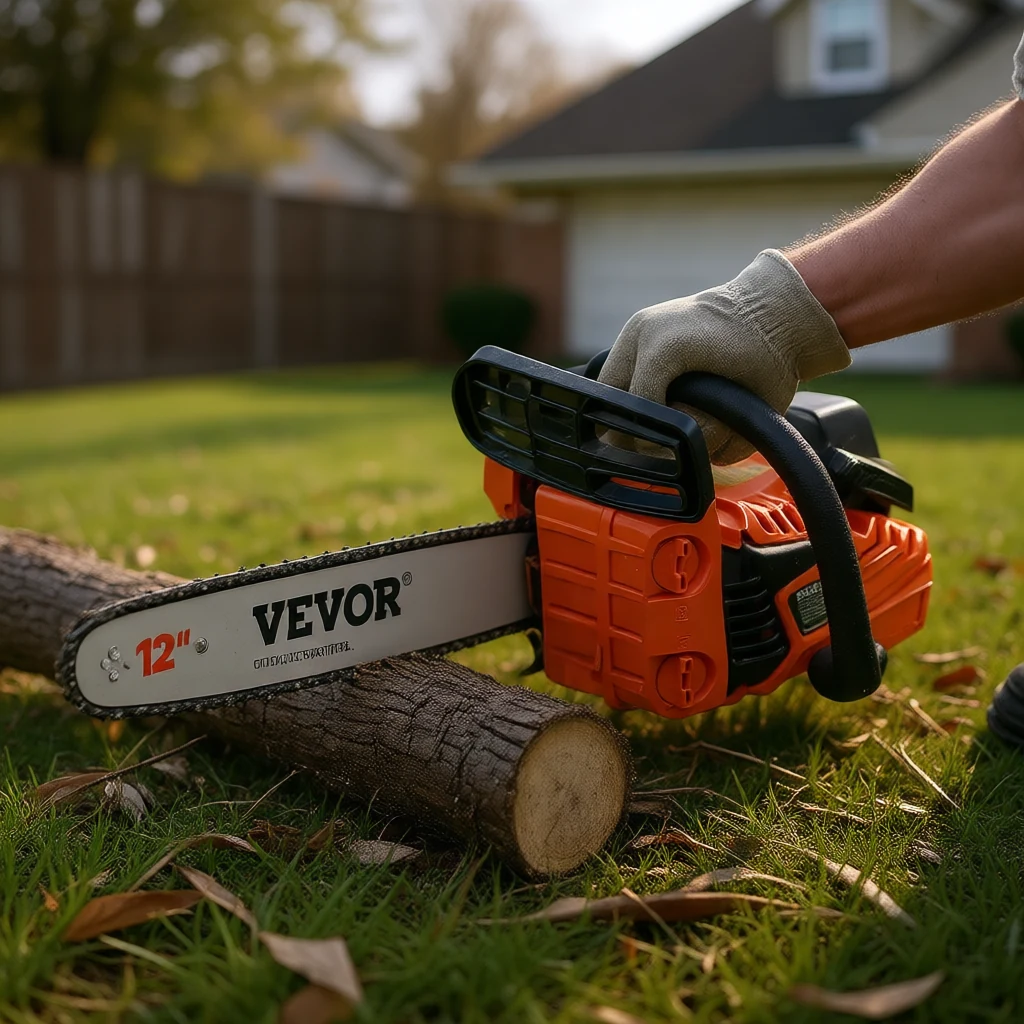
If your work is branches, limbs, and logs under about 10 inches in diameter, a 12-inch bar is enough. If you plan to fell trees or split up large rounds, step up to a 16 or 18-inch saw. For the typical homeowner, the 12-inch size is the one that actually gets used, because it is light enough to grab for one branch without making a project out of it.
What a 12-inch bar can actually cut
The usable cut depth of a chainsaw is less than the bar length, because the engine housing and chain cover sit at the back of the bar. A 12-inch bar realistically cuts material up to about 9.8 inches in diameter. The VEVOR 25.4CC model is rated to that number: a 250 mm (9.84 in) maximum cut.
That covers the two most common home tasks:
- Storm cleanup: snapped limbs, fallen branches, and trees under 10 inches at the base.
- Firewood prep: logs that fit a typical fireplace or fire pit, split or round.
Anything thicker than that can be cut from two sides, but at that point a 16 or 18-inch saw makes the job faster and safer.
Where the 25.4CC handheld shines
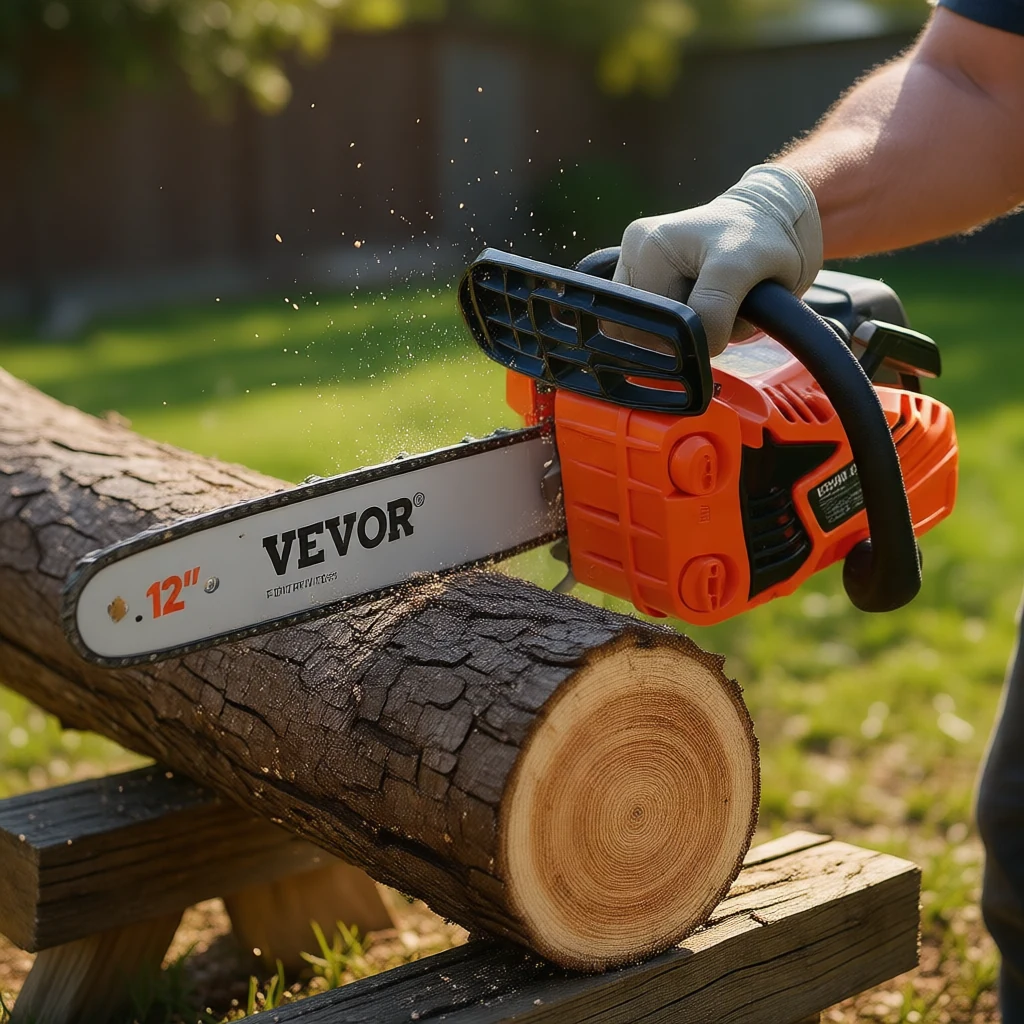
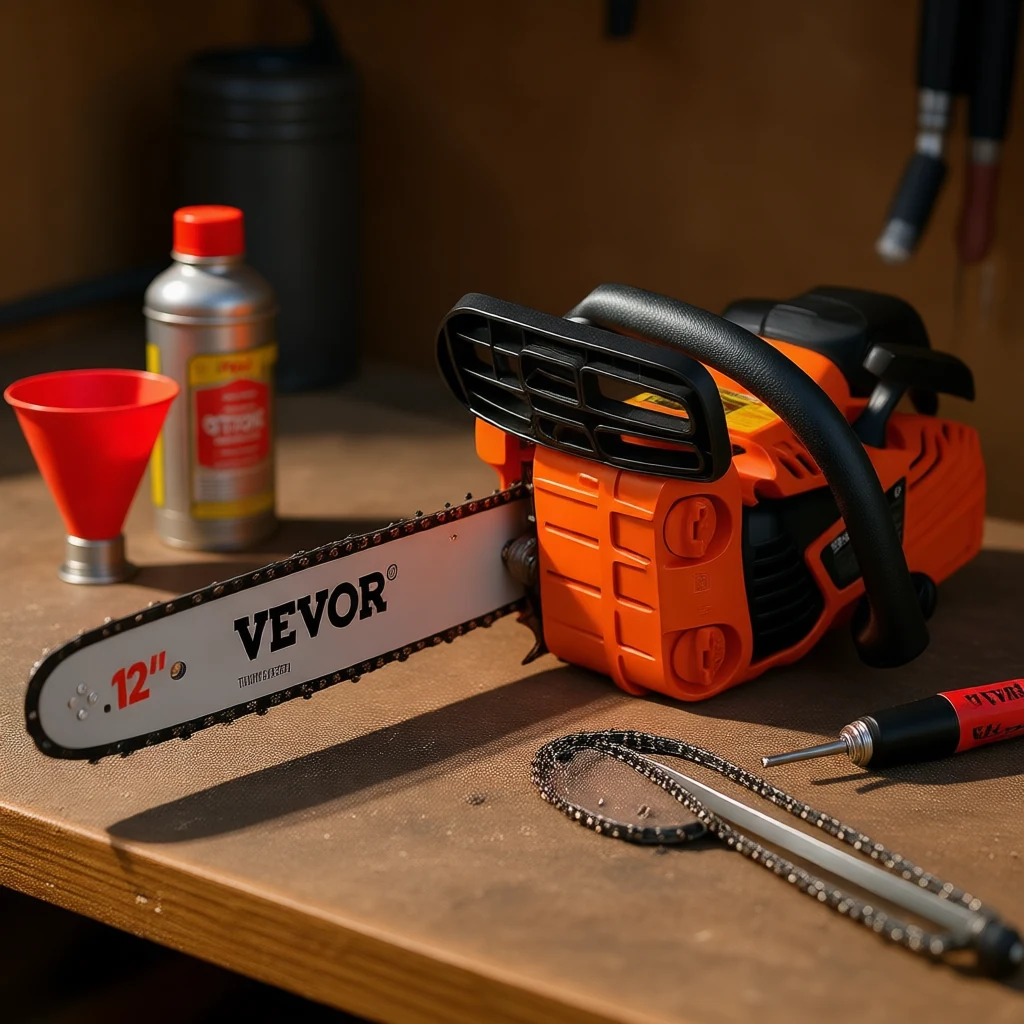
The VEVOR 25.4CC 12-inch chainsaw is a top-handle design, which changes how it feels in use. The weight sits over your hand, and at 9.26 lbs (4.2 kg) you can cut one-handed during trimming and trail work. The 1.2 HP engine spins up to 11,500 RPM, which is enough to pull a sharp chain through green wood without bogging down.
This is the category of saw that stays in the shed ready to go:
- Trimming low branches and suckers that would otherwise be a pole saw job.
- Clearing brush and small trees on a weekend property.
- Cutting firewood in 10-inch-and-under diameters.
- Camp and trail cutting where you carry the saw in one hand.
The tradeoff for the compact size is the fuel tank. At 0.24 qt, it holds about a third as much as a larger saw, so expect to refill on longer sessions. For typical backyard use, that is a non-issue.
Where a 12-inch saw is not enough
Buy a larger bar if your work regularly involves:
- Felling trees over 10 inches in diameter. A longer bar gives you more control over the felling cut.
- Buckling large rounds, especially hardwood, where a longer bar reduces the number of cuts per log.
- Milling or noodling, which is a specialty job for a bigger powerhead anyway.
- All-day firewood production for a wood stove. That workload wants a 40CC-class saw.
12 vs 16 vs 18 vs 20 inch: what each size is for
| Bar length | Engine class | Best for | Limits |
|---|---|---|---|
| 12 in | 25.4CC | Branches, storm cleanup, small firewood | ~10 in max cut |
| 16 in | 40CC | Mixed yard work, mid-size logs | ~13 in max cut |
| 18 in | 52CC | Firewood, larger trees | ~15 in max cut |
| 20 in | 58-62CC | Felling, heavy firewood work | Heavier, harder to start |
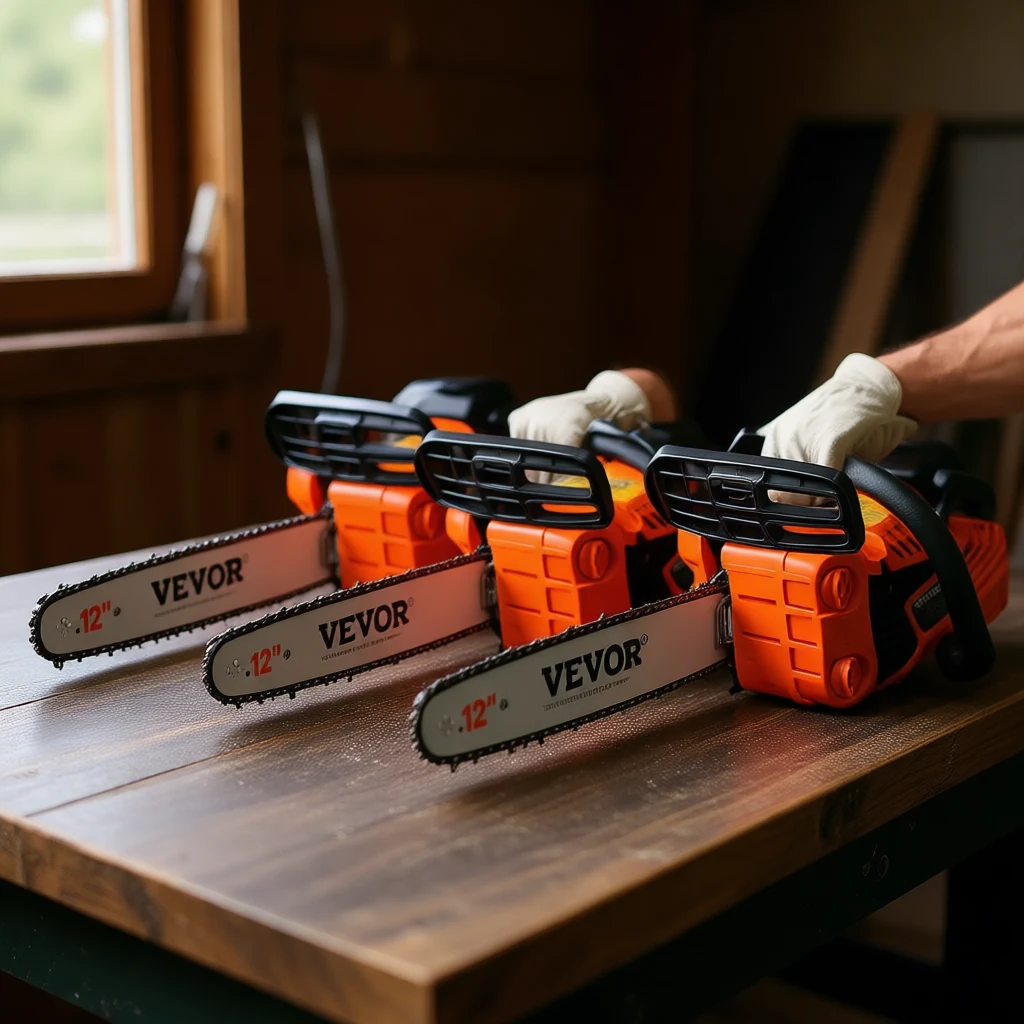
If you already own the VEVOR 25.4CC 12-inch handheld chainsaw and hit its limit, the natural upgrades in the same family are the 16-inch 40CC, the 18-inch 52CC, and the 20-inch 62CC models. Each jumps the maximum cut by a few inches while staying in the same two-stroke engine family.
Maintenance that keeps a small saw alive
Small two-stroke saws die from neglect, not from work. Three habits cover 90% of it:
Mix the fuel right
Use a 40:1 fuel-to-oil ratio with two-stroke engine oil rated FB or above and 92+ octane gasoline. Never run straight gasoline. Mix in a can, not in the tank, and shake before pouring.
Keep the chain tight
The VEVOR 25.4CC has a tool-free chain tension knob, so check tension before every use. A loose chain wears the bar and cuts poorly; a tight chain binds. The chain should hug the bar but still pull freely by hand.
Replace the chain when it stops cutting
When a sharpened chain still produces sawdust instead of chips, it is time to replace it. The VEVOR 12-inch saw takes a 3/8-inch pitch, 3/8-inch gauge, 45 drive-link chain. A 3-pack of replacement chains keeps a sharp loop on the bar and a spare in the shed.
Verdict: who should buy the 12-inch
Buy the VEVOR 25.4CC 12-inch if you are a homeowner with trees, a woodpile under 10 inches, and no plans to fell timber. It is light enough to actually use, cheap enough to keep as a second saw, and powerful enough for every backyard task.
Skip it if your routine is big firewood or felling. In that case the 16-inch or 18-inch model is the better first saw, with the 12-inch as a handy backup.
Frequently asked questions
Yes, for branches, storm cleanup, and logs up to about 10 inches in diameter. A 12-inch bar cuts material up to roughly 9.8 inches, which covers most backyard work.
About 9.8 inches (250 mm) in one pass, because the engine housing takes up some of the bar length. Thicker logs need cuts from two sides or a longer bar.
A 40:1 fuel-to-oil ratio with two-stroke oil rated FB or above and 92+ octane gasoline. Do not run it on straight gasoline.
The VEVOR 12-inch saw uses a 3/8-inch pitch, 3/8-inch gauge, 45 drive-link chain. A 3-pack of matching replacement chains is available for this model.
When you regularly fell trees or cut firewood thicker than about 10 inches. A longer bar cuts larger rounds in one pass and gives more control on felling cuts.
Frequently Asked Questions
Is a 12-inch chainsaw enough for home use?
Yes for most home jobs: storm cleanup, branch trimming, and firewood up to about 10 inches thick. Move up to a 16 or 18-inch model when you regularly fell trees or cut larger rounds.
How thick of wood can a 12-inch bar actually cut?
About 9.8 inches in a single pass. The usable cut is less than the bar length because the engine housing and chain cover sit behind the bar.
What is the VEVOR 25.4CC 12-inch chainsaw best for?
Trimming low branches, clearing brush, cutting firewood under 10 inches, and camp or trail work where the top-handle design lets you cut one-handed.
When is a 12-inch saw not enough?
When you regularly fell trees over 10 inches in diameter, buck large rounds, or run long cutting sessions, since the compact fuel tank needs more frequent refills.
Related Articles



Browse Related Products
Products covered by these guides.
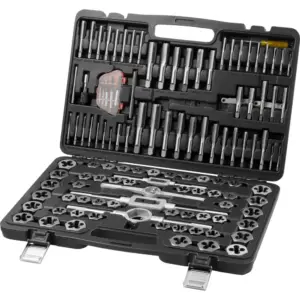
VEVOR Tap and Die Set, 116-Piece Include Metric and SAE Size, Bearing Steel Taps and Dies
Original price was: $88.90.$80.01Current price is: $80.01.Shop now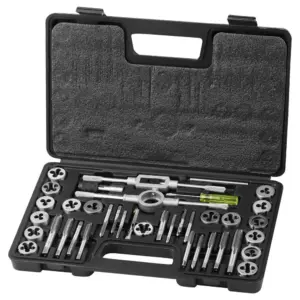
VEVOR Tap and Die Set, 40-Piece Include Metric Size M3 to M12, Bearing Steel Taps and Dies
$29.90Shop now
VEVOR Tap and Die Set, 110-Piece Include Metric Size M2 to M18, Bearing Steel Taps and Dies
$79.90Shop now
VEVOR Welding Screen with Frame, 6' x 6' Welding Curtain Screen, Flame-Resistant Vinyl Welding Protection Screen on 4 Swivel Wheel (2 Lockable)
$49.90Shop nowGet new guides first
New buying guides, size guides and restock alerts — one email a week.