
Shutter Exhaust Fan Buying Guide: Size It by CFM, Not by the Inches

The short answer
Pick a shutter exhaust fan by the CFM your space needs, not by the diameter of the fan. A 10-inch fan moves 820–900 CFM, which clears a single-car garage in about a minute. A 36-inch fan at 11,000 CFM is for barns and warehouse bays — it’s complete overkill for a garage. Measure the room, do the air-changes math, then look at inches. The full calculation is in our garage exhaust fan CFM guide.

What makes a shutter fan different
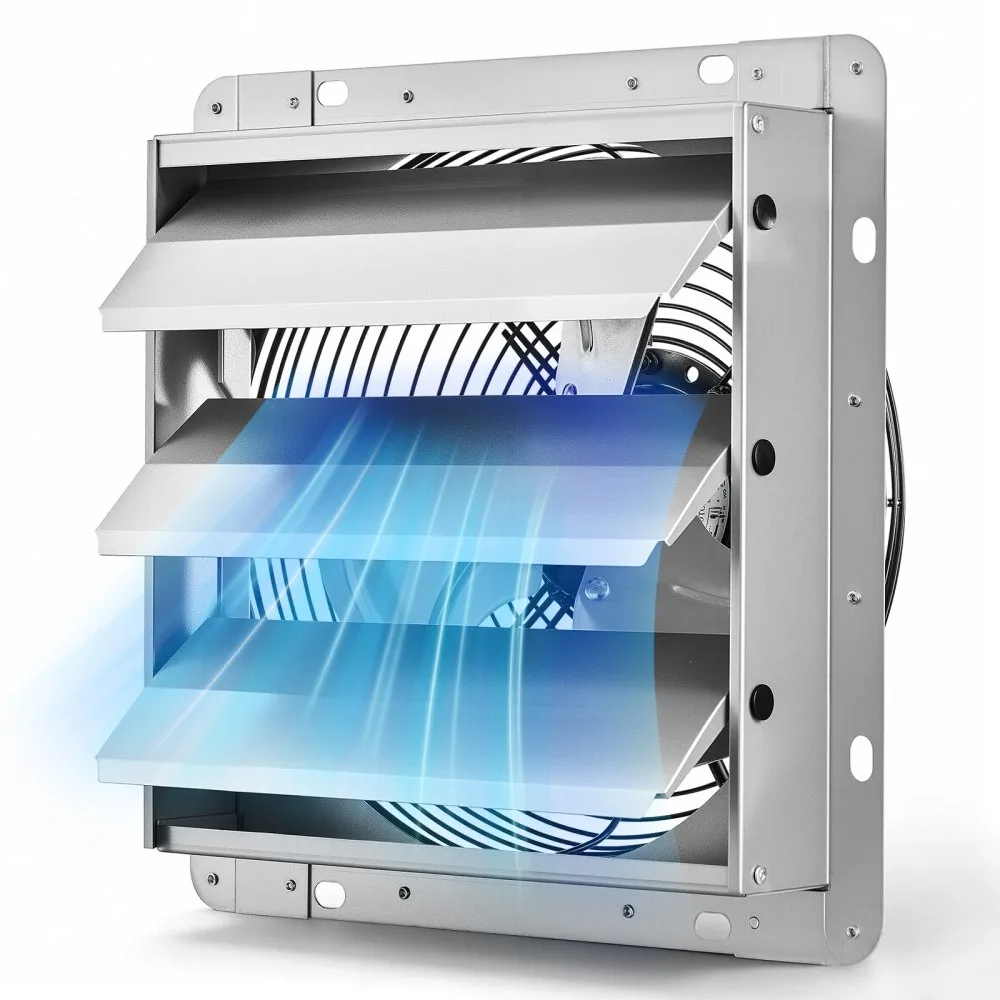
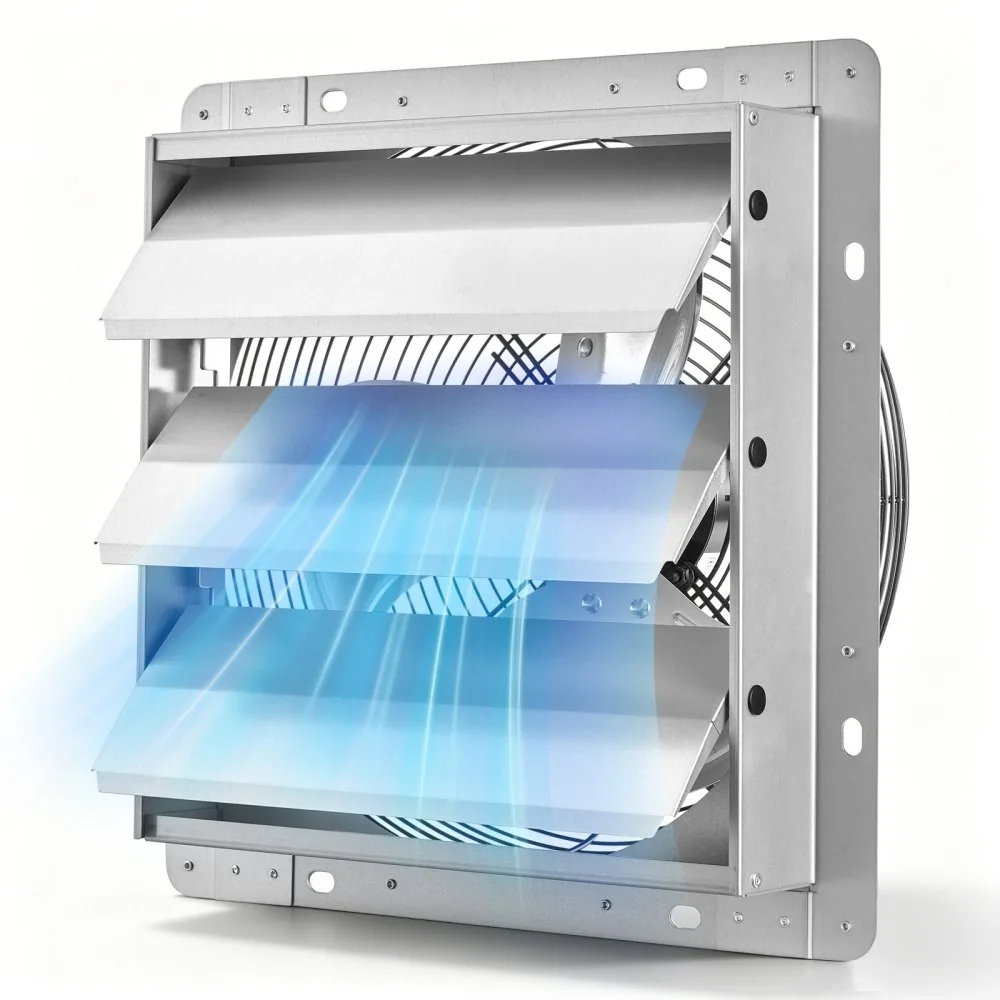
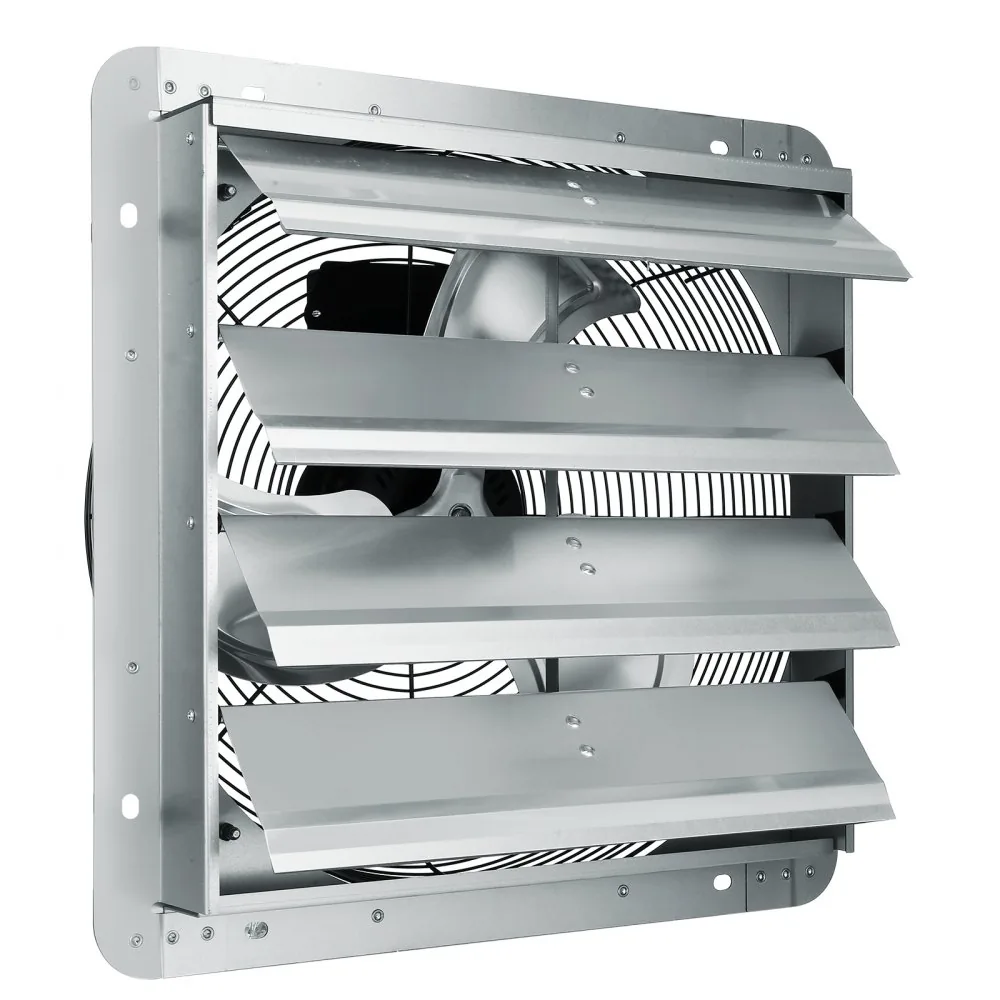
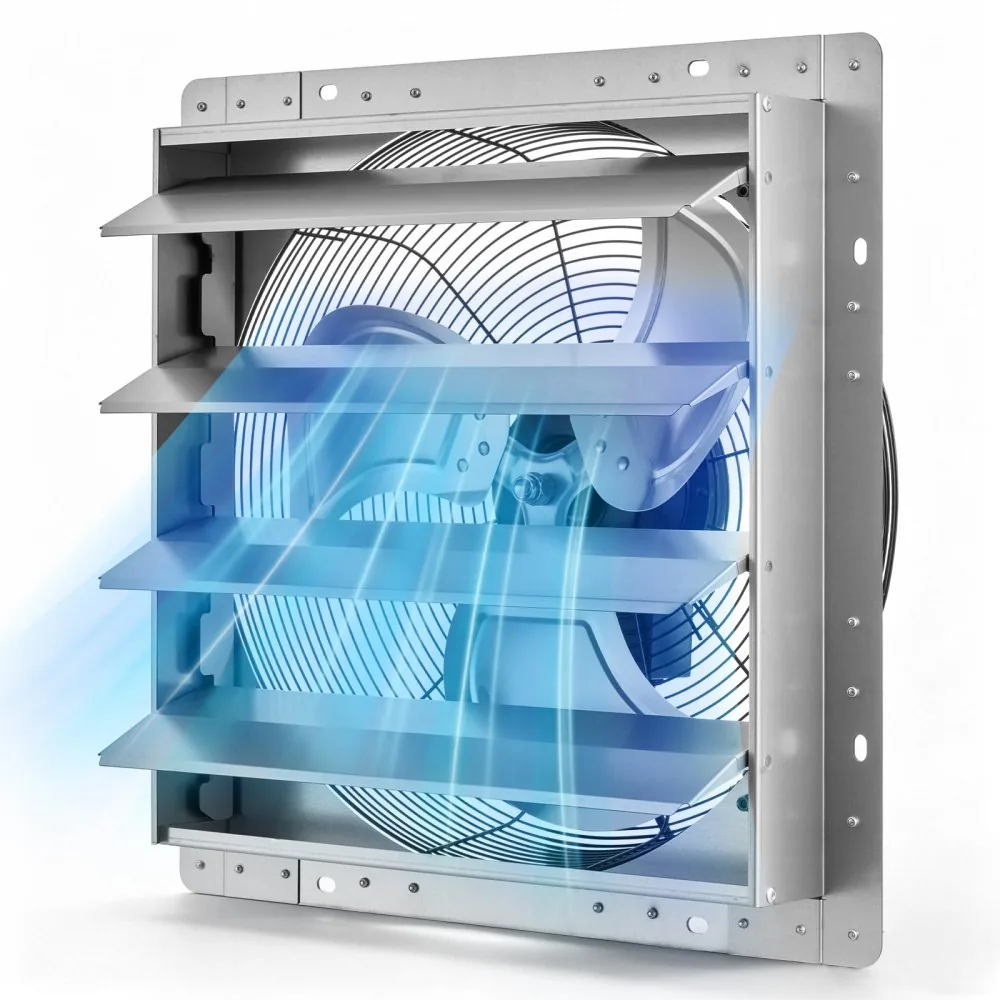
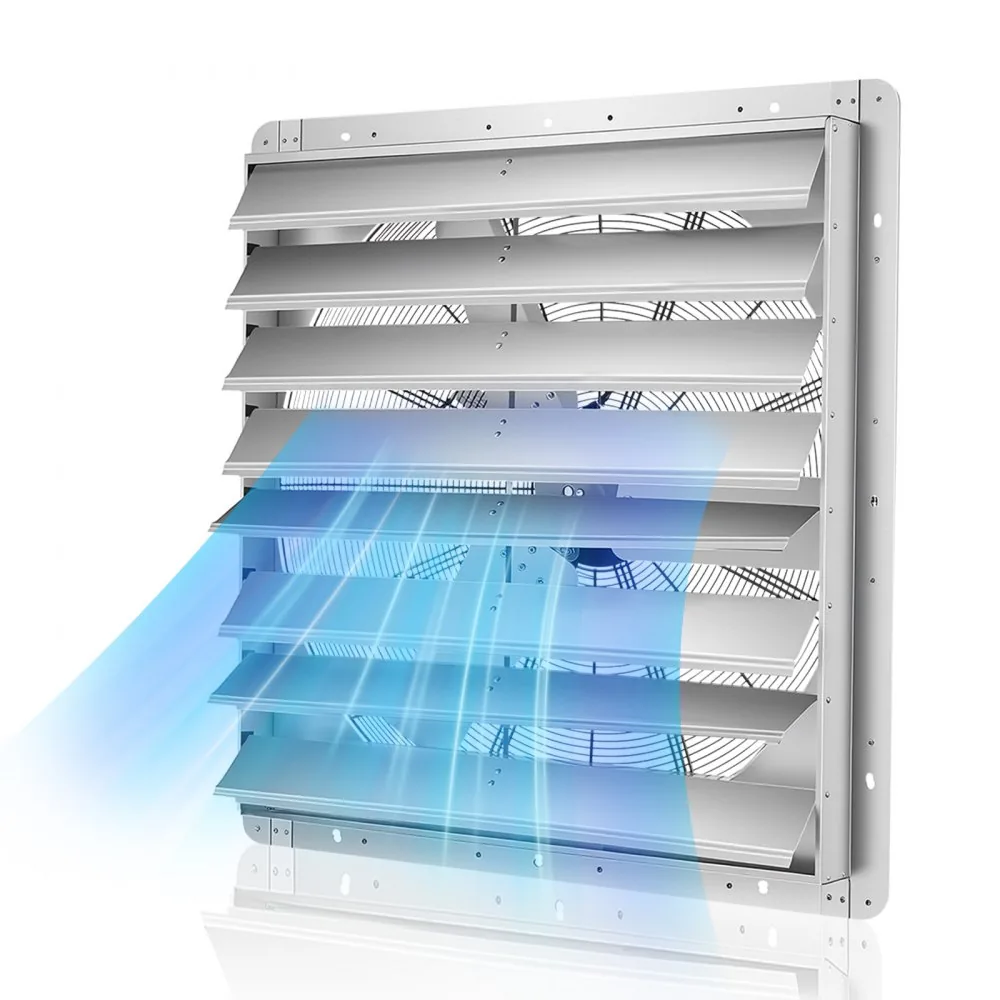
A shutter exhaust fan mounts directly in a wall or roof opening, with spring-loaded louvers on the outside face. When the fan runs, the airflow pushes the louvers open; when it stops, they close on their own and keep rain, birds, and heat from coming back in. No cover to remember to close, and the hole seals itself when the fan is off.
The trade-off is noise and efficiency. A shutter fan is louder and moves less air per watt than an inline duct fan. But for a garage, workshop, greenhouse, or barn, it wins on price and airflow per dollar — the whole lineup here runs from about $40 to $430.
Sizing: the only math that matters
CFM = room volume (length × width × height) × air changes per hour ÷ 60.
Worked examples using the usual 5–6 air changes per hour for a garage:
- Single-car garage (12 × 20 × 8 ft = 1,920 cu ft) → about 192 CFM. A 10-inch fan covers this at low speed.
- Two-car garage (20 × 20 × 8 ft = 3,200 cu ft) → about 320 CFM. A 10–12 inch fan is plenty.
- Workshop where you weld or paint → plan for 8–10 changes per hour and add 30–50% headroom. That usually lands on a 14–18 inch fan.
- Barn or large shop (30 × 40 × 10 ft = 12,000 cu ft) → 1,200+ CFM, so 20–24 inches.
- Big barns and greenhouse rows → 30–36 inches, 7,000–11,000 CFM. These move serious air and you’ll hear them doing it.
Don’t oversize “just in case.” A fan that’s too big pulls make-up air through every gap in the building, which makes the room draftier and the fan fight its own suction.
The lineup at a glance
| Size | CFM range | Price range | What it fits |
|---|---|---|---|
| 10″ | 820–1000 CFM | $38.90–$88.90 | single-car garage, small workshop, greenhouse |
| 12″ | 940–1500 CFM | $43.90–$94.90 | two-car garage, shed, small barn |
| 14″ | 1400–2000 CFM | $66.90–$107.90 | workshop, welding or paint bay |
| 16″ | 1550–2900 CFM | $68.90–$124.99 | workshop, larger garage, attic |
| 18″ | 2200–3051 CFM | $88.90–$99.90 | big shop, barn stall area |
| 20″ | 3000–4800 CFM | $100.90–$170.90 | barn, greenhouse rows, warehouse bay |
| 24″ | 2900–7030 CFM | $136.90–$215.90 | large barn, greenhouse, warehouse |
| 30″ | 6900–8099 CFM | $269.90–$319.90 | barn, warehouse, large greenhouse |
| 36″ | 9761–11000 CFM | $329.90–$429.90 | big barns, warehouse bays, poultry houses |
Steel, aluminum, and what the controls add
| Type | What you get | Who it’s for |
|---|---|---|
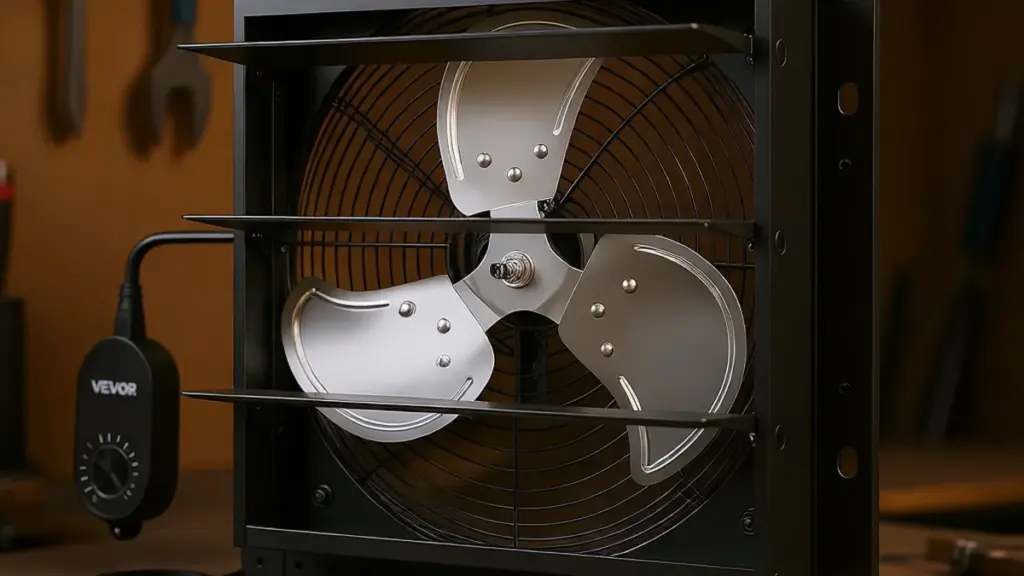
| Steel auto-louver (base) | Sturdy steel housing, louvers open with airflow. Simple, no electronics. | Most garages and sheds. Set-and-forget. |
| Aluminum high-speed | Lighter body, more CFM for the size, still basic controls. | Max airflow per inch at the lowest price. |
| Variable speed | Turn it down to move less air quietly. | Garages attached to the house, overnight runs, noise-sensitive spots. |
| Smart programming | Timer and schedule control. | Set-and-forget attic or shop ventilation. |
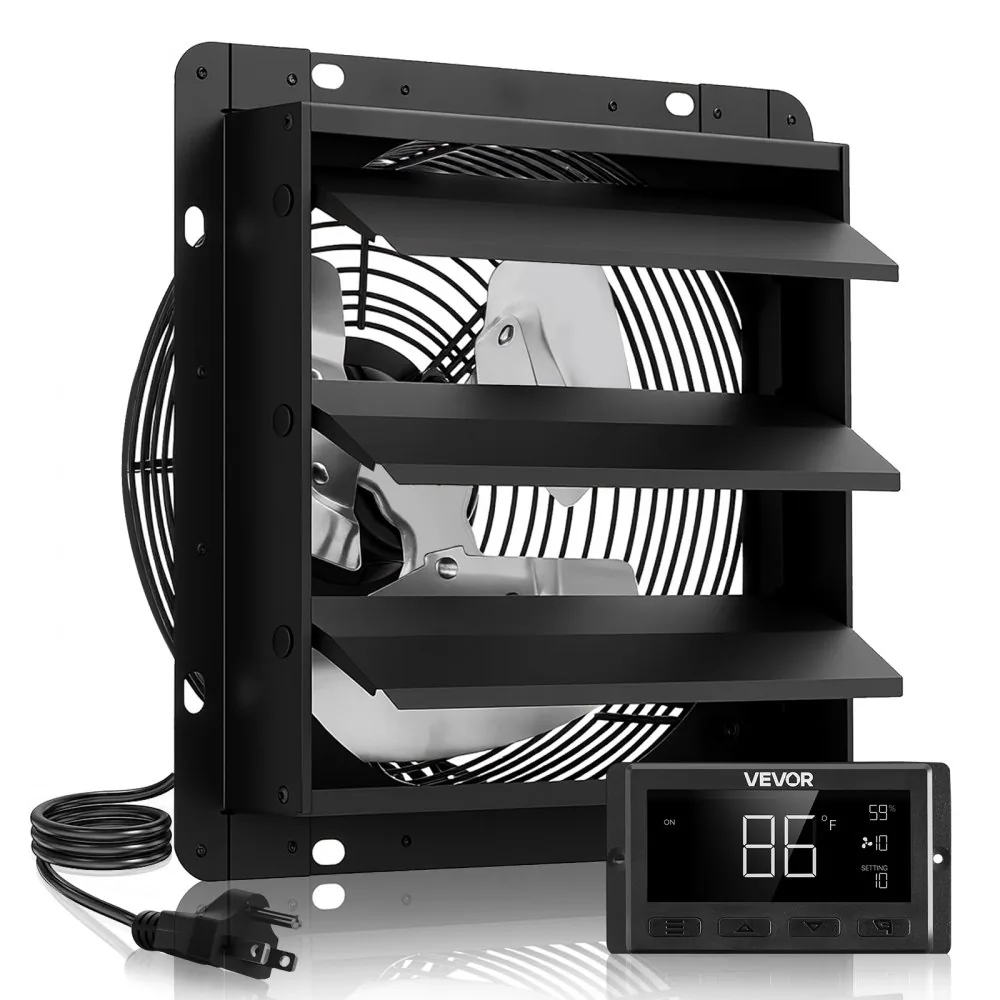
| EC temp & humidity controller | Motor with a built-in controller that reacts to heat and humidity on its own. | Greenhouses, grow rooms, damp spaces. |
For a plain garage, the base steel fan is all you need. Paying extra for variable speed only makes sense if you’ll actually use the low settings. The EC temp and humidity models cost the most, and they earn it in greenhouses and grow rooms where conditions change by the hour.
Full lineup: all 40 shutter exhaust fans
Need more than fans — inline duct fans, circulators, or whole-room ventilation? The HVAC & Ductwork buying guide covers the rest of the lineup, and the garage exhaust fan CFM guide has the sizing math in depth.
Common mistakes to avoid
- Buying by inches, not CFM. The 36-inch fan costs three times the 18-inch for a reason — buy it only if the math says so.
- Forgetting make-up air. A fan can only push out what can come in. If the building is sealed tight, the fan starves and the motor works harder. Crack a door or add an intake vent on the opposite wall.
- Mounting it where air doesn’t move. High on the wall across from the main door works; in a corner behind a shelf, it doesn’t.
- Assuming all “variable speed” fans are the same. Some are multi-step, some are fully variable. Check the controller before paying extra.
- Skipping the circuit check. The 30 and 36-inch fans draw real current. Give them their own circuit instead of sharing one with a welder or heater.
- Putting a steel fan where it gets rained on. Steel is fine under an eave; fully exposed mounts are where the aluminum body pays off.
Recommendations by use case
FAQ
What size shutter exhaust fan do I need for a garage?
A typical one-car garage needs a 10-inch fan (roughly 850–900 CFM); two-car garages usually land on 10–12 inches. Size by CFM, not inches: room volume × air changes per hour ÷ 60.
Is a 36-inch exhaust fan too big for a house garage?
Yes. 36-inch fans move about 10,000 CFM and are meant for barns, warehouses, and large greenhouses. For a residential garage, 10–16 inches covers everything.
Do shutter exhaust fan louvers close automatically?
Yes. The louvers are spring-loaded and close when the fan stops, keeping rain, birds, and outside heat out of the opening.
What’s the difference between a shutter fan and an inline duct fan?
A shutter fan mounts directly in a wall or roof opening and moves large volumes at low cost, with louvers sealing the hole when it’s off. An inline duct fan sits inside ducting, runs quieter and more efficiently, and suits rooms where noise and airflow control matter more than price.
Can a shutter exhaust fan run continuously?
It can, but it doesn’t have to. Most models tolerate long runs. If you plan to run one several hours a day, the variable-speed or smart-programming versions are the better pick because you can dial them down to a quiet level.
Does a shutter fan need a door or window open to work?
It needs make-up air. If the room is airtight, the fan can’t push air out fast enough and works harder for less result. Leave a door cracked or install a passive intake vent on the opposite side.
Related Articles
 Garage & Workshop
3.5 CFM Vacuum Pump Buying Guide: The 3 Numbers That Matter
Mike Thompson · Aug 2026 Garage & Workshop
Garage Shelving Buying Guide: Weight Per Tier Beats Total
Mike Thompson · Aug 2026 Garage & Workshop
Garage Exhaust Fan CFM: Stop Overspending on the Wrong Size Fan
Mike Thompson · Jul 2026Browse Related Products
Products covered by these guides.
VEVOR Copper Pipe Bender, 7 Colorful Dies 1/4-7/8 inch 90 Degrees Forward and Reverse Bending
Original price was: $85.90.$79.03Current price is: $79.03.Shop now
VEVOR Pipe Tube Bender, 1/4"-7/8" O.D. Ratcheting Tubing Bender
$80.90Shop now
VEVOR Bladeless Tower Fan, 65° Oscillating Standing Fan, 12 Speeds & 4 Modes & 8H Timer, 14.76 ft/s High Velocity Floor Air Circulator
$92.90Shop now
VEVOR Tower Fan Bladeless, 16.4ft/s Velocity Floor Fan that Blows Cold Air, 80° Oscillating 8-Speed Fans, 8H Timer
Original price was: $123.90.$93.99Current price is: $93.99.Shop nowGet new guides first
New buying guides, size guides and restock alerts — one email a week.