
3.5 CFM Vacuum Pump Buying Guide: The 3 Numbers That Matter
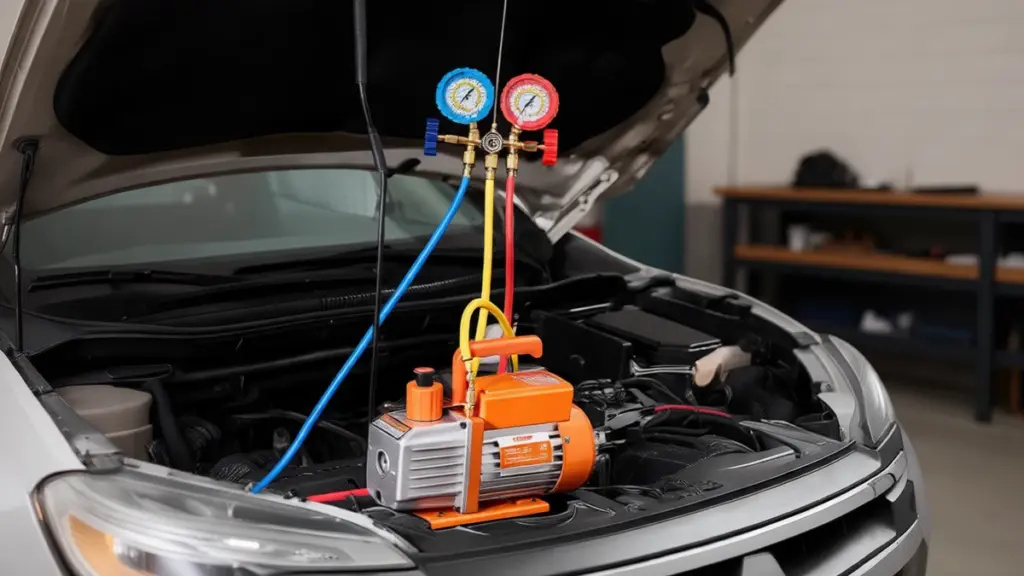
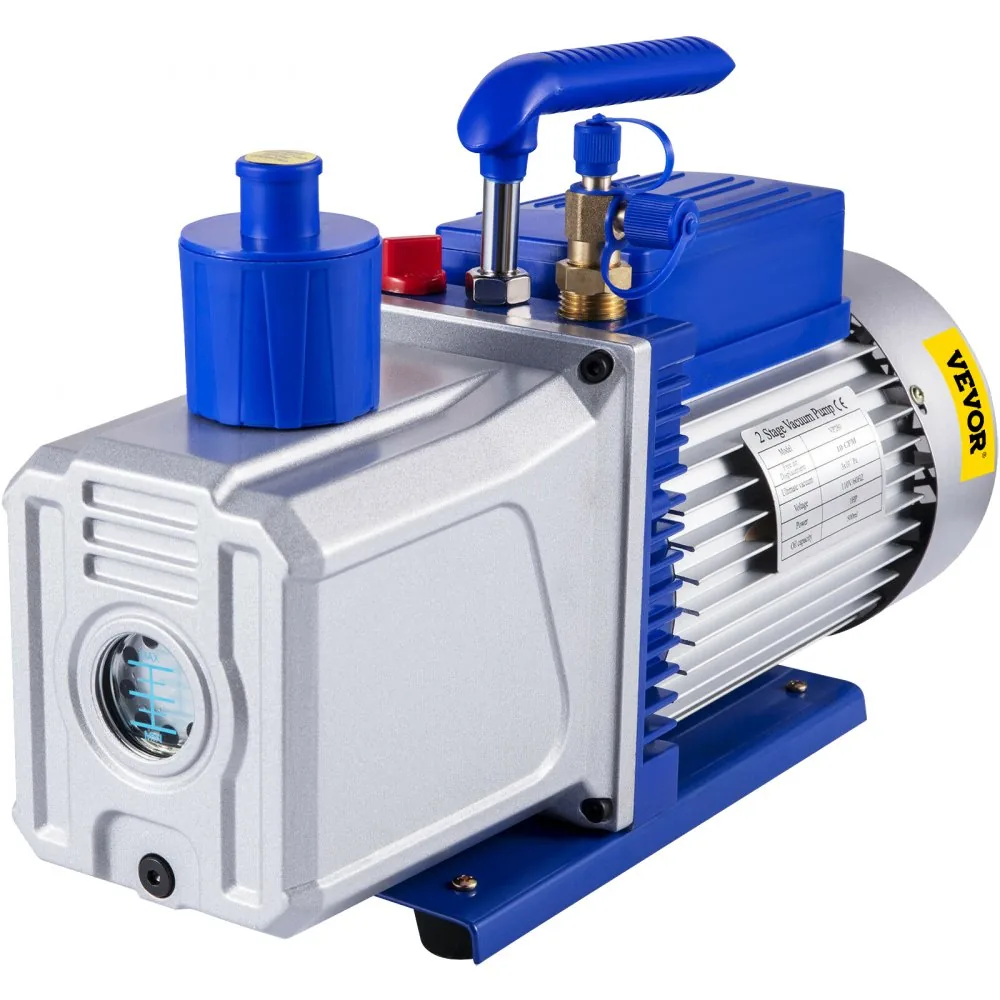
The short answer: For recharging a car AC system, a mini split, or a fridge line, a 3.5 CFM single-stage pump is enough — the models in this lineup pull down to 5 Pa (about 38 microns), which clears the moisture out of a small system. The stage and the ultimate vacuum rating matter more than the CFM number. If you’re doing AC work every week, a 5 CFM two-stage pump finishes faster and pulls deeper. The full lineup below runs from about $70 to $190.
What a vacuum pump actually does
Before you charge an AC system, it has to be empty of air and moisture. Air left inside doesn’t condense — it raises head pressure and makes the compressor work harder. Moisture is worse: mixed with refrigerant and oil it forms acid that eats the system from the inside. The pump pulls both out through the service ports, and the deeper the vacuum, the more moisture boils off the internal surfaces.
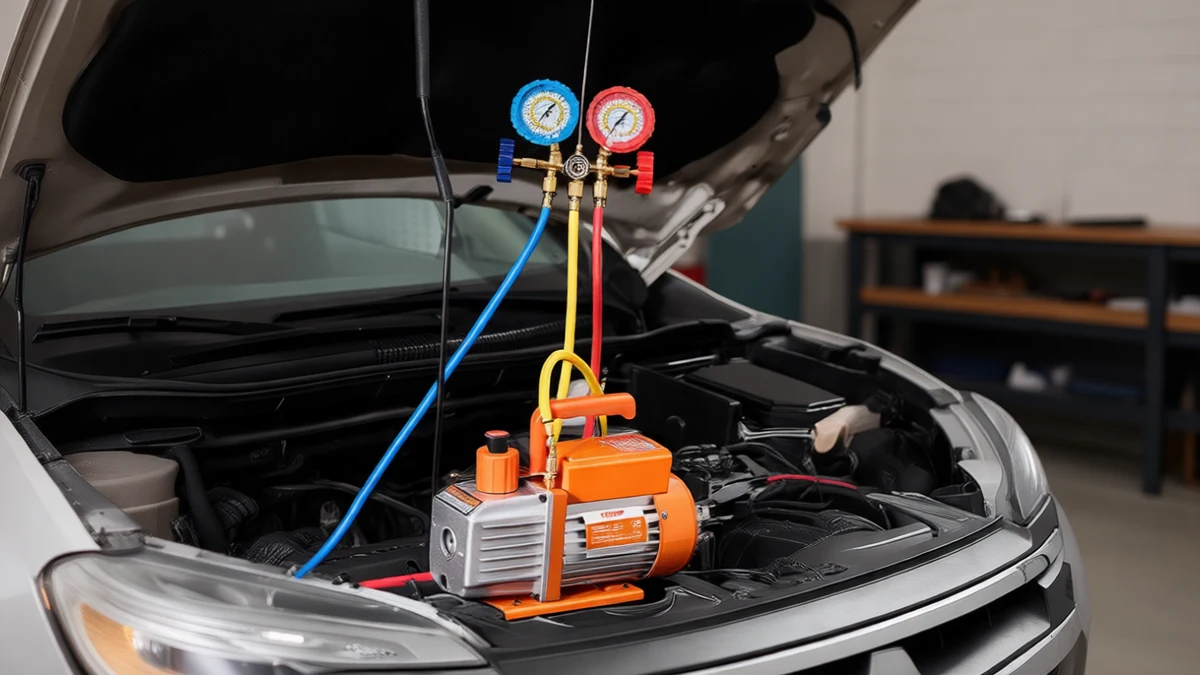
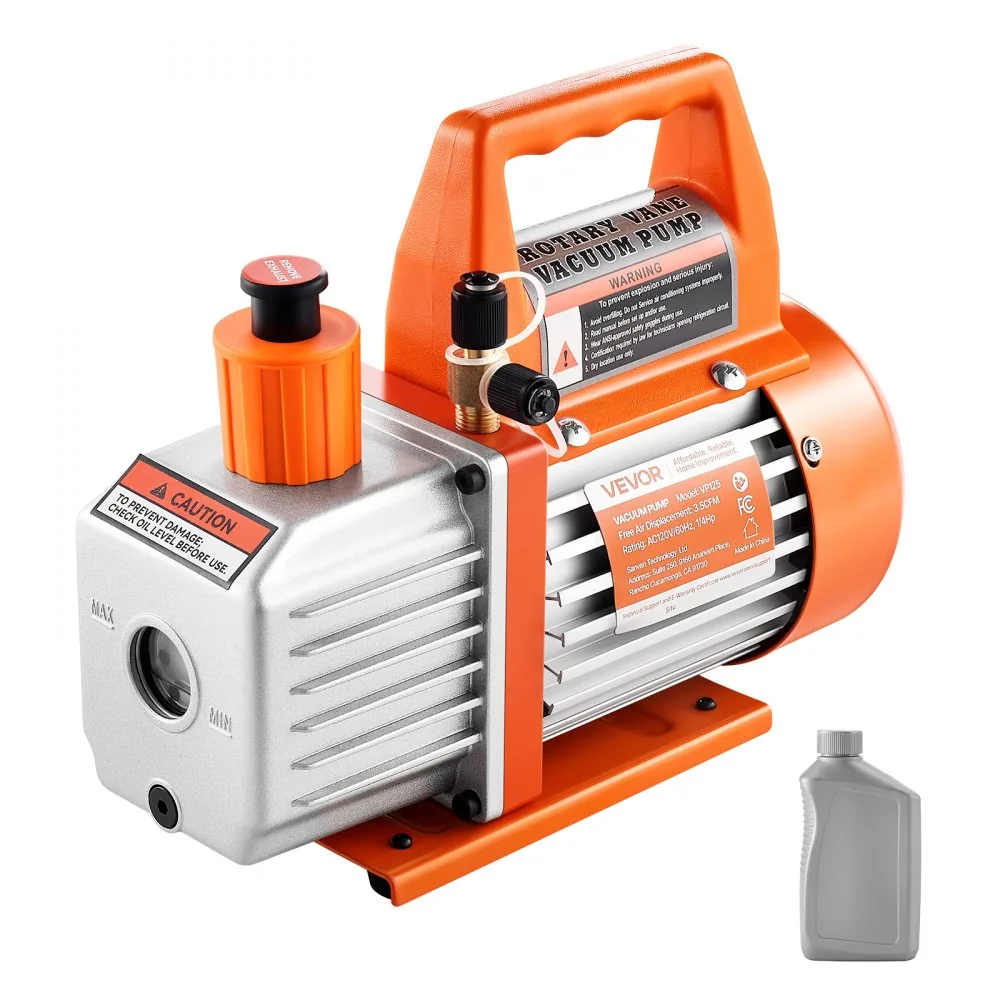
The pumps in this guide are all rotary vane designs. Vanes spin inside an oil-filled housing, trap air on every rotation, and push it out the exhaust. The oil seals the vanes and carries heat away, which is why running one dry ruins it in minutes.
The three numbers that matter
CFM (free air displacement) is how fast the pump moves air. A 3.5 CFM pump clears a small system’s lines in a couple of minutes; a 12 CFM pump does it in under a minute. For home and light shop work, the difference is minutes — not whether the job gets done right.
Ultimate vacuum is how deep the pump can pull, and it’s the number to watch. Single-stage pumps here rate 5 Pa (about 38 microns); the two-stage models rate 0.2 Pa (about 1.5 microns). Lower is better, because a deeper vacuum boils off more trapped moisture.
Stage — single or two. A two-stage pump runs the gas through a second vane set after the first, which lets it keep pulling once the first stage can’t move any more. That’s why the two-stage models reach the sub-1 Pa territory. For a routine recharge, single stage is fine. For repairs where you need a verified deep vacuum, buy two-stage.
Horsepower on the spec sheet mostly shows up as pump speed and oil capacity, not vacuum depth. Don’t pick a pump by HP — pick it by CFM for speed and by stage for depth.
Which pump for which job
| Job | CFM | Stage | Price range |
|---|---|---|---|
| Home car AC recharge, mini split, small appliance | 3–3.5 CFM | Single | from $69.90 |
| Same jobs, manifold gauge set included | 3–4.5 CFM | Single | from $98.90 |
| Small shop, AC work a few times a month | 5 CFM | Single or two | $99.90–$129.90 |
| Rental fleet, daily AC service | 6 CFM | Two | $116.90 |
| Commercial systems, large equipment | 12 CFM | Two | from $175.90 |
A 3.5 CFM single-stage pump is the honest answer for most people who only touch AC once or twice a year. Paying for a two-stage 6 CFM machine makes sense only if the pump actually earns it — meaning you pull vacuums regularly.
Gauge set or bare pump?
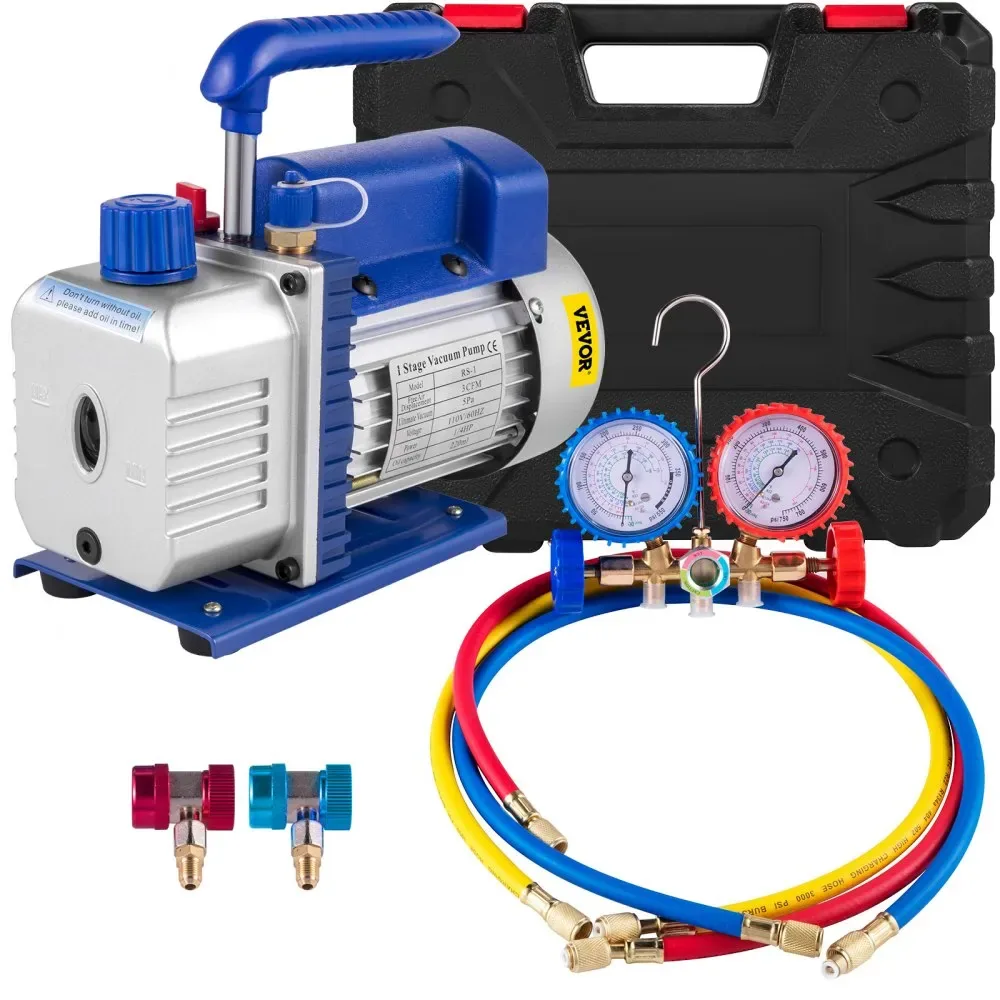
The gauge-set kits bundle a manifold gauge with hoses, so you can hook the pump to the system, watch the vacuum level, and then charge straight from the same setup. If you already own gauges, buy the bare pump. If this is your first AC job, the kit saves you a second purchase — the 3 CFM kit with manifold gauges at $98.90 is the cheapest way into a complete setup.
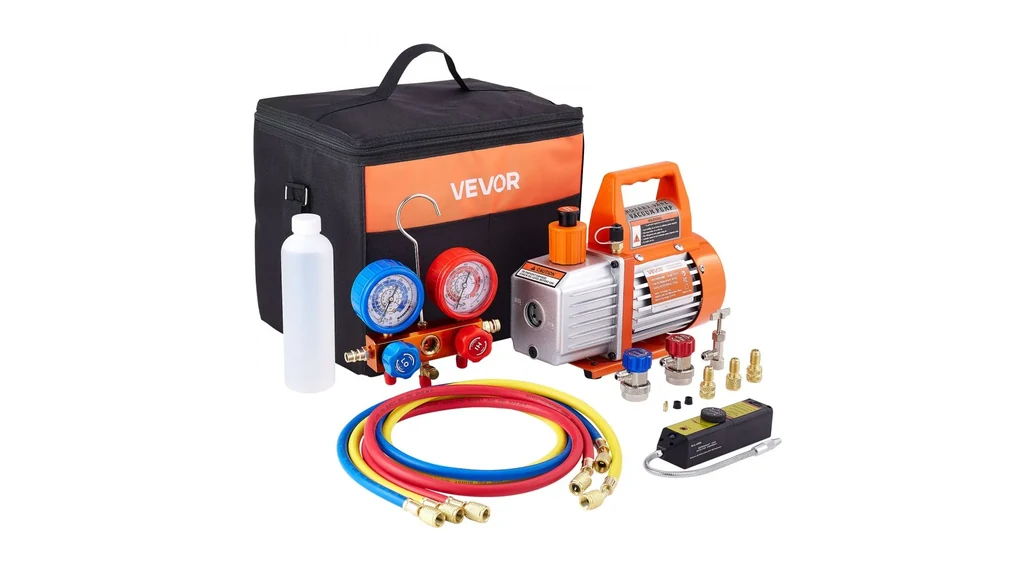
Two fitment notes. The port on these pumps is 1/4″ SAE, which covers nearly every car and mini split service port; some models add 1/2″ ACME for larger commercial fittings. The kits on the site are rated for R134a, R22, R410a and the common auto refrigerants; the R32-rated kit versions are out of stock right now.
Full lineup: all 21 vacuum pumps
| CFM | Stage | Power | Ultimate vacuum | Price | Product |
|---|---|---|---|---|---|
| 3 | Single | — | — | $98.90 | 3CFM 1/4HP Single Stage Air Vacuum Pump HVAC R134a R12 R22 R410a A/C Refrigeration Kit AC Manifold Gauge R134 Can Tap Included Carrying Tote |
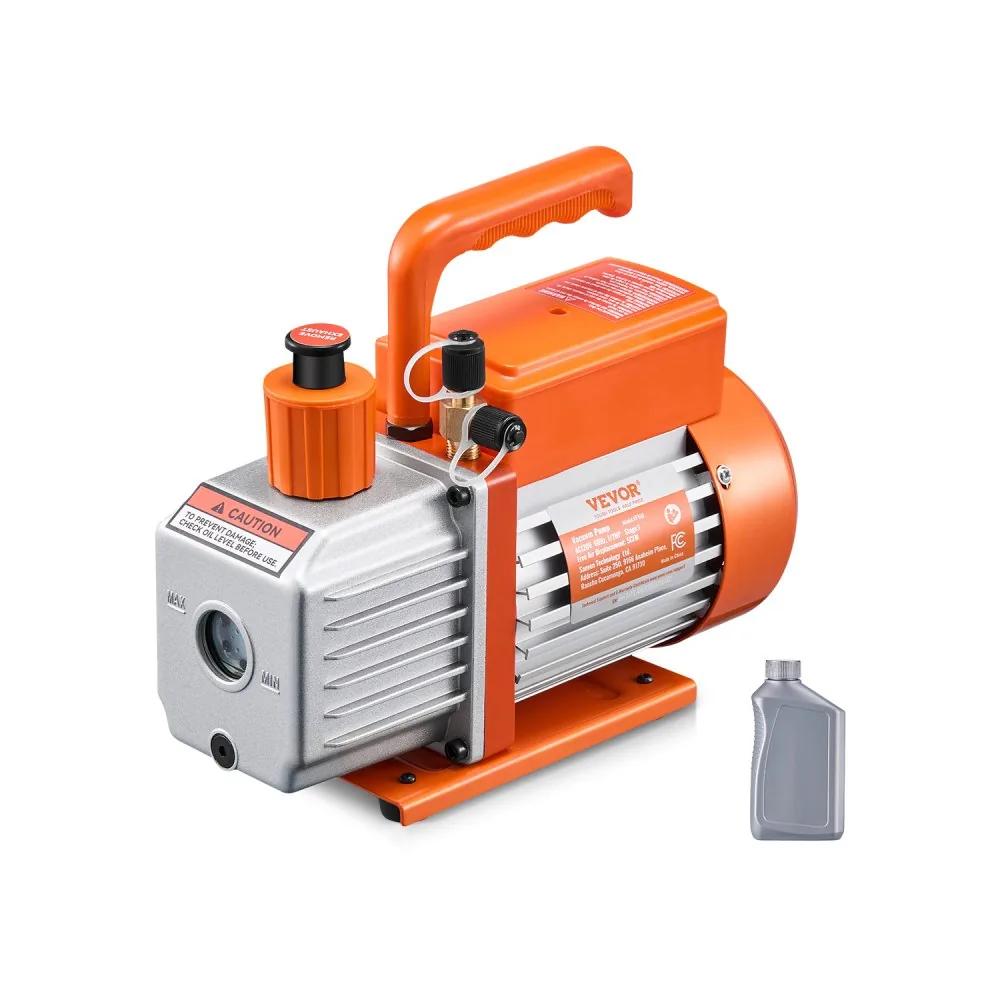
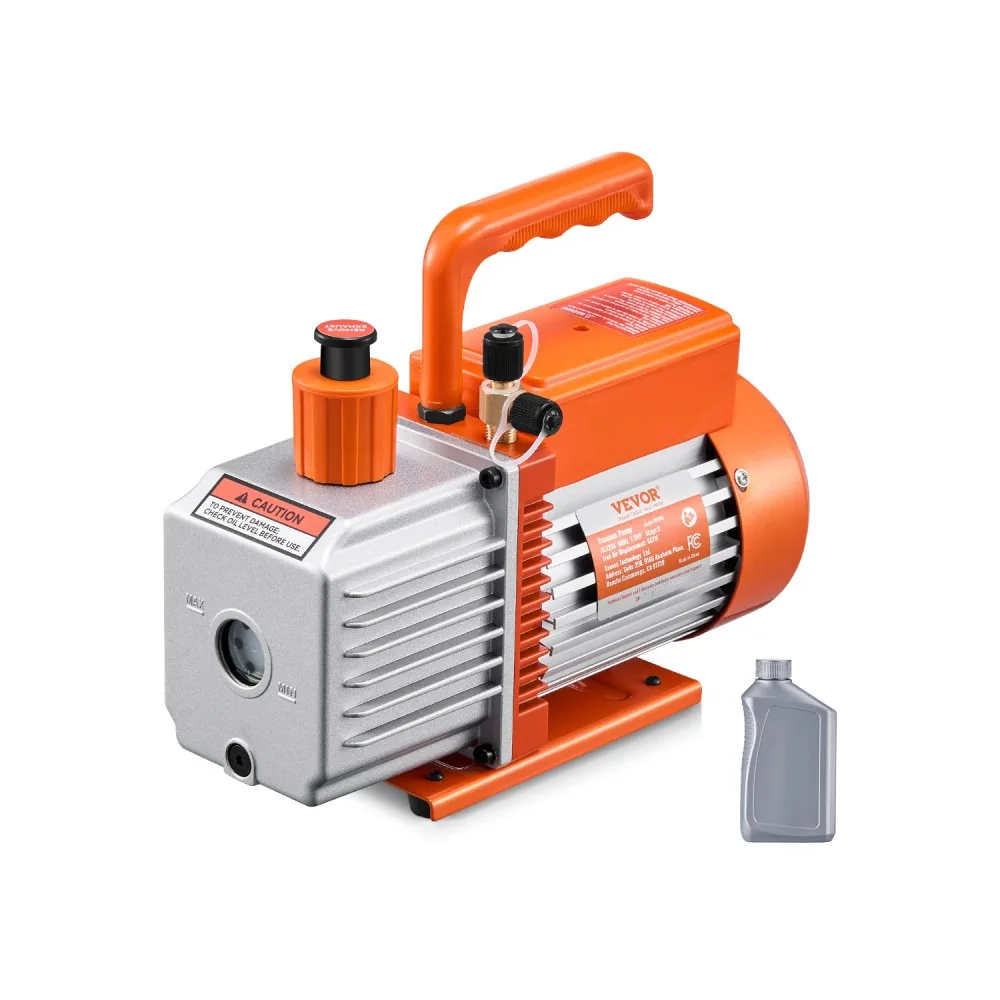
| 3.5 | Single | 1/4 HP | 5 Pa | $69.90 | Vacuum Pump |
| 3.5 | Single | 180W | 5 Pa | $69.90 | Vacuum Pump |
| 3.5 | Single | — | 40 Microns | $63.99 | 1/5 HP Single Stage Vacuum Pump — out of stock |
| 3.5 | Single | — | 5 Pa | $116.90 | 3.5 CFM AC Vacuum Pump and Gauge Set — out of stock |
| 3.5 | Single | — | 5 Pa | $105.90 | 3.5 CFM AC Vacuum Pump and Gauge Set — out of stock |
| 3.5 | Single | — | 40 microns | $100.99 | 1/5 HP 3.5 CFM AC Vacuum Pump and Gauge Set — out of stock |
| 3.5 | Single | — | 40 microns | $112.99 | 1/5 HP 3.5 CFM AC Vacuum Pump and Gauge Set — out of stock |
| 4 | Single | 150W | 5 Pa | $76.90 | Vacuum Pump — out of stock |
| 4 | Single | 1/3 HP | 5 Pa | $136.90 | 4 CFM AC Vacuum Pump and Gauge Set |
| 4 | Single | — | 40 microns | $126.90 | 1/4 HP 4 CFM AC Vacuum Pump and Gauge Set — out of stock |
| 4 | Single | — | 40 microns | $148.90 | 1/4 HP 4.5 CFM AC Vacuum Pump and Gauge Set — out of stock |
| 4.5 | Single | 1/3 HP | 5 Pa | $71.90 | Vacuum Pump 4.5CFM Vacuum Pump HVAC Single-Stage Rotary Vane Vacuum Pump 1/3HP 5PA Ultimate Air Conditioning Refrigerant Vacuum Pump — out of stock |
| 4.5 | Single | 150W | 5 Pa | $139.90 | 4.5 CFM AC Vacuum Pump and Gauge Set |
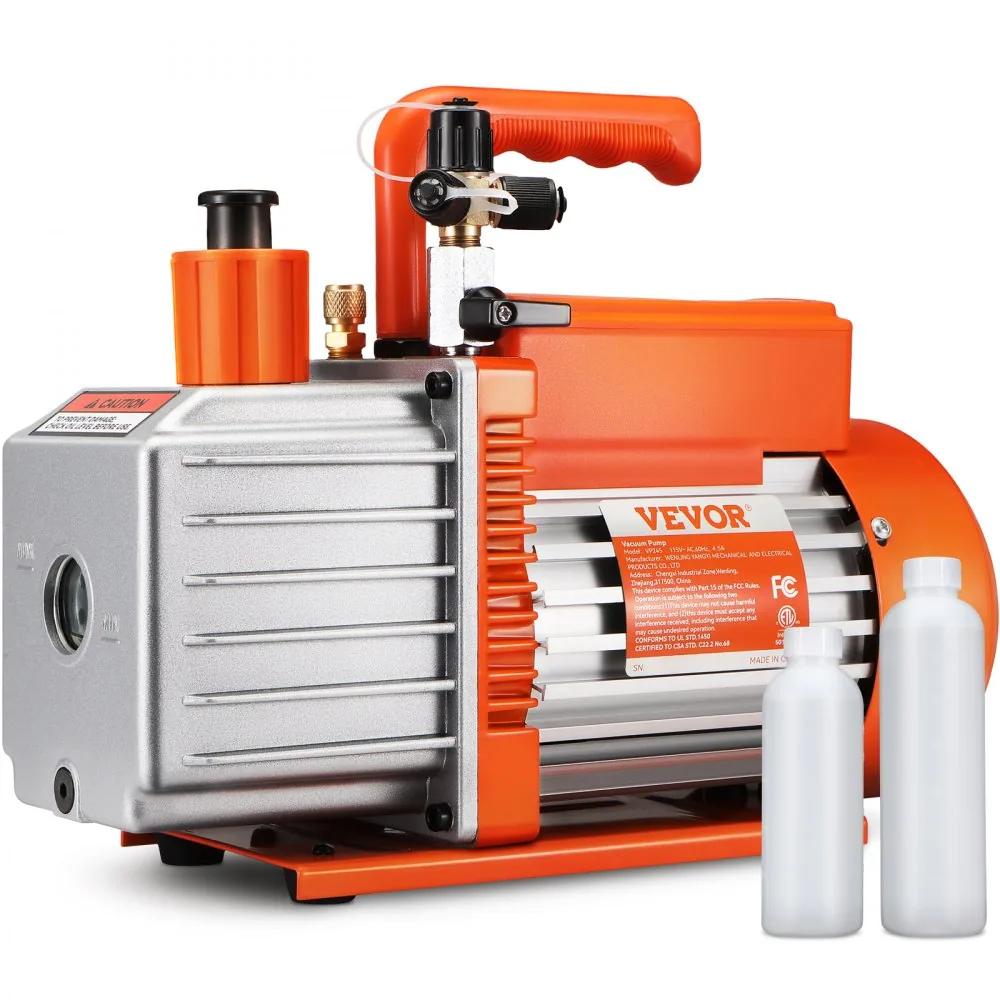
| 5 | Single | 250W | 5 Pa | $99.90 | Vacuum Pump |
| 5 | Two | 375W | 2.5 Pa | $129.90 | 1/2 HP 2 Stage Rotary Vane Vacuum Pump |
| 6 | Two | 370W | 0.2 Pa | $116.90 | Vacuum Pump |
| 7 | Two | — | 20 pa | $145.99 | 1/2 HP 2 Stage Rotary Vane Vacuum Pump — out of stock |
| 9 | Two | 750W | 0.2 Pa | $189.90 | Vacuum Pump — out of stock |
| 10 | Two | — | 3×10⁻¹Pa | $175.90 | Vacuum Pump 12CFM 1HP Vane Vacuum Pump Two Stage 3 x 10⁻¹ Pa Ultimate HVAC Rotary Auto AC Refrigerant Vacuum Pump |
| 12 | Single | — | 5pa | $182.90 | Vacuum Pump 12CFM 1 HP Single Stage Air Conditioning Vacuum Pump 110V 5PA Ultimate Vacuum Refrigerant HVAC Air Tool Rotary Vane Vacuum Pump for |
Ten of the 21 are in stock right now, and they’re the ones linked above. The out-of-stock rows are kept in the table so the sizes and specs are easy to compare when they come back.
Common mistakes to avoid
- Running it without oil, or with old oil. A dry pump scorches its vanes in minutes. Change the oil when it looks milky — that’s water you pulled out of a system.
- Skipping the leak check. A vacuum pump can’t fix a system that leaks. Pressure-test with nitrogen or at least verify the service ports seal before you pull.
- Watching the clock instead of the gauge. “Run it for 30 minutes” is not the rule. Pull until the micron gauge stops dropping and holds after you isolate the pump.
- Shutting the pump off with the manifold valves open. The vacuum siphons oil backward into the lines. Close the low-side valve before killing the pump.
- Wrong adapters. A 1/2″ ACME system needs the step-down fitting; forcing 1/4″ SAE into it leaks air and wastes the whole pull.
- Buying by horsepower. A 1/4 HP 3.5 CFM pump and a 1/2 HP 5 CFM pump are the same depth, different speed. Match the CFM to the system size, not the HP badge.
Recommendations by use case
FAQ
Do I need a vacuum pump to recharge car AC?
Yes, if the system has been opened. Any system that was opened for repair has to be pulled into a vacuum before charging — skipping it leaves moisture that shortens the compressor’s life.
What’s the difference between a single-stage and a two-stage vacuum pump?
A two-stage pump runs the gas through a second vane set, so it can keep pulling deeper once the first stage stalls. Here, single-stage models reach 5 Pa; two-stage models reach 0.2 Pa. For routine recharges single stage is fine; for repairs, two-stage.
How long should I run a vacuum pump on an AC system?
Until the gauge holds, not for a fixed time. On a small car AC system a 3.5 CFM pump usually reaches a stable deep vacuum in 15–45 minutes. Close the pump off and watch the gauge — if it climbs back, you have a leak or leftover moisture.
What does CFM mean on a vacuum pump, and does bigger always mean better?
CFM is how fast the pump moves air, so bigger means faster, not deeper. Vacuum depth comes from the stage and the ultimate vacuum rating. A 3.5 CFM pump and a 12 CFM pump both reach 5 Pa in these listings — the 12 CFM just gets there quicker.
Why does a vacuum pump need oil?
The oil seals the vanes inside the housing, carries heat away, and flushes wear debris out the exhaust. Without it, the vanes overheat and score the bore within minutes.
Can a 3.5 CFM pump pull deep enough for an R410A mini split?
Yes. R410A runs at higher pressures, but the vacuum requirement is the same — the system still has to be dried below the same threshold. The 3.5 CFM single-stage VP125 reaches 5 Pa, which is deep enough for a routine mini split install.
Related Articles
 Garage & Workshop
Shutter Exhaust Fan Buying Guide: Size It by CFM, Not by the Inches
Mike Thompson · Aug 2026 Garage & Workshop
Garage Shelving Buying Guide: Weight Per Tier Beats Total
Mike Thompson · Aug 2026 Garage & Workshop
Garage Exhaust Fan CFM: Stop Overspending on the Wrong Size Fan
Mike Thompson · Jul 2026Browse Related Products
Products covered by these guides.
VEVOR Copper Pipe Bender, 7 Colorful Dies 1/4-7/8 inch 90 Degrees Forward and Reverse Bending
Original price was: $85.90.$79.03Current price is: $79.03.Shop now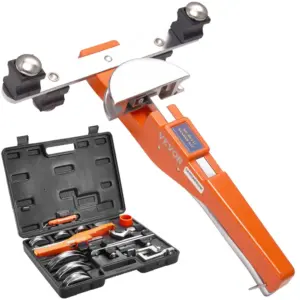
VEVOR Pipe Tube Bender, 1/4"-7/8" O.D. Ratcheting Tubing Bender
$80.90Shop now
VEVOR Bladeless Tower Fan, 65° Oscillating Standing Fan, 12 Speeds & 4 Modes & 8H Timer, 14.76 ft/s High Velocity Floor Air Circulator
$92.90Shop now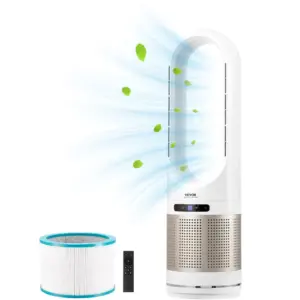
VEVOR Tower Fan Bladeless, 16.4ft/s Velocity Floor Fan that Blows Cold Air, 80° Oscillating 8-Speed Fans, 8H Timer
Original price was: $123.90.$93.99Current price is: $93.99.Shop nowGet new guides first
New buying guides, size guides and restock alerts — one email a week.