
Garage Exhaust Fan CFM: Stop Overspending on the Wrong Size Fan
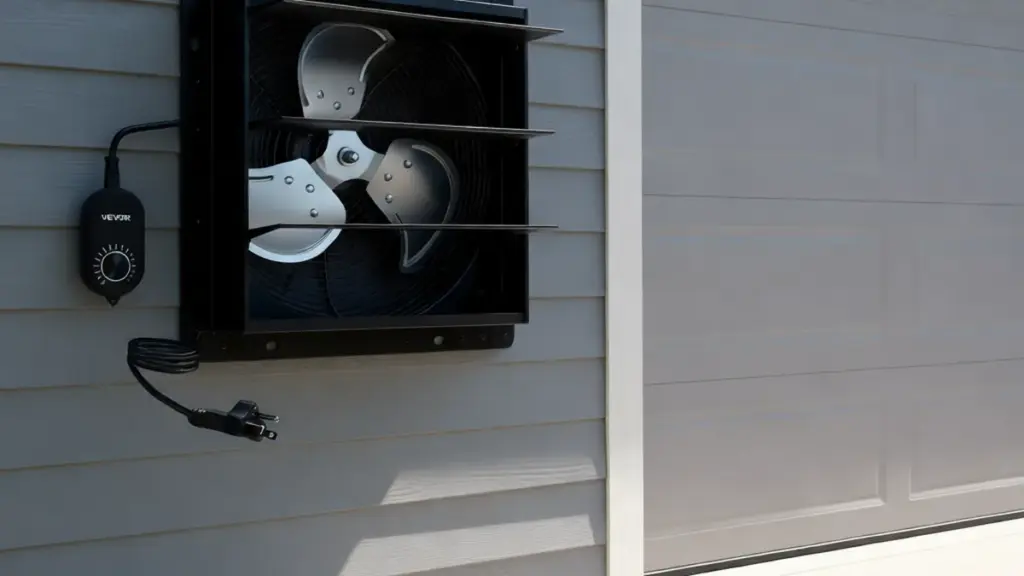
The short answer
A 10-inch shutter exhaust fan moves about 900 CFM, and for a normal two-car garage that is more than enough. You do not need to match the fan to the volume of the room; you need to match it to how often you want the air replaced. The formula is simple: CFM = (garage volume x air changes per hour) / 60. A 22 x 22 x 8 ft garage at 6 air changes per hour needs about 387 CFM. Most people undershoot on airflow and overshoot on fan size at the same time, because they skip the math.
Why CFM matters more than fan size
An exhaust fan has one job: move stale air out and pull fresh air in. If it is too small, the garage gets hot, humid, and smells of gas or paint. If it is wildly oversized, you pay more, hear more noise, and pull conditioned air out of the house through every crack. CFM, or cubic feet per minute, is the honest measurement of that job. Inches measure the opening. CFM measures the work.

The CFM formula, step by step
- Measure the length, width, and height of the garage in feet.
- Multiply them together to get the volume in cubic feet.
- Pick an air change rate: 5-6 for a regular garage, 8 for a workshop, 10 or more for welding, painting, or heavy fumes.
- Multiply volume by the air change rate, then divide by 60 to get CFM.
Here is a real example. A 24 x 30 x 10 ft workshop is 7,200 cubic feet. At 8 air changes per hour, the math is 7,200 x 8 / 60 = 960 CFM. A 14-inch shutter fan rated around 1,400 CFM covers that with breathing room.
CFM sizing table
| Garage type | Typical volume | Recommended CFM at 6 ACH | Fan size to look at |
|---|---|---|---|
| 1-car garage | 1,900-2,300 cu ft | 190-230 CFM | 10 inch (900 CFM) |
| 2-car garage | 3,800-4,700 cu ft | 380-470 CFM | 10-12 inch |
| Large garage or small workshop | 6,000-8,000 cu ft | 600-800 CFM | 14-18 inch |
| Big workshop or barn | 10,000+ cu ft | 1,000+ CFM | 20-30 inch |
Those CFM numbers assume an open or lightly restricted intake. If your garage is tight, add 30-50% to the fan rating so it does not choke on its own vacuum.
What else to check before you buy
Automatic louvers
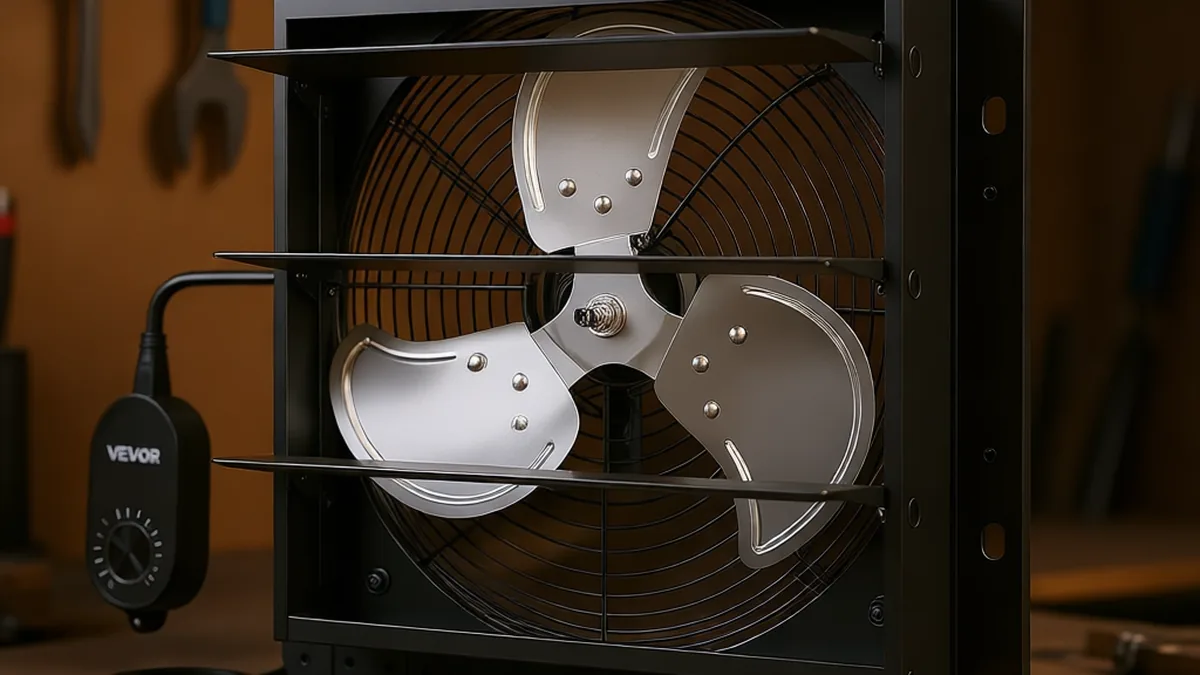
A wall-mounted shutter fan uses louvers that stay closed when the fan is off, which keeps rain, dust, and rodents out. Before you mount anything, make sure the louvers open freely and the frame fits the opening. If the louver linkage binds, even a high-CFM fan will sound loud and move very little air.
Variable speed
Garage ventilation is not a constant. Summer afternoon heat calls for full speed; light evening airflow does not. A variable-speed controller lets one fan cover both situations without waking up the neighbors.
Noise
CFM is useless if you hate being in the room. Compare sound ratings when you can, mount the fan on a wall away from living areas, and avoid running a 24-inch fan where a 12-inch fan does the job.
Intake
An exhaust fan only works if air can get in. Crack a door or window, or add a passive vent on the opposite wall. Otherwise the fan spins, but it barely exchanges the air.
Shutter exhaust fans that fit this guide
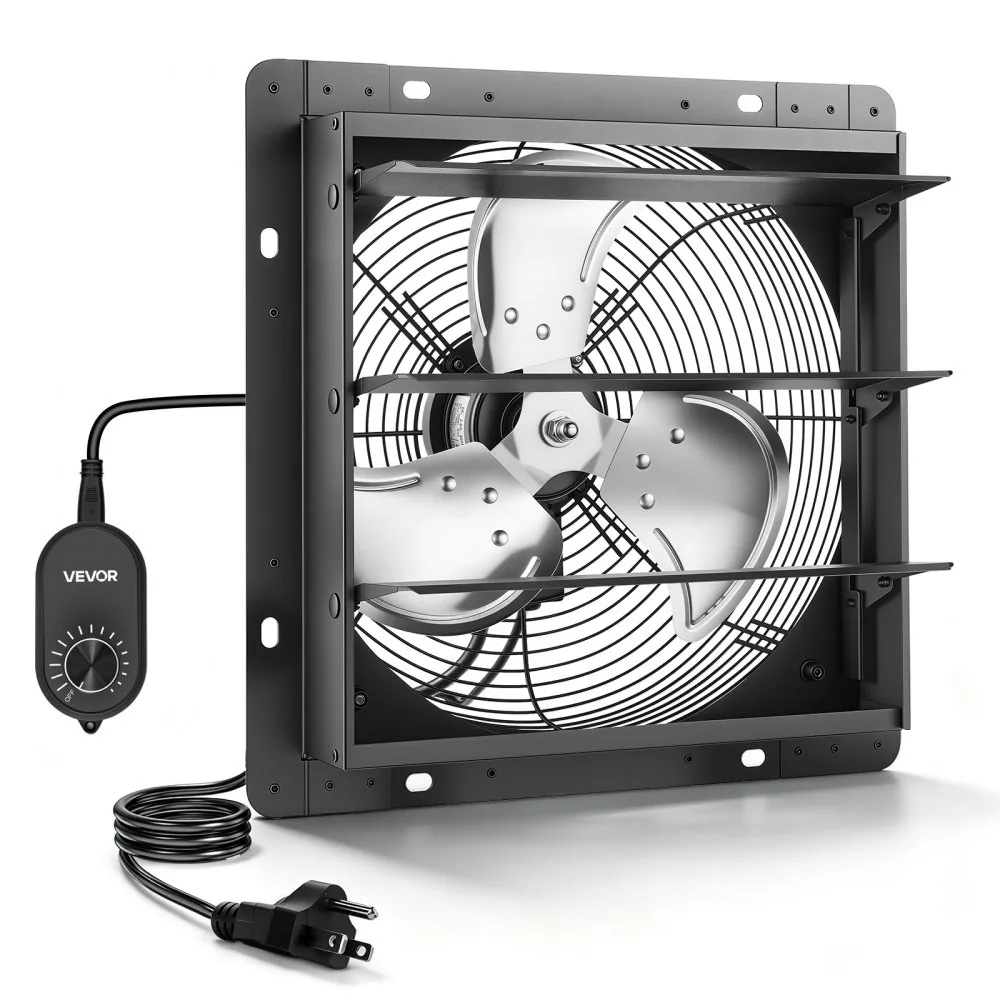
- VEVOR 10 inch Shutter Exhaust Fan, 900 CFM, variable speed – best for one- and two-car garages
- VEVOR 12 inch Shutter Exhaust Fan, 1,100 CFM – a step up if you want more margin
- VEVOR 14 inch Shutter Exhaust Fan, 1,400 CFM – good for larger garages and small shops
- VEVOR 20 inch Shutter Exhaust Fan, 3,000 CFM – serious airflow for workshops
- VEVOR 24 inch Shutter Exhaust Fan, 4,800 CFM – for barns and big shops
Quick sizing checklist
- Measure the room, not the opening.
- Decide how the space is used before choosing an air change rate.
- Add 30-50% for a tight garage.
- Plan the intake before you cut the hole.
- Choose variable speed if the same room serves as parking, workshop, and storage.
Frequently asked questions
Measure the room, multiply length by width by height, multiply by 6 air changes per hour, and divide by 60. A 22 x 22 x 8 ft garage needs about 387 CFM, so a 10 inch or 12 inch shutter fan rated at 900-1,100 CFM is more than enough.
No. A bigger fan is louder, costs more, and can pull air from the house. Size the CFM to the room volume and how you use the space, then add 30-50% for a tight garage.
Yes. An exhaust fan only works when fresh air can enter. Crack a door or window, or add a passive vent on the opposite wall, or the fan will struggle to move air.
Use 5-6 for a normal garage, 8 for a workshop, and 10 or more when welding, painting, or working with strong fumes.
Yes, most wall-mount shutter fans use continuous-duty AC motors. A variable-speed model lets you run low for background ventilation and turn it up when you need maximum airflow.
Frequently Asked Questions
How many CFM do I need for my garage?
Measure length x width x height in feet, multiply by the air changes per hour (5-6 for a regular garage, 8 for a workshop, 10+ for welding or painting), then divide by 60. A 22 x 22 x 8 ft garage at 6 air changes needs about 387 CFM.
Is a 10-inch exhaust fan enough for a two-car garage?
Yes. A 10-inch shutter fan moves about 900 CFM, well above the 380-470 CFM a typical two-car garage needs at 6 air changes per hour.
Why does fan size in inches not tell me the airflow?
Inches measure the opening; CFM measures the work. Two fans with the same diameter can move very different amounts of air, so size the fan by CFM.
Do I size the fan to the room volume or to air changes?
To how often you want the air replaced. Use the formula CFM = (garage volume x air changes per hour) / 60, then add margin if your garage is tight or has restricted intake.
Related Articles
 Garage & Workshop
Shutter Exhaust Fan Buying Guide: Size It by CFM, Not by the Inches
Mike Thompson · Aug 2026 Garage & Workshop
3.5 CFM Vacuum Pump Buying Guide: The 3 Numbers That Matter
Mike Thompson · Aug 2026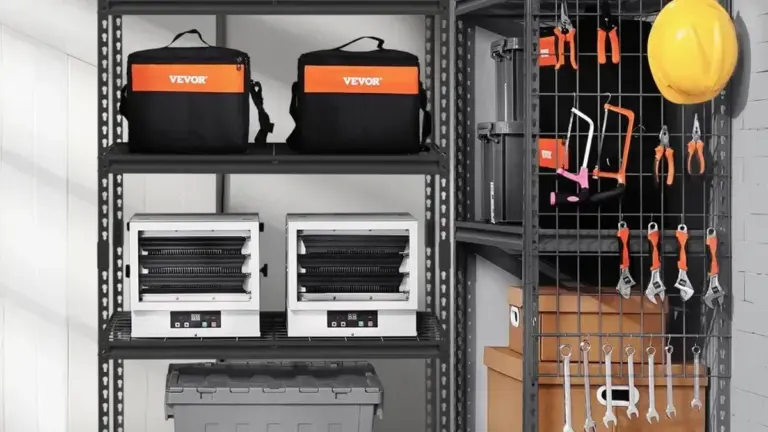 Garage & Workshop
Garage Shelving Buying Guide: Weight Per Tier Beats Total
Mike Thompson · Aug 2026Browse Related Products
Products covered by these guides.
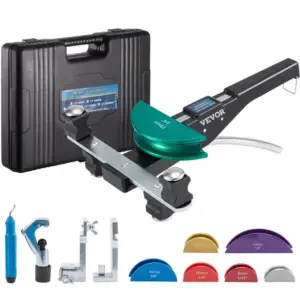
VEVOR Copper Pipe Bender, 7 Colorful Dies 1/4-7/8 inch 90 Degrees Forward and Reverse Bending
Original price was: $85.90.$79.03Current price is: $79.03.Shop now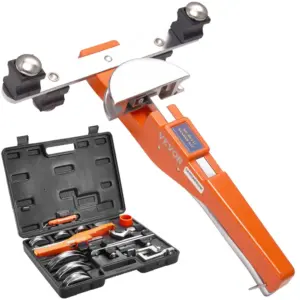
VEVOR Pipe Tube Bender, 1/4"-7/8" O.D. Ratcheting Tubing Bender
$80.90Shop now
VEVOR Bladeless Tower Fan, 65° Oscillating Standing Fan, 12 Speeds & 4 Modes & 8H Timer, 14.76 ft/s High Velocity Floor Air Circulator
$92.90Shop now
VEVOR Tower Fan Bladeless, 16.4ft/s Velocity Floor Fan that Blows Cold Air, 80° Oscillating 8-Speed Fans, 8H Timer
Original price was: $123.90.$93.99Current price is: $93.99.Shop nowGet new guides first
New buying guides, size guides and restock alerts — one email a week.