
HVAC Buying Guide: Exhaust Fans Sized by CFM, Not Inches

The short answer
Choose ventilation equipment by the size of the space and the job it has to do, not by fan diameter or price. For moving air, CFM is the honest number. For moving heat, wattage and coverage matter. Every HVAC purchase starts with the same question: what is the room, and how often does its air need to change?

Decide what the equipment actually does
HVAC and ductwork gear splits into two jobs that people mix up. Exhaust and circulation fans move air to clear heat, humidity, and fumes. Conditioned-air machines (heaters, air circulators, purifiers) change the temperature or cleanliness of the air that stays in the room. Pick the category that matches your problem before you compare prices.
For a garage, workshop, barn, or attic, you want exhaust: hot air leaves, fresh air enters. For a bedroom, living room, or office, you want a fan or purifier that moves and filters the air that is already there.
Exhaust fans: size by CFM, not inches
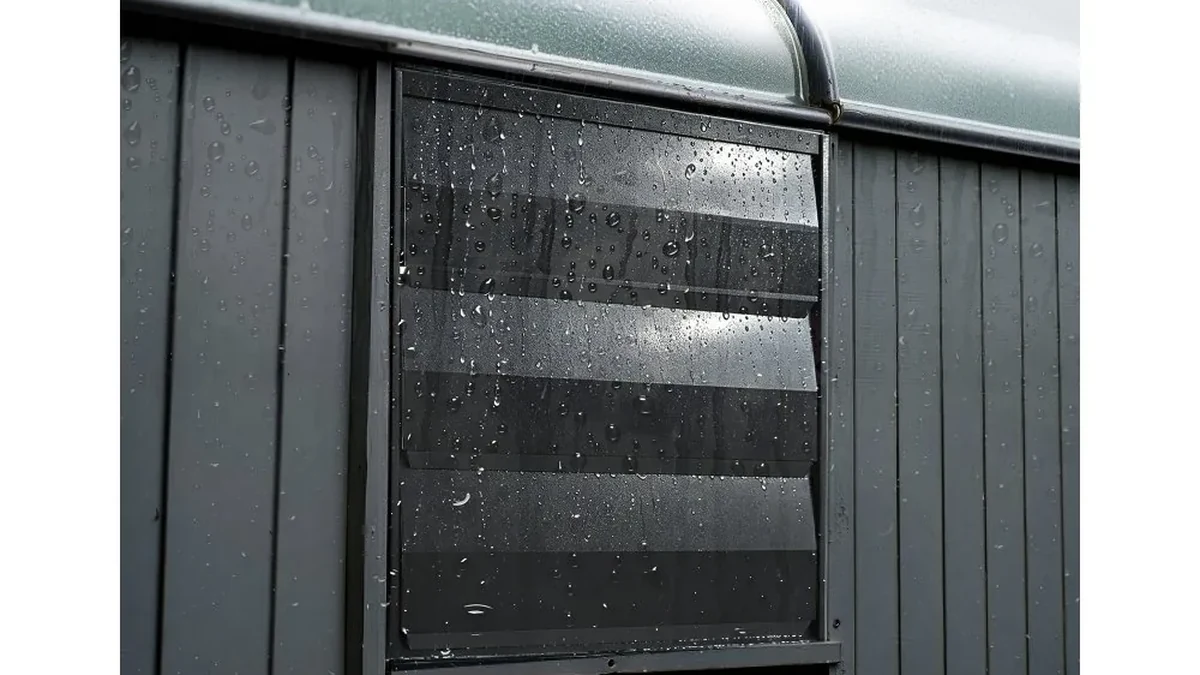
Exhaust fan sizing is simple math: CFM = (room volume x air changes per hour) / 60. A 22 x 22 x 8 ft garage at 6 air changes per hour needs about 387 CFM; a 10-inch shutter fan rated near 900 CFM covers it with margin. Use 5-6 air changes for a normal garage, 8 for a workshop, and 10+ for welding or painting. If the space is tight, add 30-50% to the rating so the fan does not choke on its own vacuum.
We explain the full calculation in the garage exhaust fan CFM guide, including the sizing table for one-car to barn-size spaces.
Circulators and tower fans: look at reach and modes

For indoor air movement, the specs that matter are velocity, oscillation, and control. A tower fan rated at 14-16 ft/s moves air across a room instead of just at the person sitting next to it, and 65-80 degree oscillation spreads that airflow evenly. Look for multiple speeds plus a timer if the fan runs overnight, and HEPA filtration if you buy a purifier-fan combo.
The 40-inch bladeless tower fan covers large bedrooms and living rooms with 12 speeds and an 8-hour timer, while the 26-inch cool-and-warm tower fan doubles as a low-cost heater for shoulder-season rooms.
Filters and replacements: match the model, not the shape

If your fan or purifier takes a filter, buy the replacement that matches the model’s rated dimensions. HEPA plus activated carbon layers catch pollen, pet hair, and smoke odors; a pure HEPA layer does not handle smells. Check the manufacturer’s filter life before you buy the machine, because the filter cost is part of the real price of the unit.
Common mistakes to avoid
- Sizing fans by diameter: two 14-inch fans can move very different CFM. Always read the CFM rating.
- Skipping the intake: an exhaust fan only works when fresh air can enter. Crack a door or add a passive vent.
- Buying a heater when you need circulation: warm-air tower fans add heat but move less air per watt than a pure circulator.
- Ignoring filter cost: a cheap machine with a pricey proprietary filter costs more over two years.
Recommended HVAC & ventilation products
- VEVOR 40-inch bladeless tower fan – 12 speeds, 65-degree oscillation, 8-hour timer
- VEVOR 26-inch cool and warm tower fan – heat plus circulation in one unit
- VEVOR replacement tower fan filter – HEPA + activated carbon for the 26-inch model
- VEVOR 10-inch shutter exhaust fan – garage and workshop ventilation
Browse the full HVAC & ductwork collection to compare exhaust fans, circulators, and accessories.
Measure the room, multiply length by width by height, multiply by the air changes per hour you need, and divide by 60. A typical garage needs 5-6 air changes per hour; workshops and fume-heavy spaces need more.
Circulators move air across a whole room and are quiet for background use, while tower fans direct a narrow airflow where you sit. Choose by reach and modes: check the coverage distance and speed settings.
Match the model number and dimensions, not just the shape: filters that look alike often differ in depth and media. Check the part number against the unit before ordering.
Count the room volume and add an exhaust fan sized to at least 6 air changes per hour, plus fresh-air intake on the opposite side. Fumes from painting or welding call for more air changes and local exhaust.
Related guides
For workshop ventilation math, read the garage exhaust fan CFM guide. If you are outfitting a workshop from scratch, the automotive tools buying guide covers the safety-first order to build the rest of your kit.
Frequently Asked Questions
How do I choose the right exhaust fan?
Size by CFM, not diameter: CFM = room volume x air changes per hour / 60. Use 5-6 air changes for a garage, 8 for a workshop, and 10+ for welding or painting.
What CFM do I need for a two-car garage?
About 380-470 CFM at 6 air changes per hour. A 10-inch shutter fan rated near 900 CFM covers it with margin.
Tower fan or air circulator - which should I buy?
Match the job. A tower fan with 65-80 degree oscillation and multiple speeds suits bedrooms and living rooms; add HEPA filtration if you also want air purification.
Why does my exhaust fan not pull air?
An exhaust fan needs an intake. Crack a door, open a window, or add a passive vent on the opposite wall, or the fan chokes on its own vacuum.
Related Articles
 Garage & Workshop
Shutter Exhaust Fan Buying Guide: Size It by CFM, Not by the Inches
Mike Thompson · Aug 2026 Garage & Workshop
3.5 CFM Vacuum Pump Buying Guide: The 3 Numbers That Matter
Mike Thompson · Aug 2026 Garage & Workshop
Garage Shelving Buying Guide: Weight Per Tier Beats Total
Mike Thompson · Aug 2026Browse Related Products
Products covered by these guides.
VEVOR Copper Pipe Bender, 7 Colorful Dies 1/4-7/8 inch 90 Degrees Forward and Reverse Bending
Original price was: $85.90.$79.03Current price is: $79.03.Shop now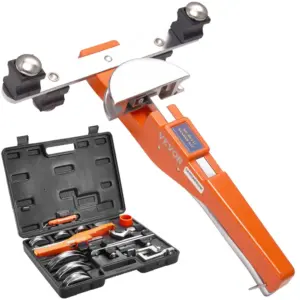
VEVOR Pipe Tube Bender, 1/4"-7/8" O.D. Ratcheting Tubing Bender
$80.90Shop now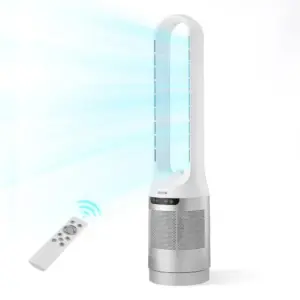
VEVOR Bladeless Tower Fan, 65° Oscillating Standing Fan, 12 Speeds & 4 Modes & 8H Timer, 14.76 ft/s High Velocity Floor Air Circulator
$92.90Shop now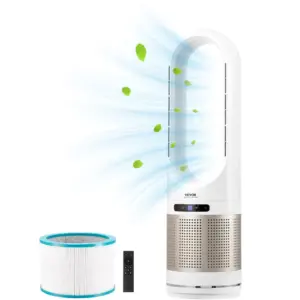
VEVOR Tower Fan Bladeless, 16.4ft/s Velocity Floor Fan that Blows Cold Air, 80° Oscillating 8-Speed Fans, 8H Timer
Original price was: $123.90.$93.99Current price is: $93.99.Shop nowGet new guides first
New buying guides, size guides and restock alerts — one email a week.