
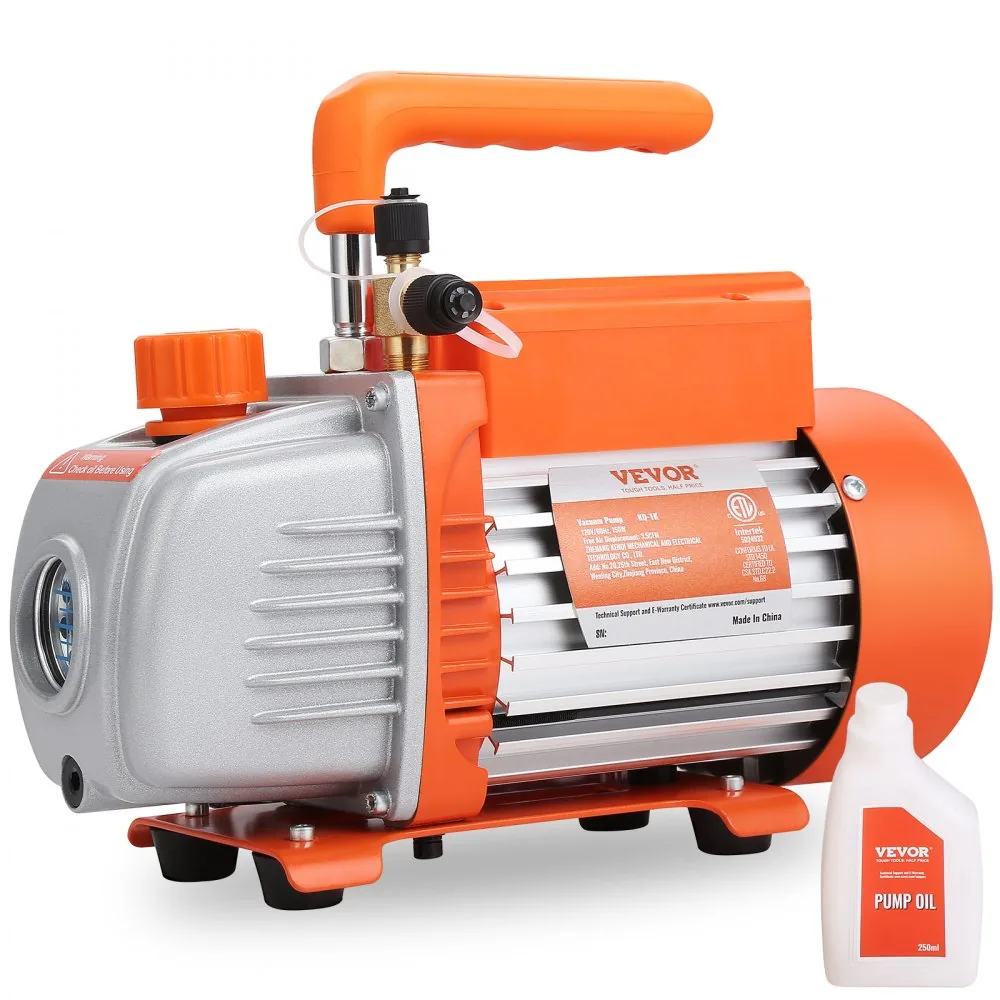

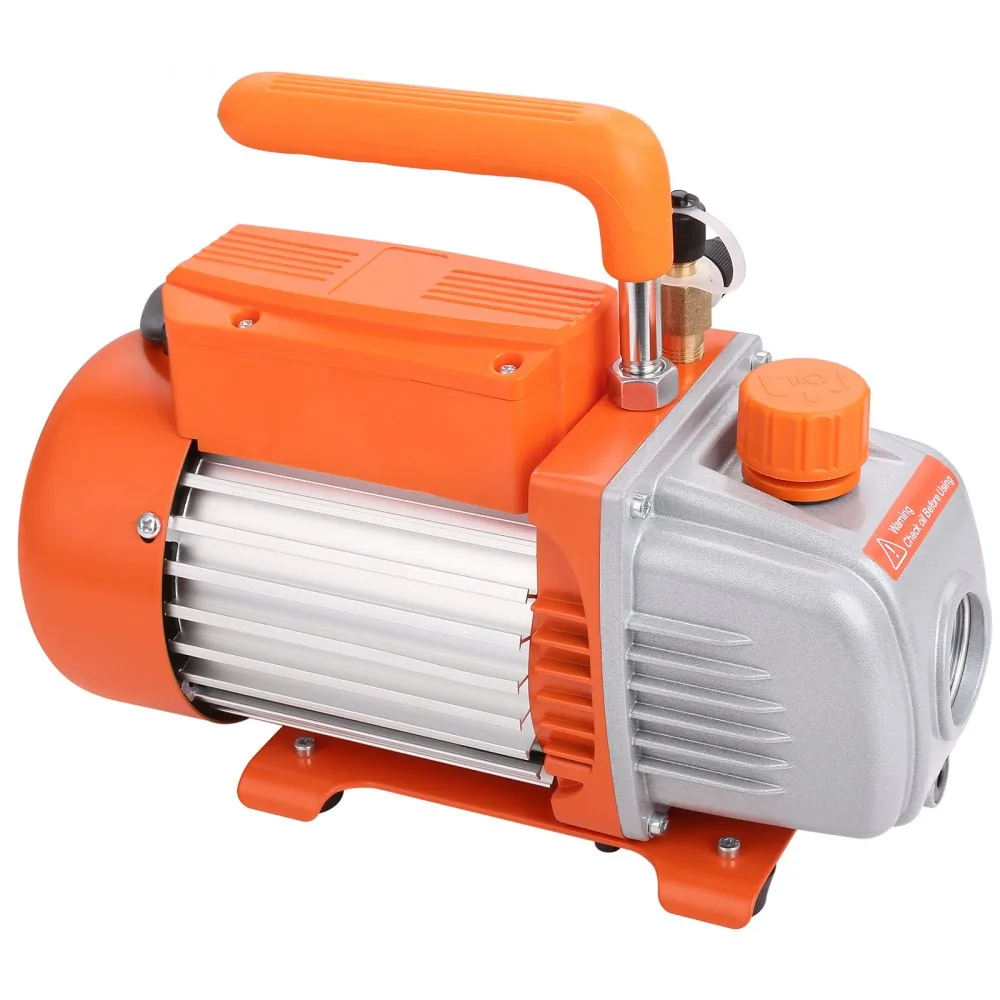
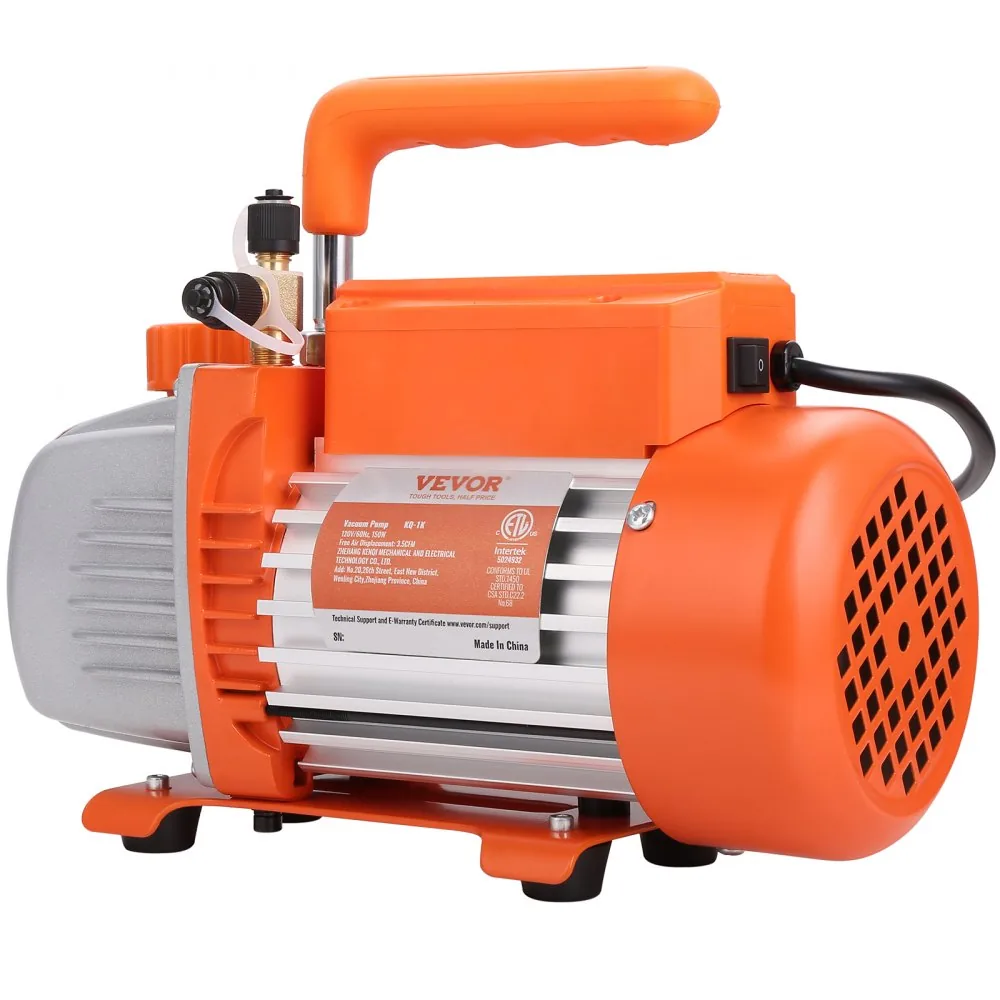
VEVOR 3.5 CFM 1/5 HP Single-Stage Vacuum Pump, 120V
$63.99Wholesale price, no minimum order
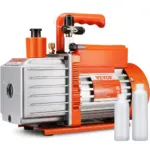
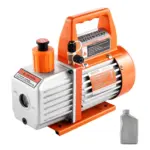
Key Features
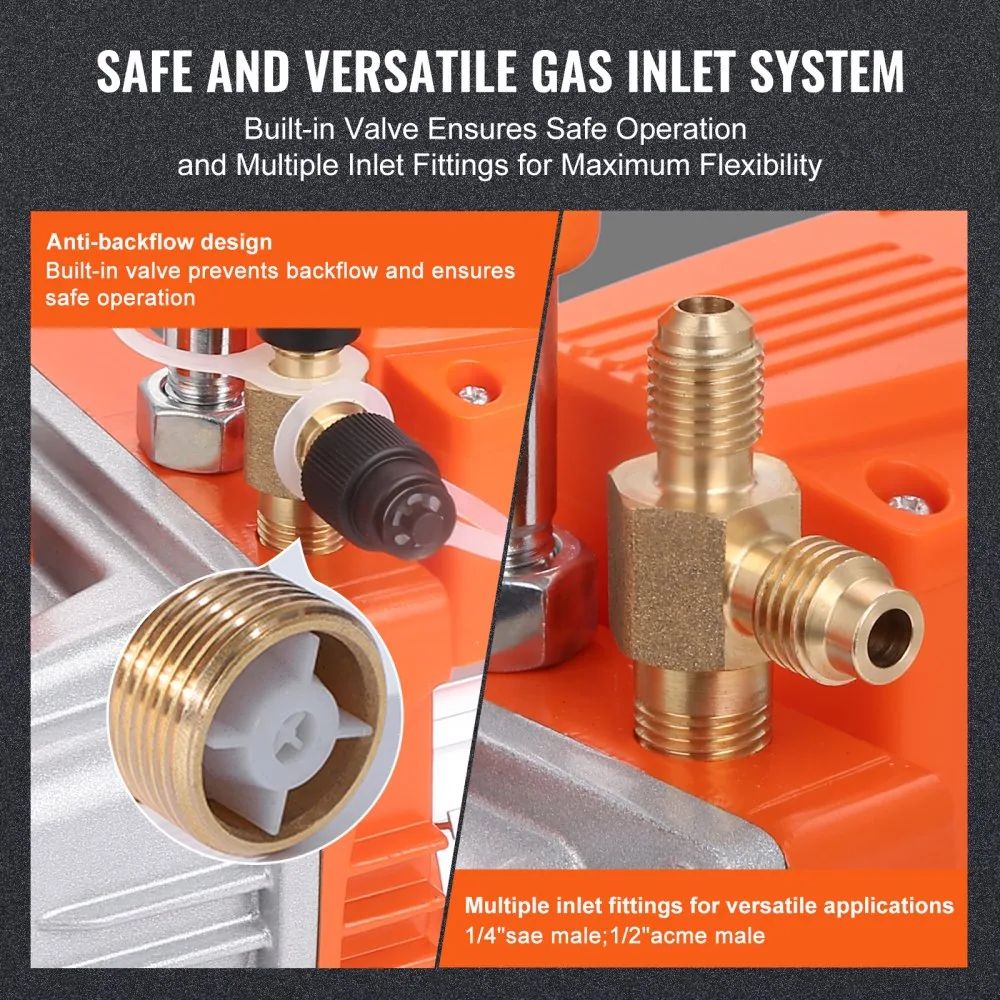
Two common inlets, 1/4 in.
Out of stock
Quick Answer
This compact 3.5 CFM, 1/5 HP single-stage pump is rated to 40 microns and runs at 1,720 RPM on 120V. It has 1/4 in. SAE and 1/2 in. ACME inlets and arrives with one 250 ml bottle of oil. It is a good fit for small AC and refrigeration jobs where the pump must stay light and easy to store.
Description
At a Glance
This compact 3.5 CFM, 1/5 HP single-stage pump is rated to 40 microns and runs at 1,720 RPM on 120V. It has 1/4 in. SAE and 1/2 in. ACME inlets and arrives with one 250 ml bottle of oil. It is a good fit for small AC and refrigeration jobs where the pump must stay light and easy to store.
3.5 CFM Single-Stage Vacuum Pump
This compact 3.5 CFM, 1/5 HP single-stage pump is rated to 40 microns and runs at 1,720 RPM on 120V. It has 1/4 in. SAE and 1/2 in. ACME inlets and arrives with one 250 ml bottle of oil. It is a good fit for small AC and refrigeration jobs where the pump must stay light and easy to store.
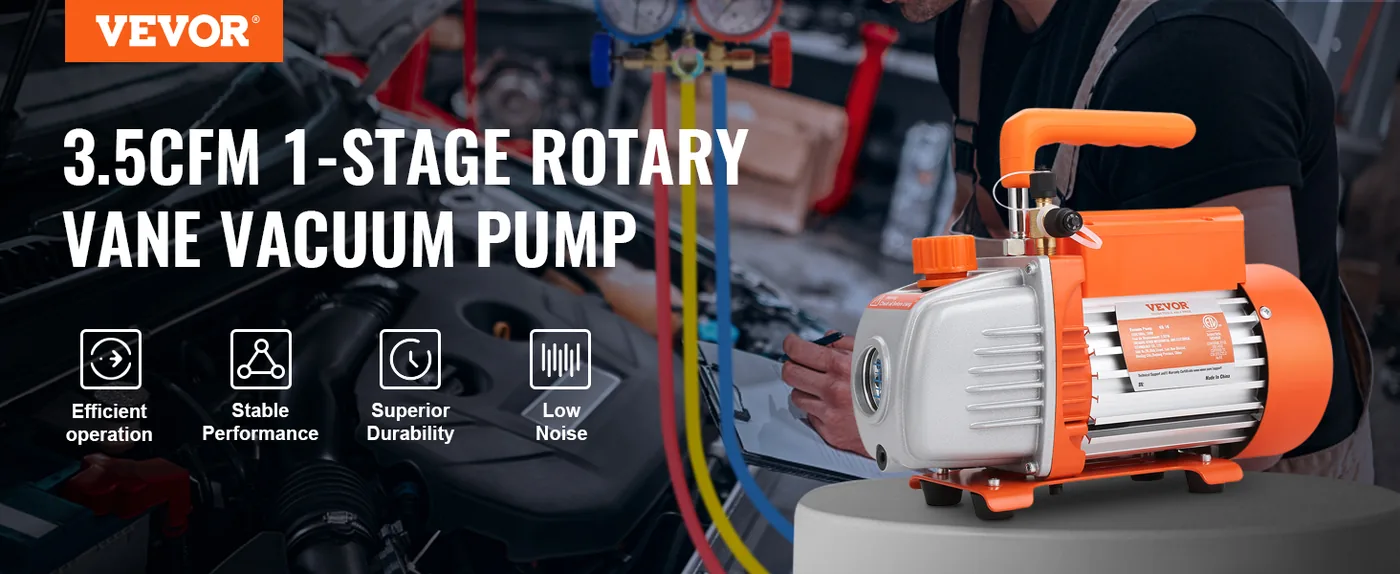
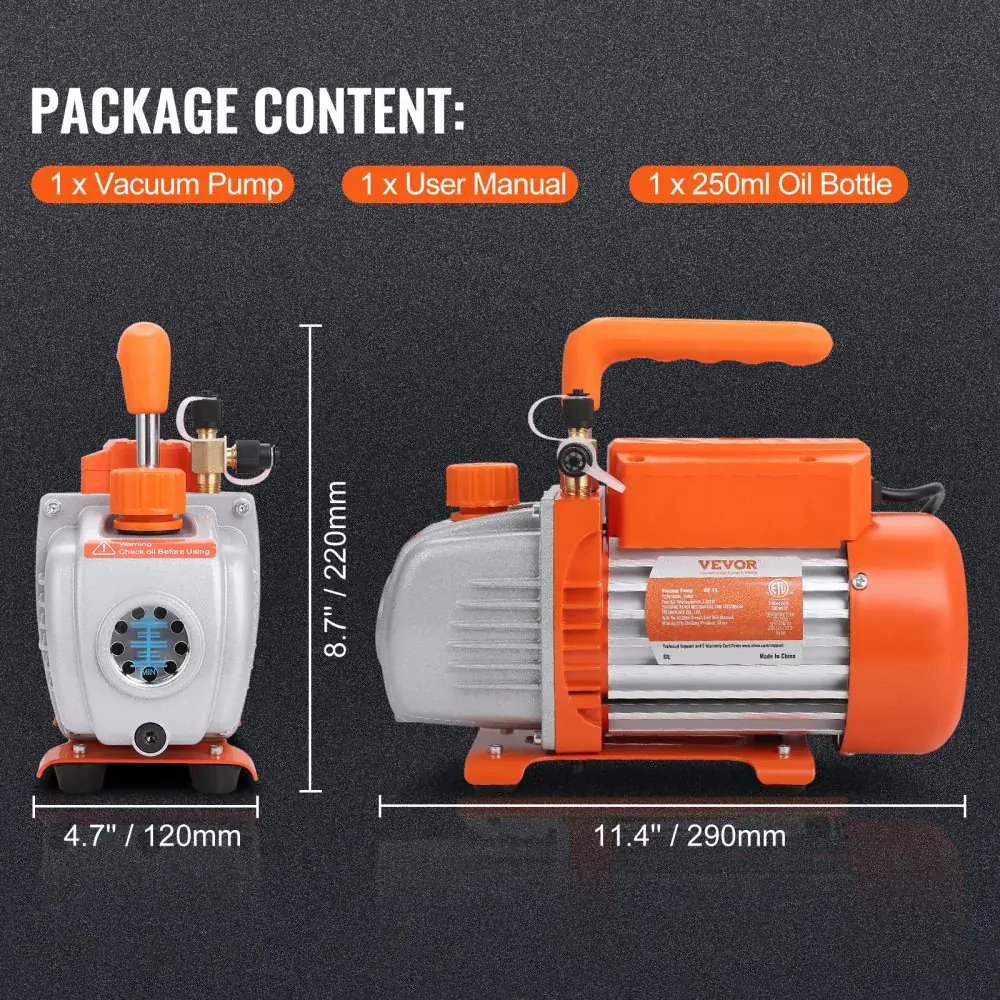
What is in the box: Vacuum pump, user manual and one 250 ml bottle of vacuum pump oil.
What 3.5 CFM and a single-stage design mean
Free air displacement tells you how much air the pump can move at its inlet under flow conditions. It is not the same as the flow rate once the system is near deep vacuum. A higher CFM pump tends to shorten the time needed to remove the initial volume of air, while the final micron reading depends on the pump’s ultimate vacuum, the condition of its oil, the hoses, the manifold seals and the leak tightness of the system.
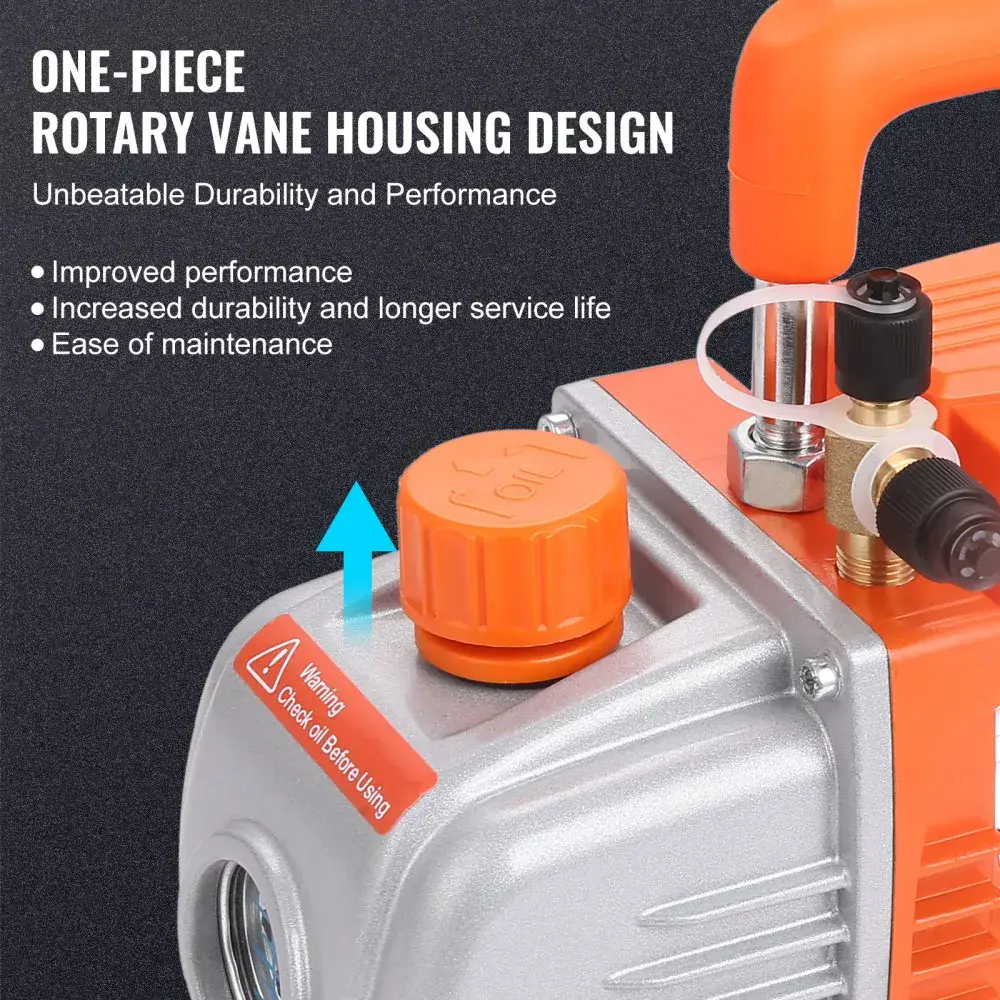
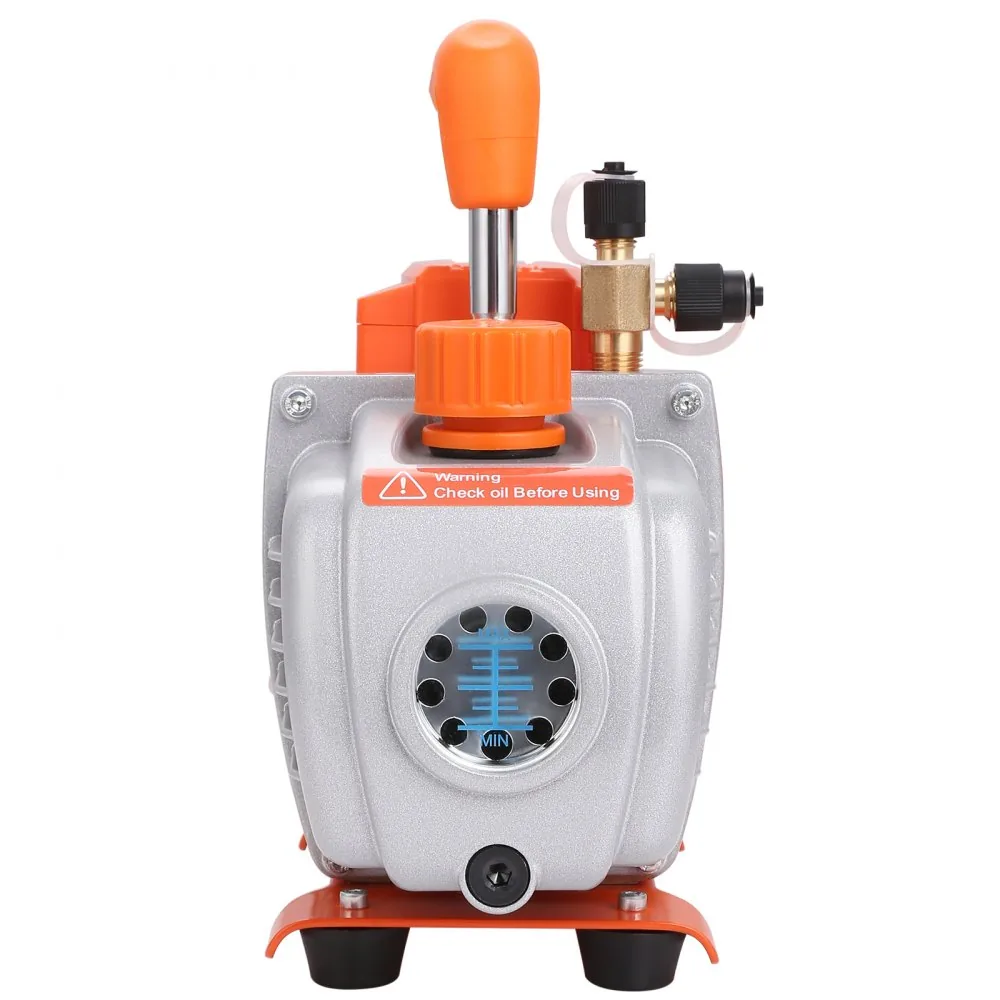
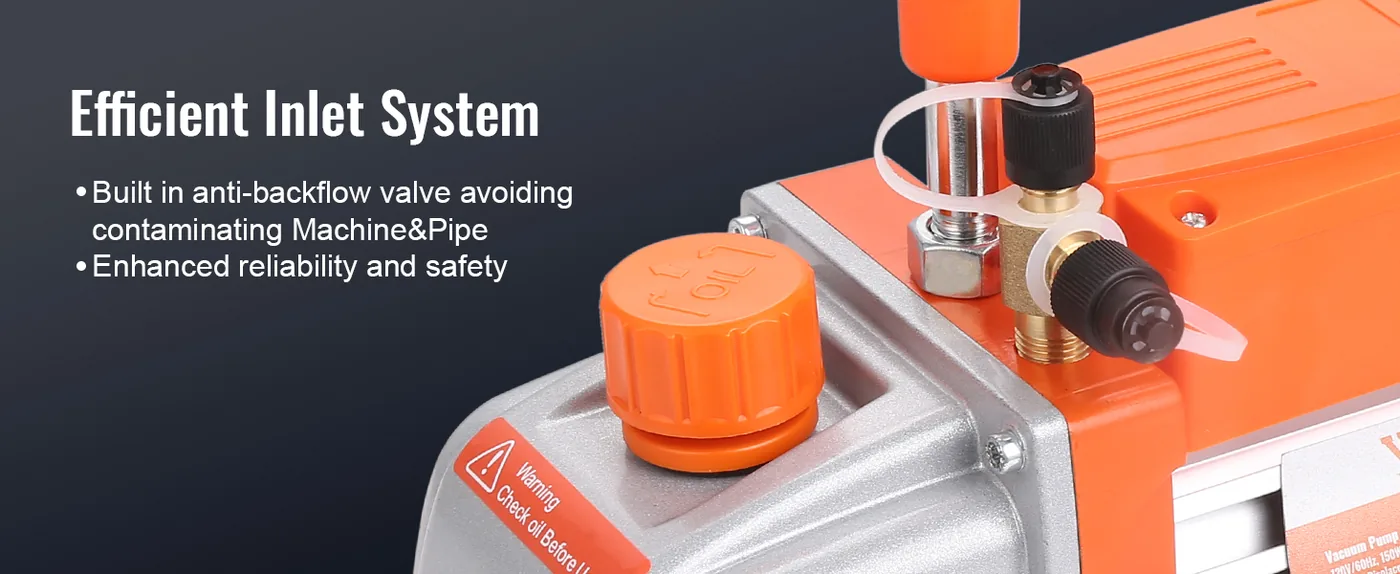
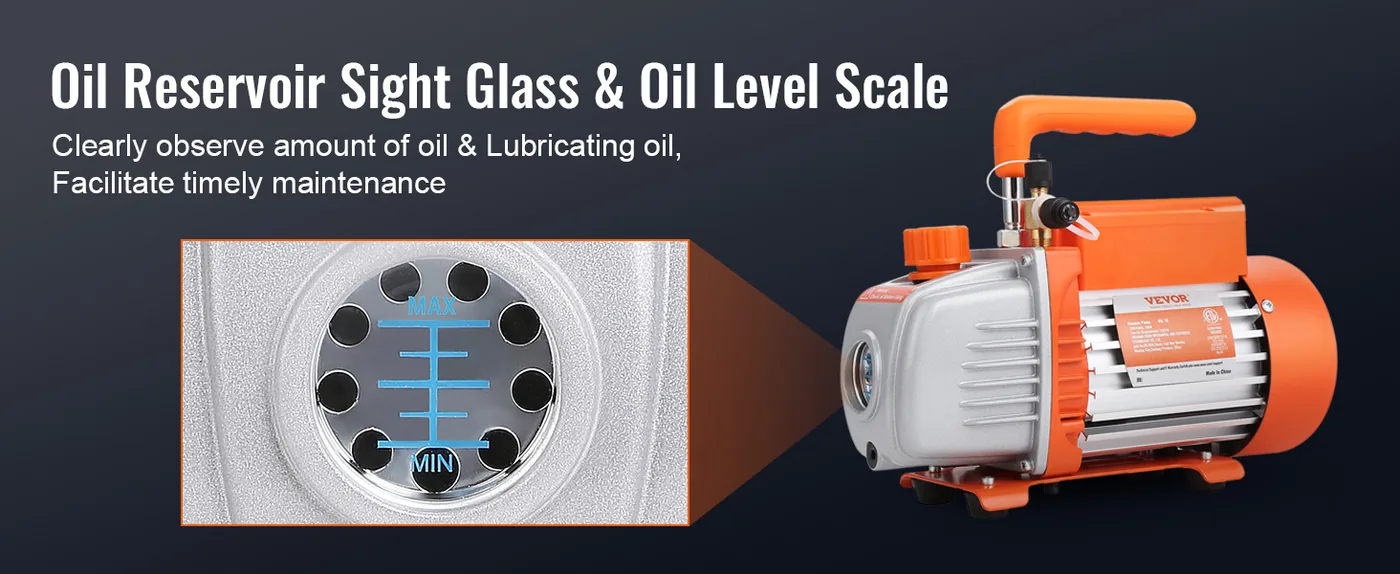
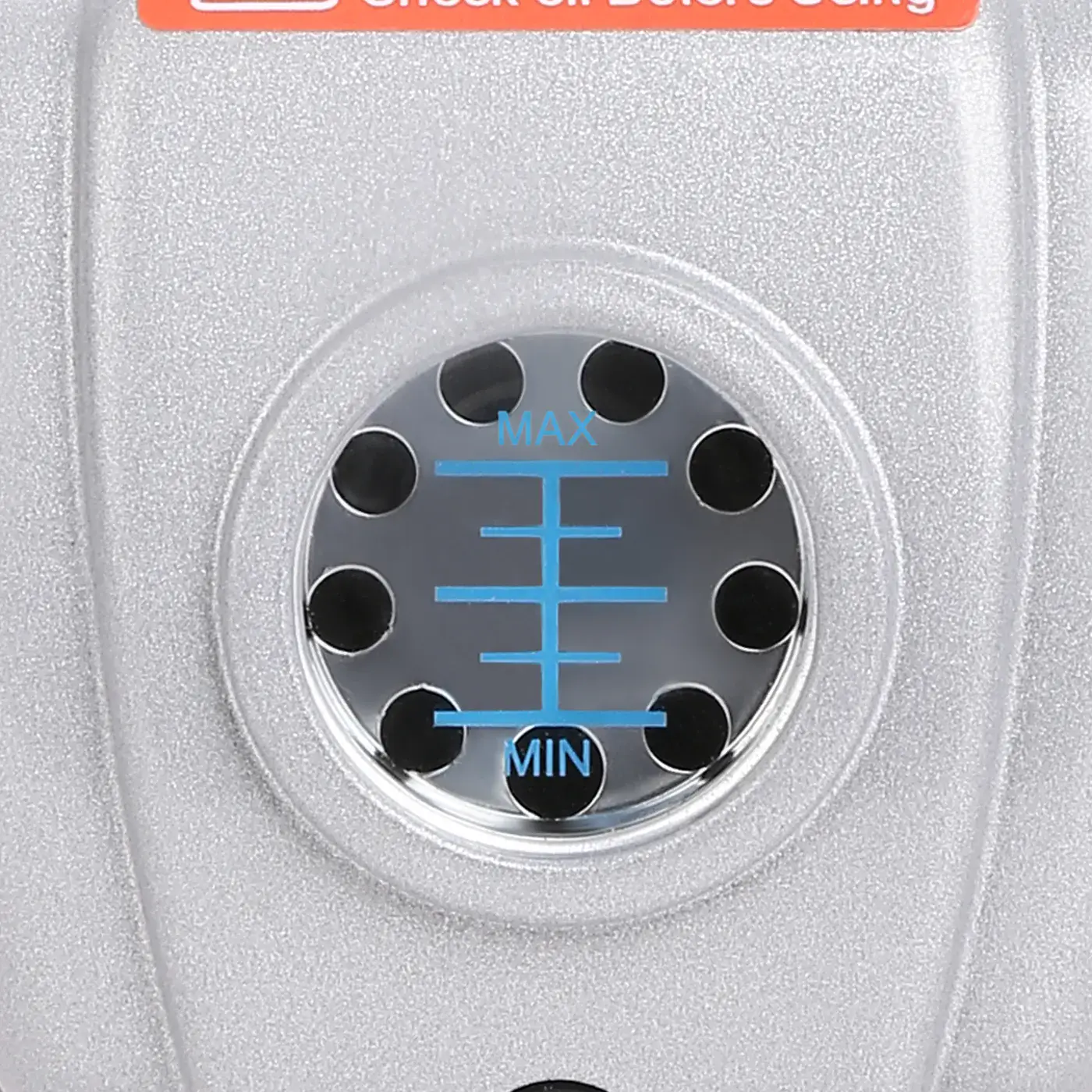
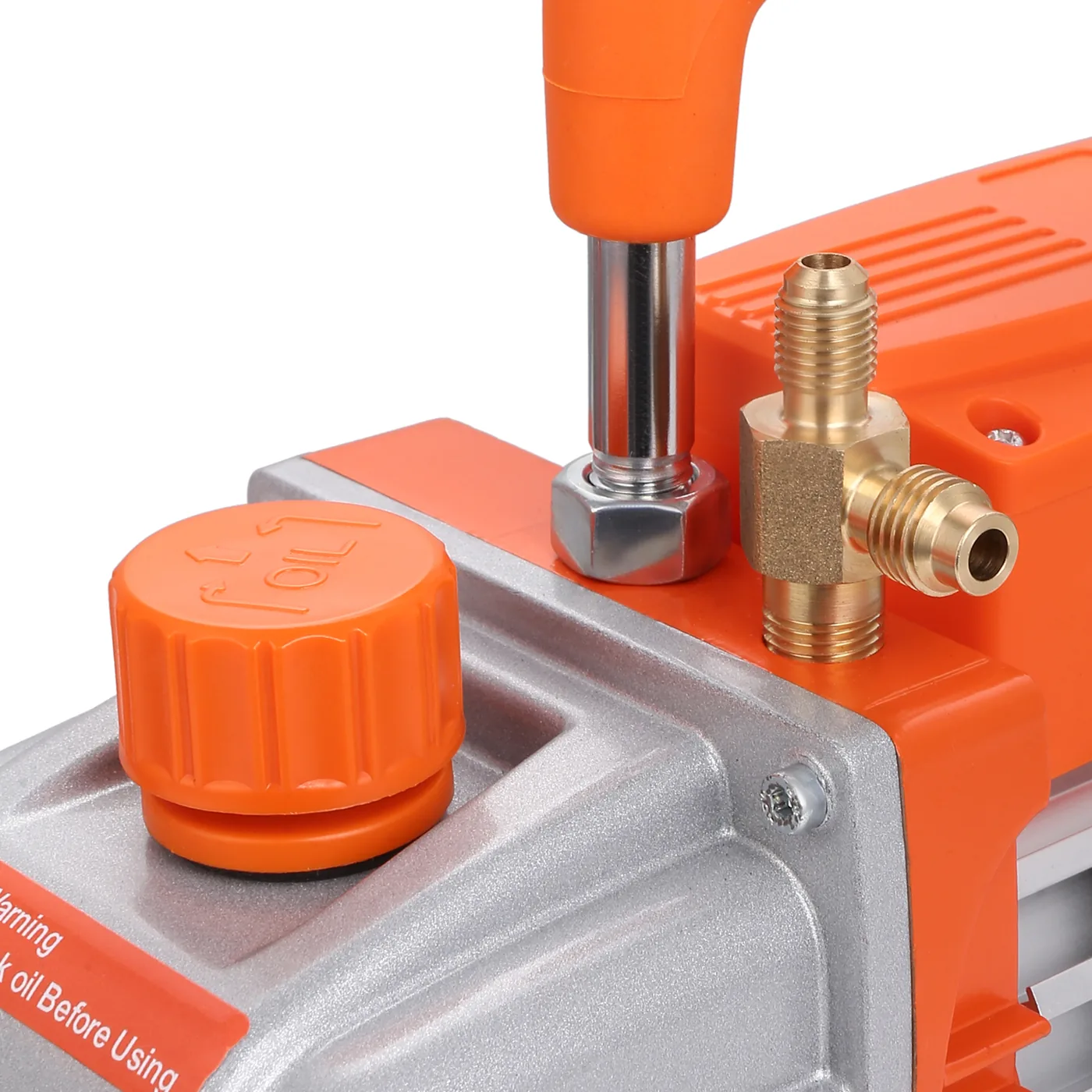
A small pump still needs a leak-free setup. Check the service hoses and manifold seals before blaming the pump for a slow micron rise. The 250 ml oil bottle covers the initial fill, but oil should be replaced when it becomes cloudy, contaminated or moisture-loaded. Keep the oil level between the sight-glass marks and never run the pump with the inlet open to atmosphere for an extended period.
Fittings and service setup
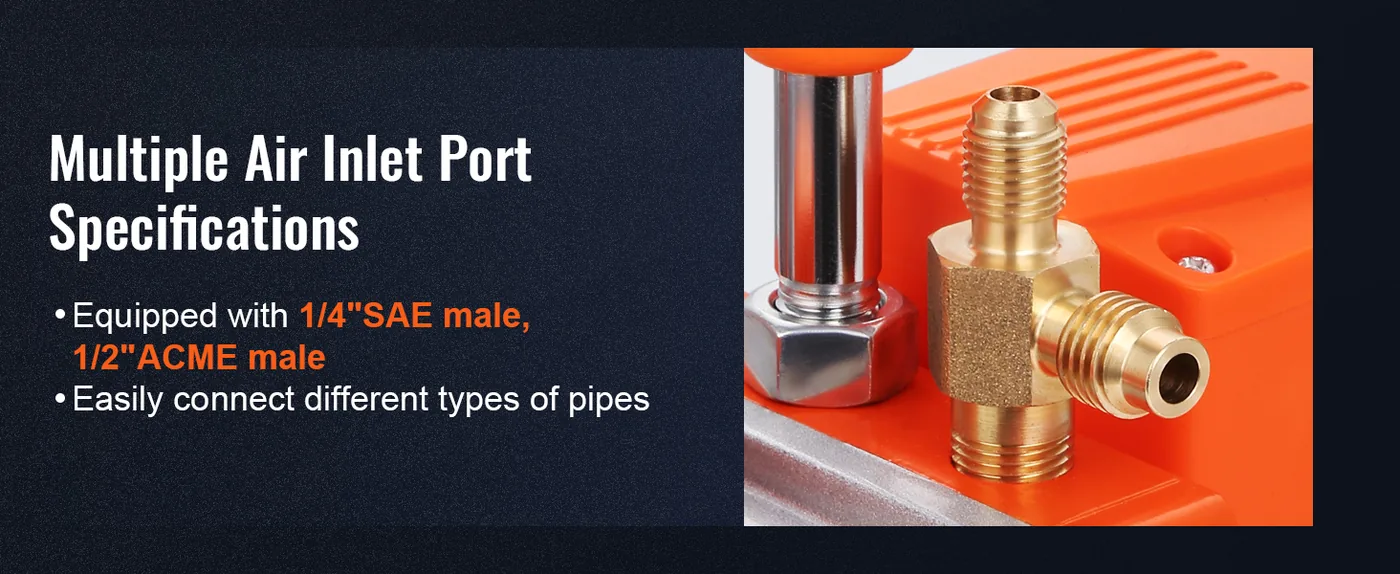
The listed intake fittings are 1/4 in. SAE male and 1/2 in. ACME male. Check the thread and flare style against your manifold before connecting a hose. Use short, pressure-rated service hoses, replace damaged gaskets and keep the hose ends capped when they are not in use. A small air leak or a worn Schrader-core tool can make a good pump look weak because the micron reading never settles.
Where this pump fits
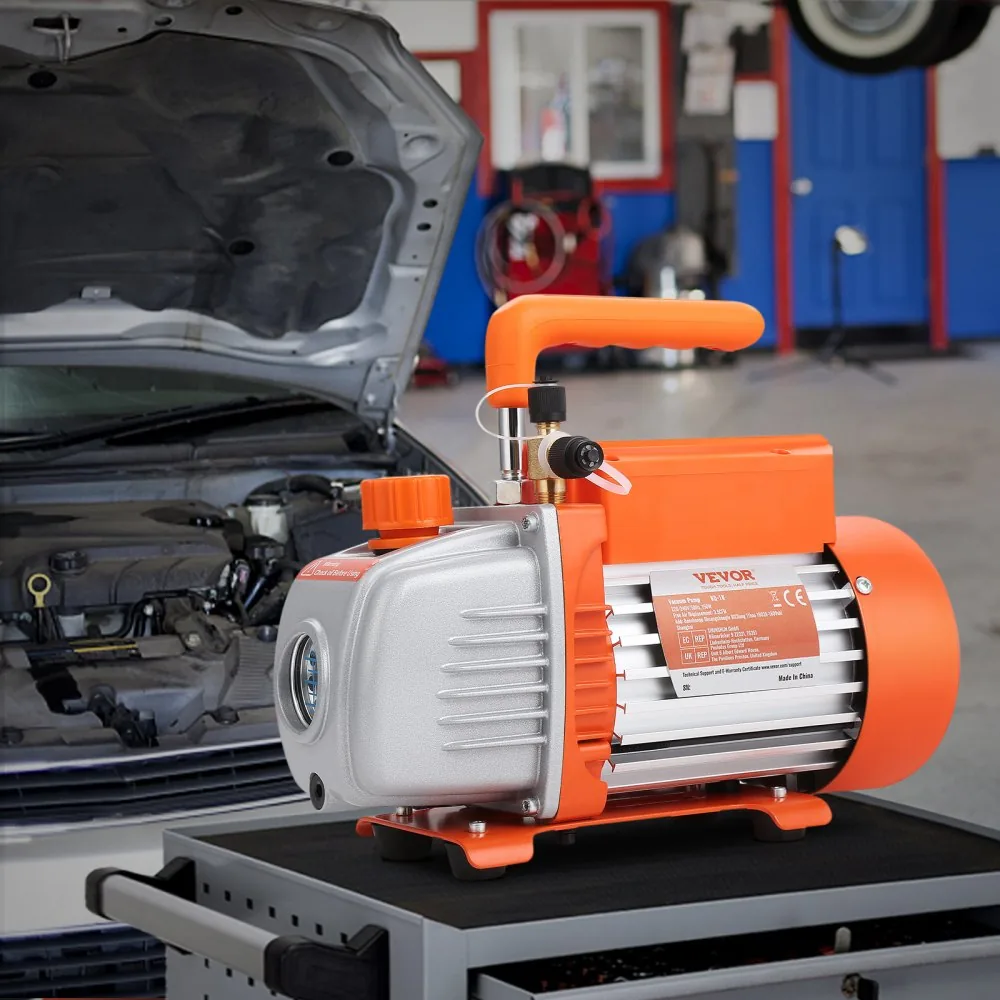
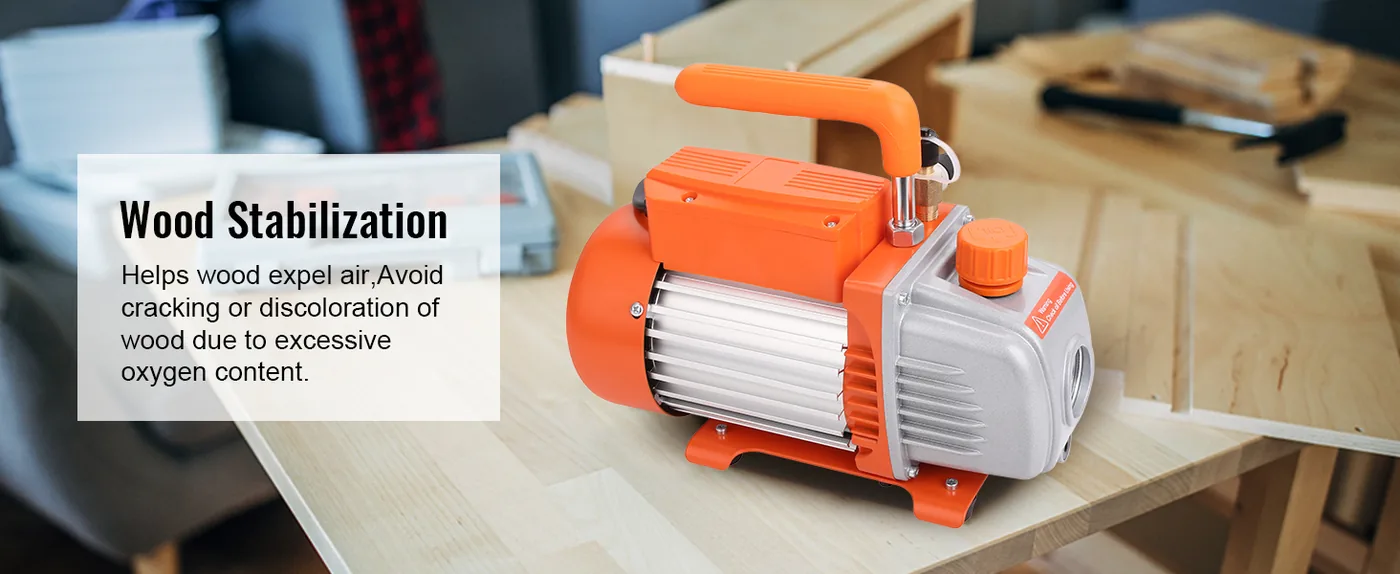
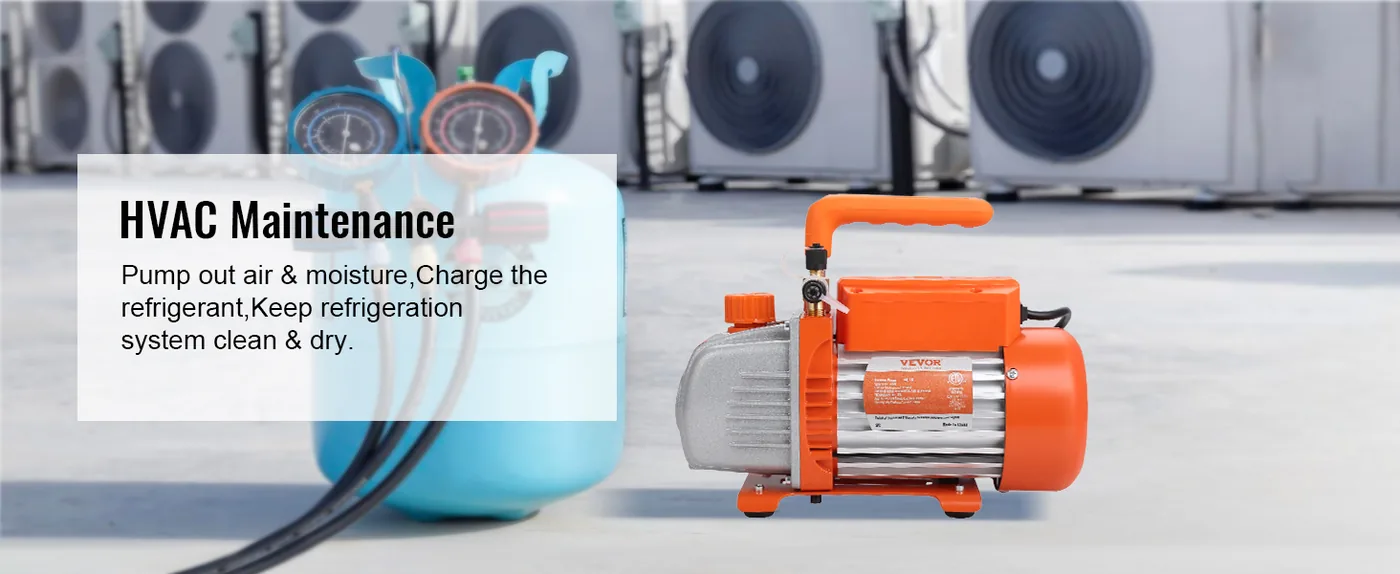
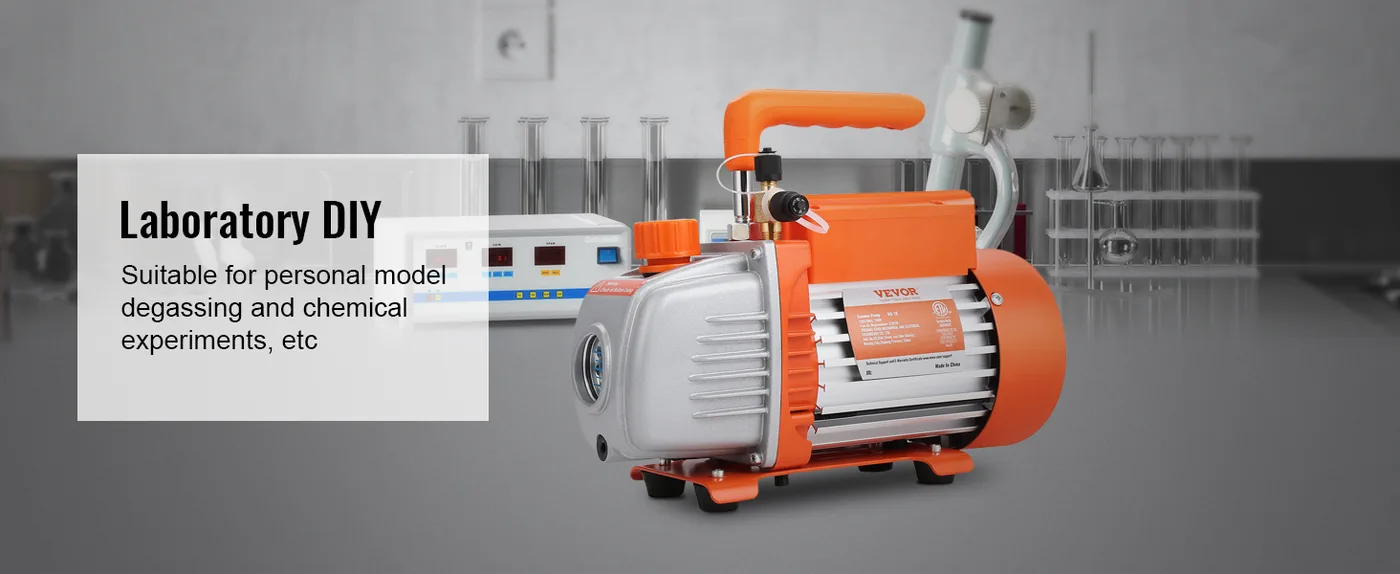
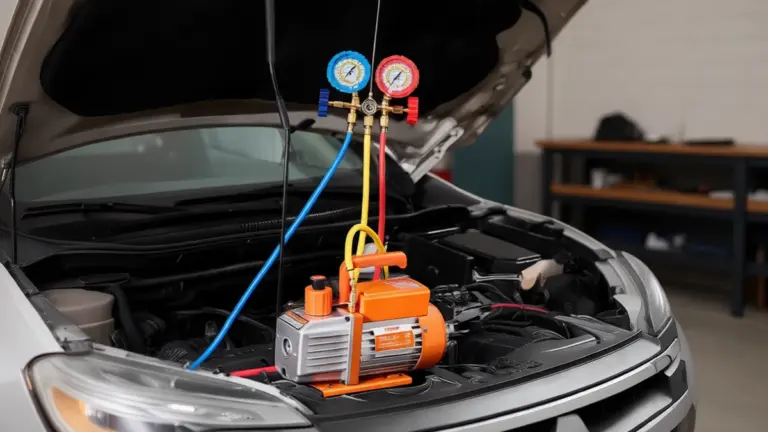
Use it for passenger-car AC, compact refrigerators, dehumidifiers and small sealed systems. It is also useful for teaching or occasional DIY work because the controls and oil sight glass are simple. For a large system or repeated all-day service, the higher-displacement 4.5 to 7 CFM models reduce waiting time.
- Evacuation: pull down with the service valves arranged according to the equipment procedure, then let the pump run long enough for moisture to leave the system.
- Leak check: isolate the pump and watch the vacuum hold. A rising gauge points to a leak or outgassing, not a reason to add refrigerant.
- Oil check: keep oil between the sight-glass marks and replace it when it looks cloudy, dark or contaminated.
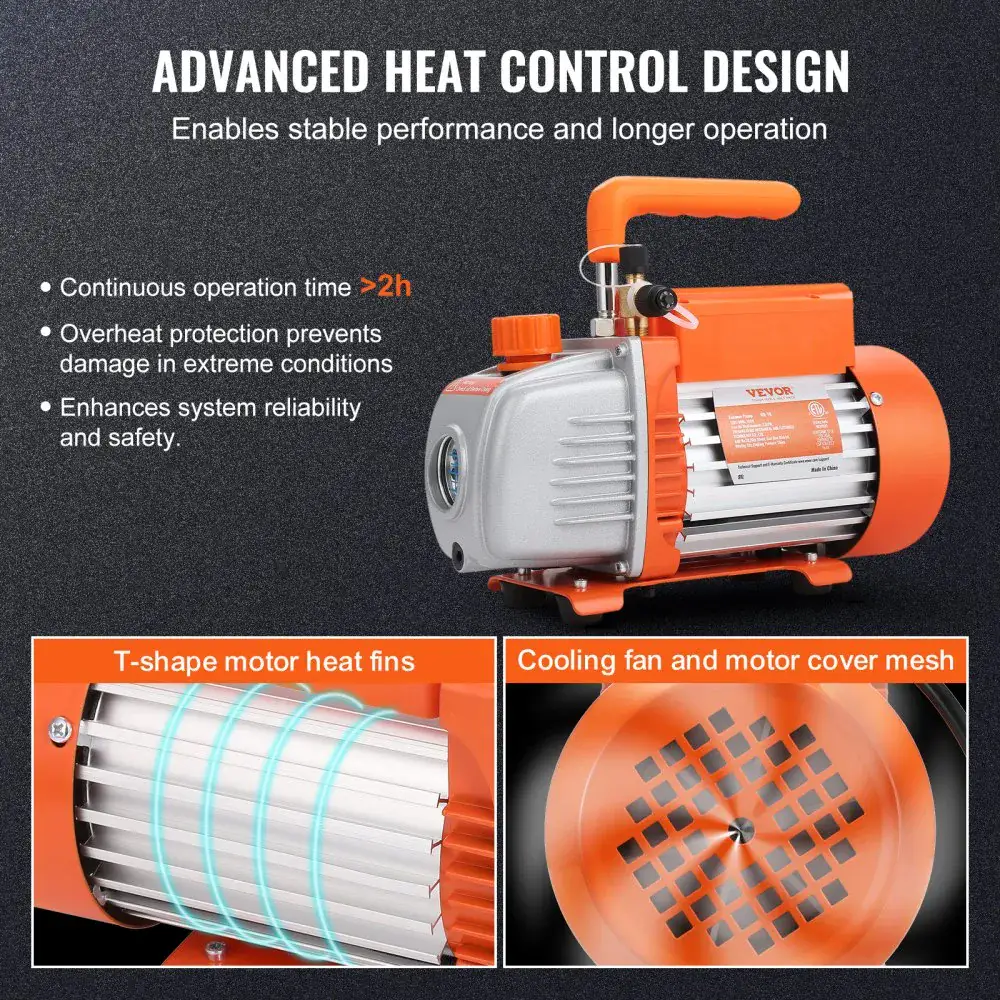
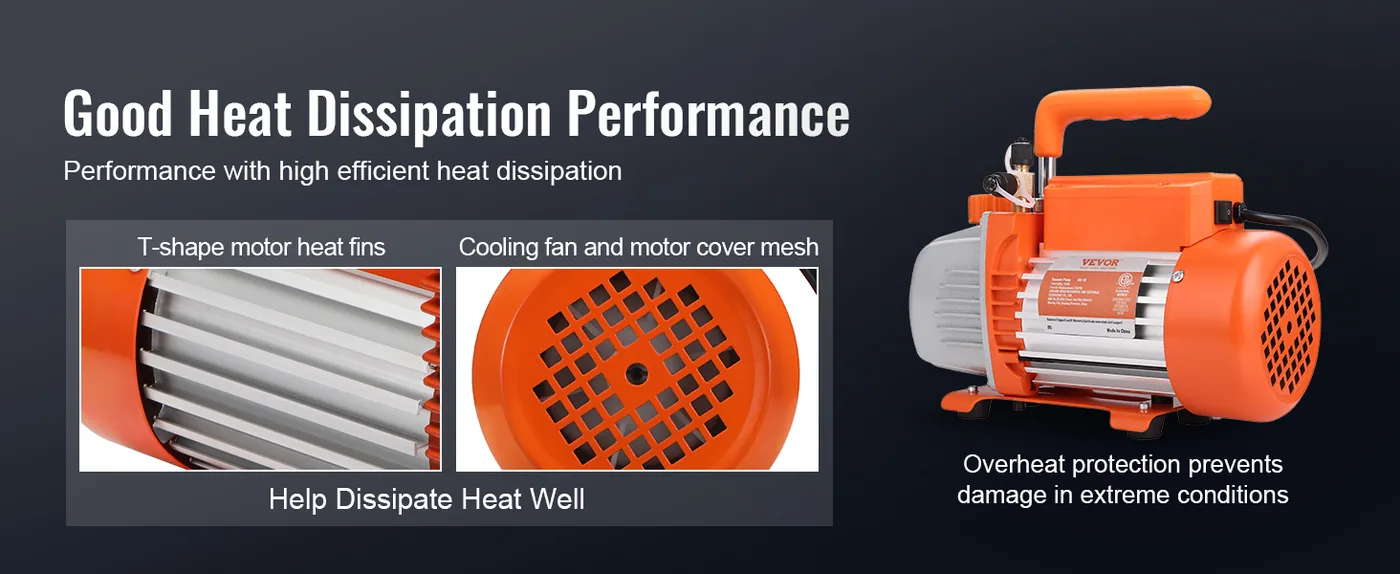
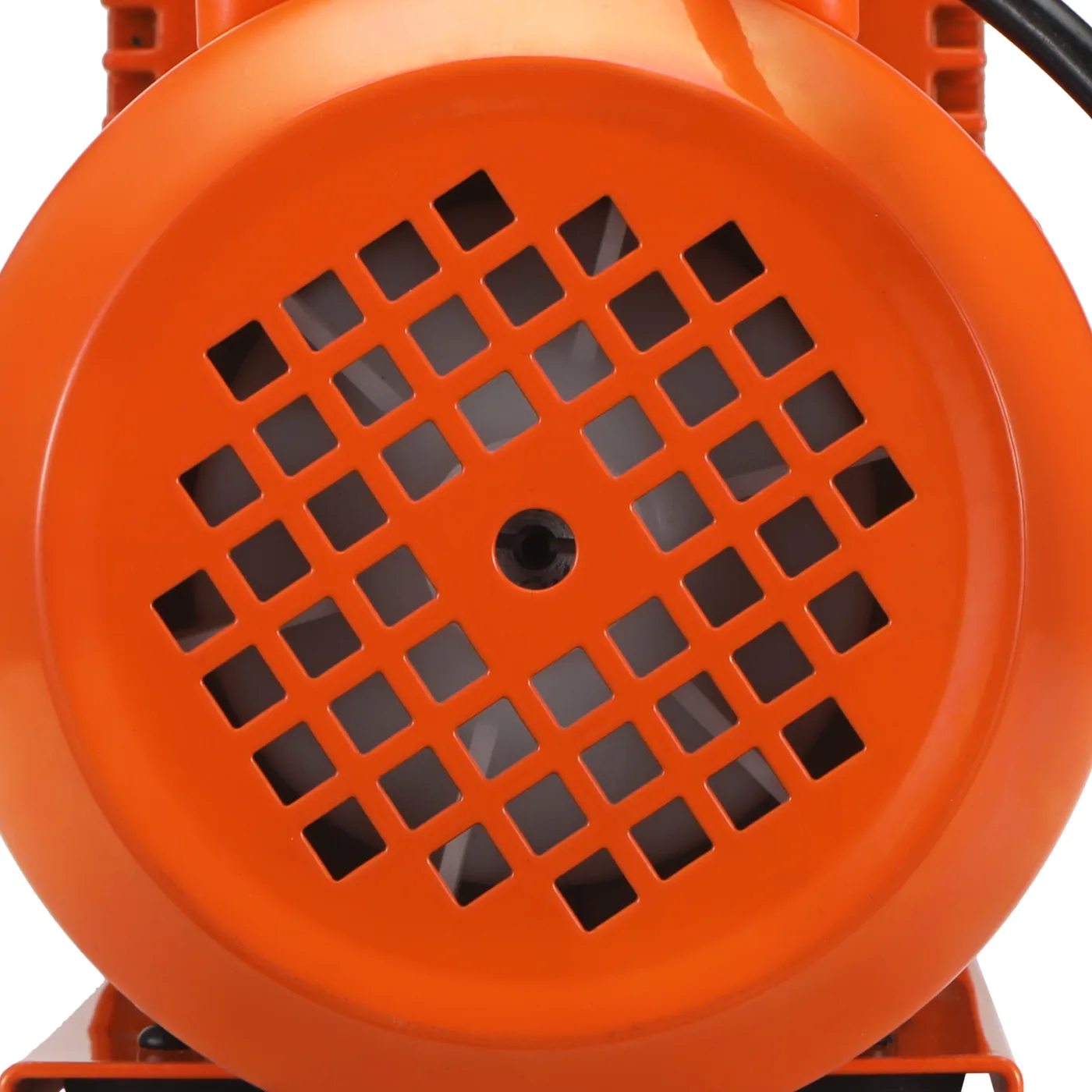
- Heat: use the cooling fan and give the pump a sensible duty cycle; a hot body is a warning to stop and inspect.
Choosing this pump
Choose this pump if light weight and a small footprint matter more than speed. Move up to the 4.5 CFM pump for more displacement, or the 5 to 7 CFM two-stage pumps for deeper vacuum and a layout aimed at more sustained HVAC work.
Before the first job
Confirm the supply voltage, set the pump on a level surface and check that the exhaust is not blocked. Fill the oil to the correct mark, close the inlet valve, and run a short no-load check while watching for unusual noise or oil movement. For refrigerant work, follow the equipment maker’s evacuation target, use a micron gauge, and never use vacuum alone as proof that a system is leak-free.
Wholesale pricing
One unit, wholesale pricing. The listed price is the wholesale rate for one pump. There is no minimum order quantity and no separate tier price, so buying one unit and buying several units use the same listed unit price.
Performance & Applications
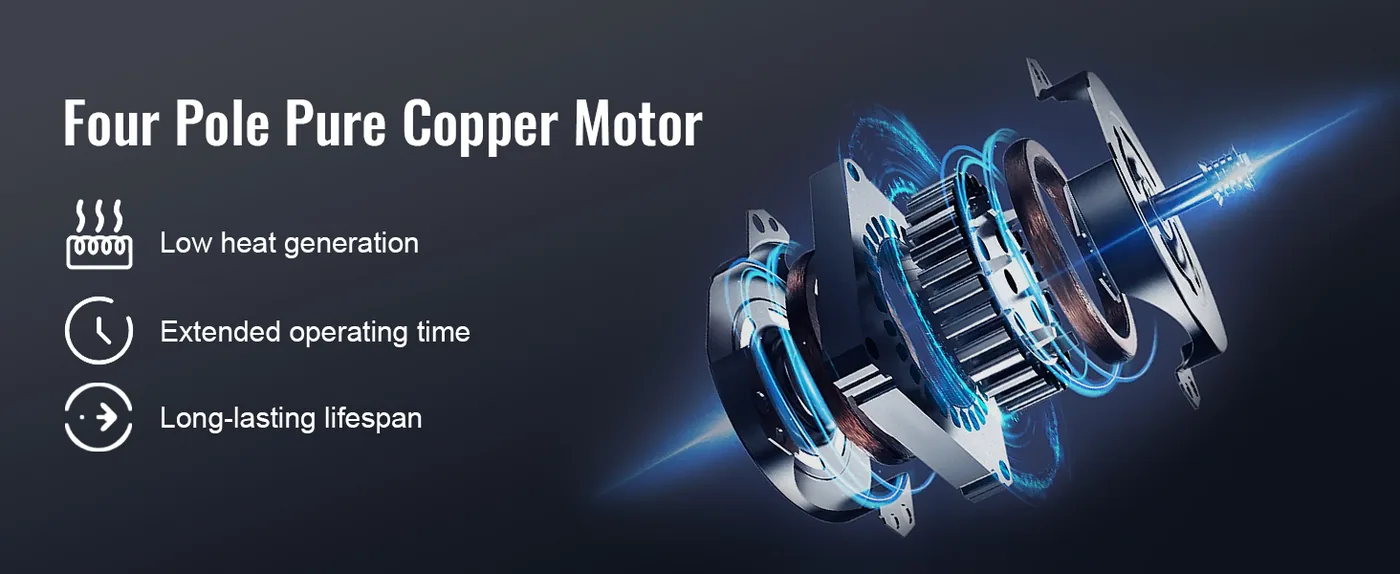

Key Features
Specifications
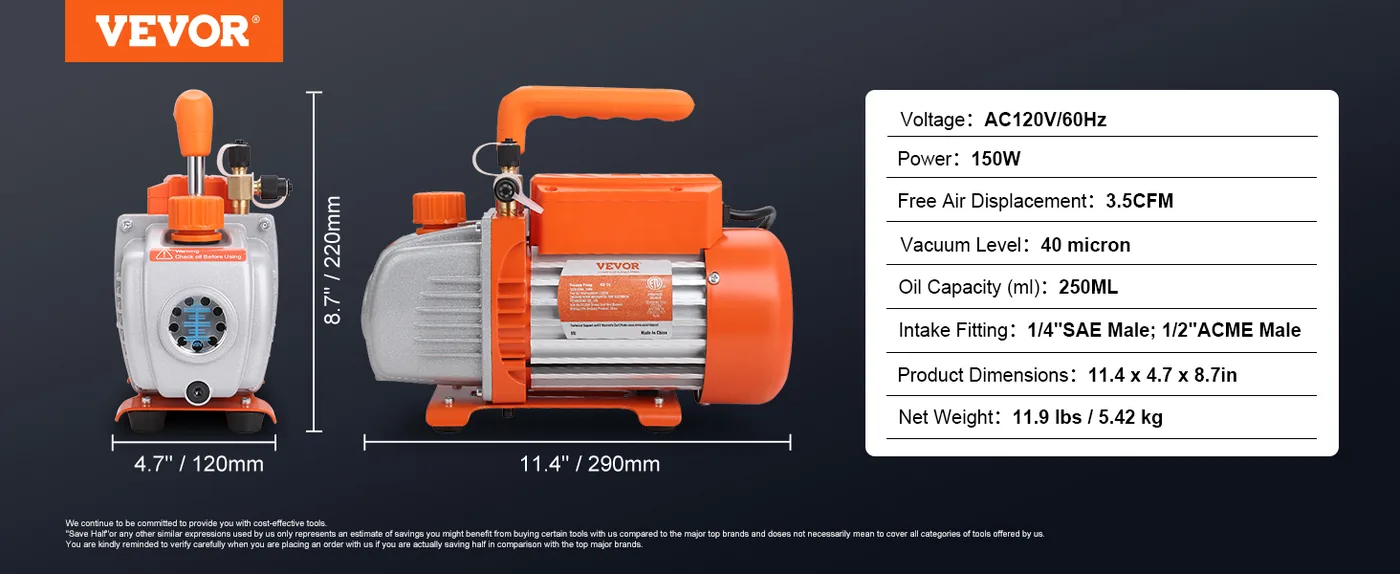
| Brand | VEVOR |
| Item Model Number | TW-1K |
| Free Air Displacement | 3.5 CFM |
| Ultimate Vacuum | 40 Microns |
| Intake Fitting | 1/4"SAE male; 1/2"ACME male |
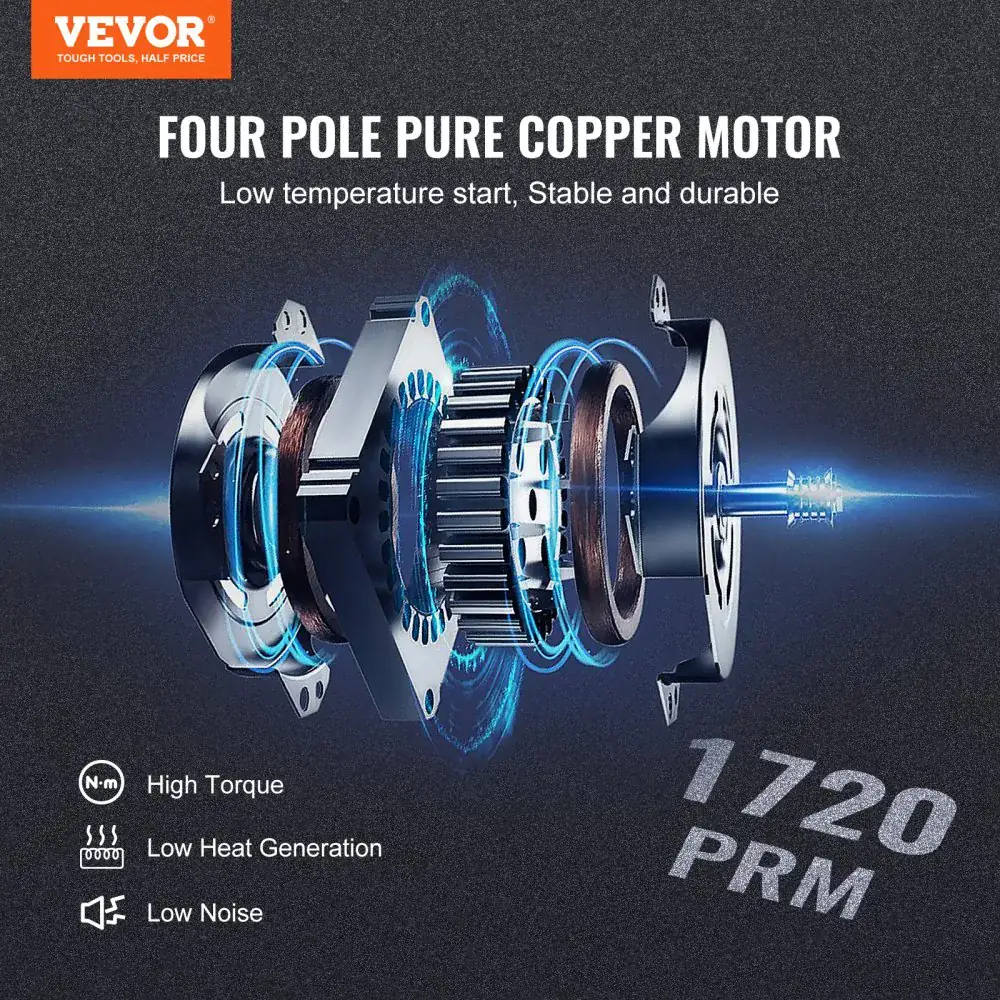
| Speed | 1720 RPM |
| Voltage/Frequency | 120V/60 Hz |
Be the first to review “VEVOR 3.5 CFM 1/5 HP Single-Stage Vacuum Pump, 120V”
Frequently Asked Questions
Q: What does 3.5 CFM mean on this pump?
A: CFM is free air displacement at the inlet. It describes how quickly the pump moves air before the system is at deep vacuum; the final result also depends on the pump's ultimate vacuum, hoses, seals and the leak tightness of the system.
Q: Is this a single-stage pump?
A: Yes. The specification table describes this model as single-stage.
Q: What fittings can I connect?
A: Intake fittings: 1/4 in. SAE male and 1/2 in. ACME male. Check the thread, flare and hose gasket against your manifold before connecting.
Q: What does 40 microns ultimate vacuum mean?
A: The page lists 40 microns ultimate vacuum. A lower pressure or micron number represents a deeper vacuum, but the system must be leak-free for the reading to settle.
Q: Does the box include gauges, hoses and oil?
A: Vacuum pump, user manual and one 250 ml bottle of vacuum pump oil.
Q: Can it run on its listed voltage?
A: The voltage is listed as 120V / 60 Hz. Match that figure to the nameplate and the outlet before use.
Q: Can I use it with R32 or R1234yf?
A: Only when the product page and your service procedure say the pump is suitable for that refrigerant. The standard single-stage kits are not the R32 explosion-proof version. Use compatible hoses, gauges and recovery equipment.
Q: How often should I change the oil?
A: Check the sight glass before every job and change the oil when it becomes cloudy, dark or contaminated. A moisture-loaded system may require a change sooner. Follow the manual and the application's oil guidance.
Q: Can I carry it between jobs?
A: The listed pump-body dimensions are 4.7 x 11.4 x 8.7 in. Check the filled weight and case layout before planning to carry it with one hand.
Q: What is the wholesale price for one unit?
A: The listed price applies to one unit. There is no minimum order quantity and no separate tier price.
Questions & Answers
Related products
-
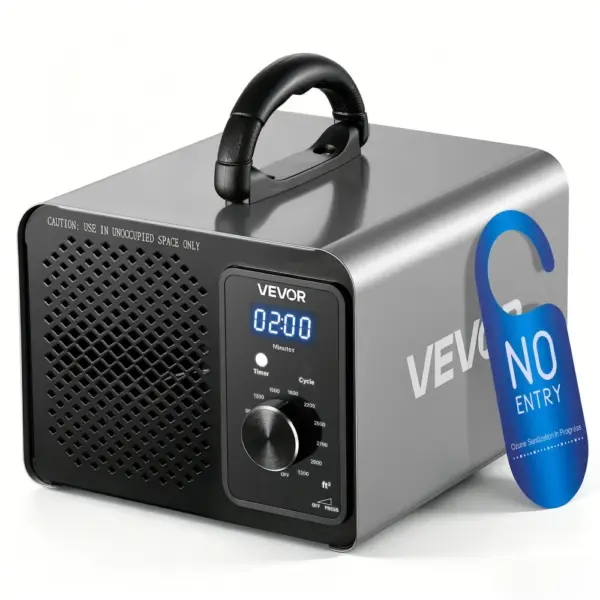
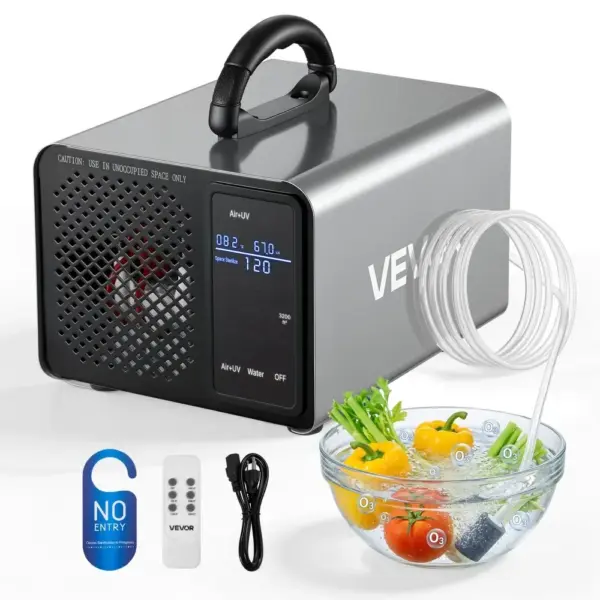
VEVOR Ozone Generator, 36000mg/h Commercial Ozone Machine, 15s Delayed Start & Timer & Rotary Encoder Knob & Odor-Treatment Cycle Mode
Original price was: $48.90.$46.46Current price is: $46.46. -
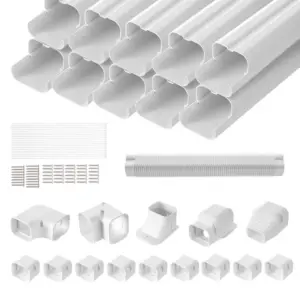
VEVOR Mini Split Line Set Cover 3-inch W 17.7Ft L
Original price was: $66.90.$63.60Current price is: $63.60.
Top Rated in HVAC & Ductwork
-
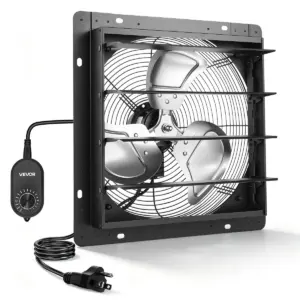
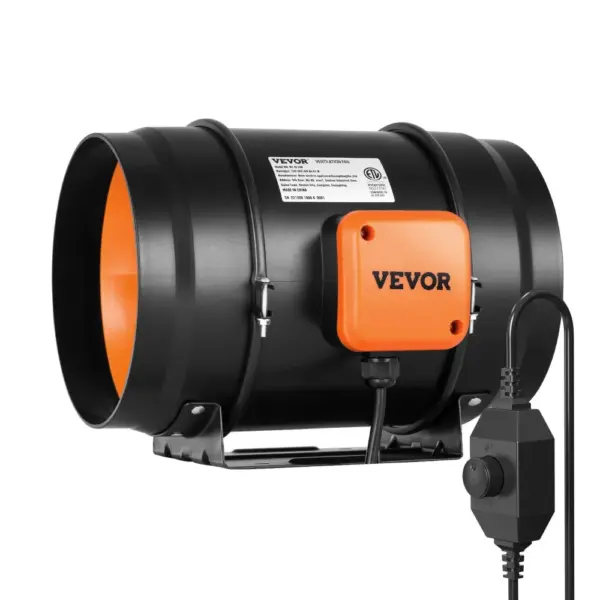
VEVOR Inline Duct Fan, 8-Inch 750 CFM with Variable Speed Controller, Quiet AC-motor Ventilation Exhaust Fan for Cooling Booster, Grow Tents
Original price was: $63.90.$57.51Current price is: $57.51.

New Arrivals in HVAC & Ductwork
-
VEVOR Tower Fan Bladeless, 16.4ft/s Velocity Floor Fan that Blows Cold Air, 80° Oscillating 8-Speed Fans, 8H Timer
Original price was: $123.90.$93.99Current price is: $93.99.





0 reviews for VEVOR 3.5 CFM 1/5 HP Single-Stage Vacuum Pump, 120V
Customer reviews
No reviews found