
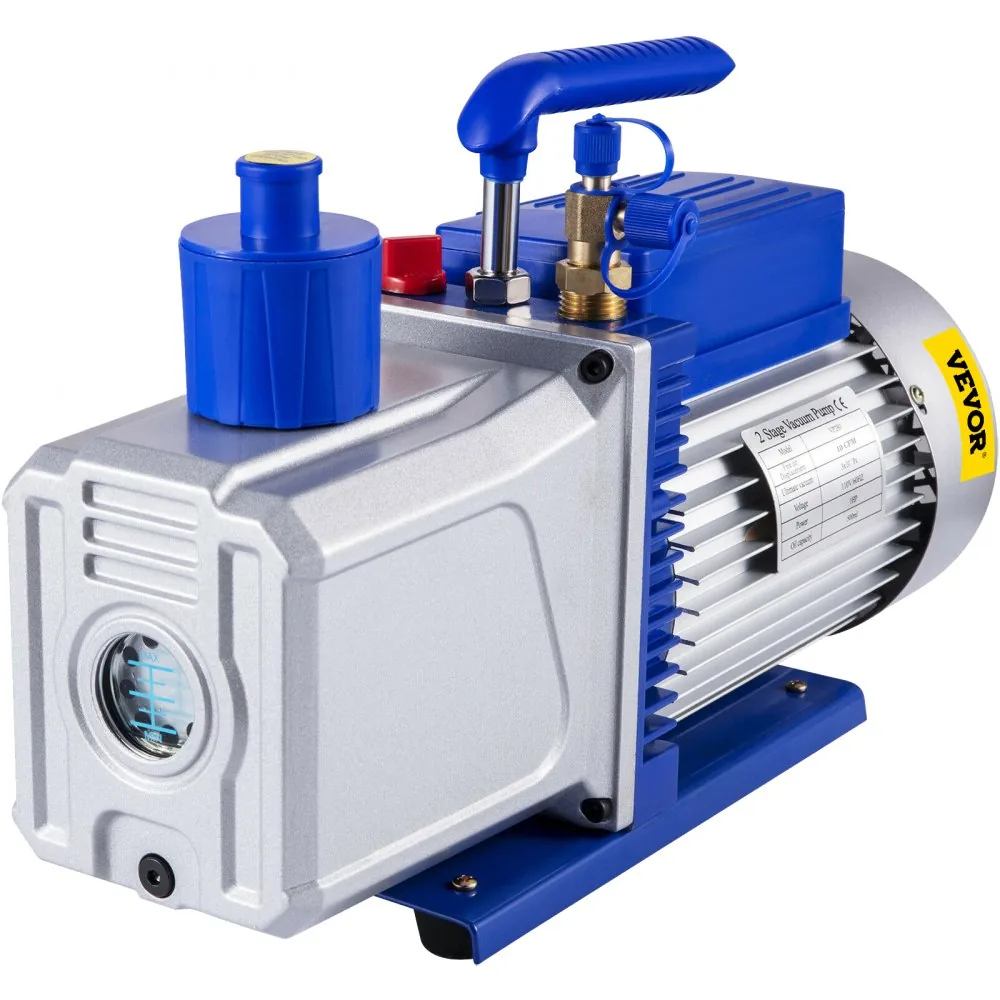
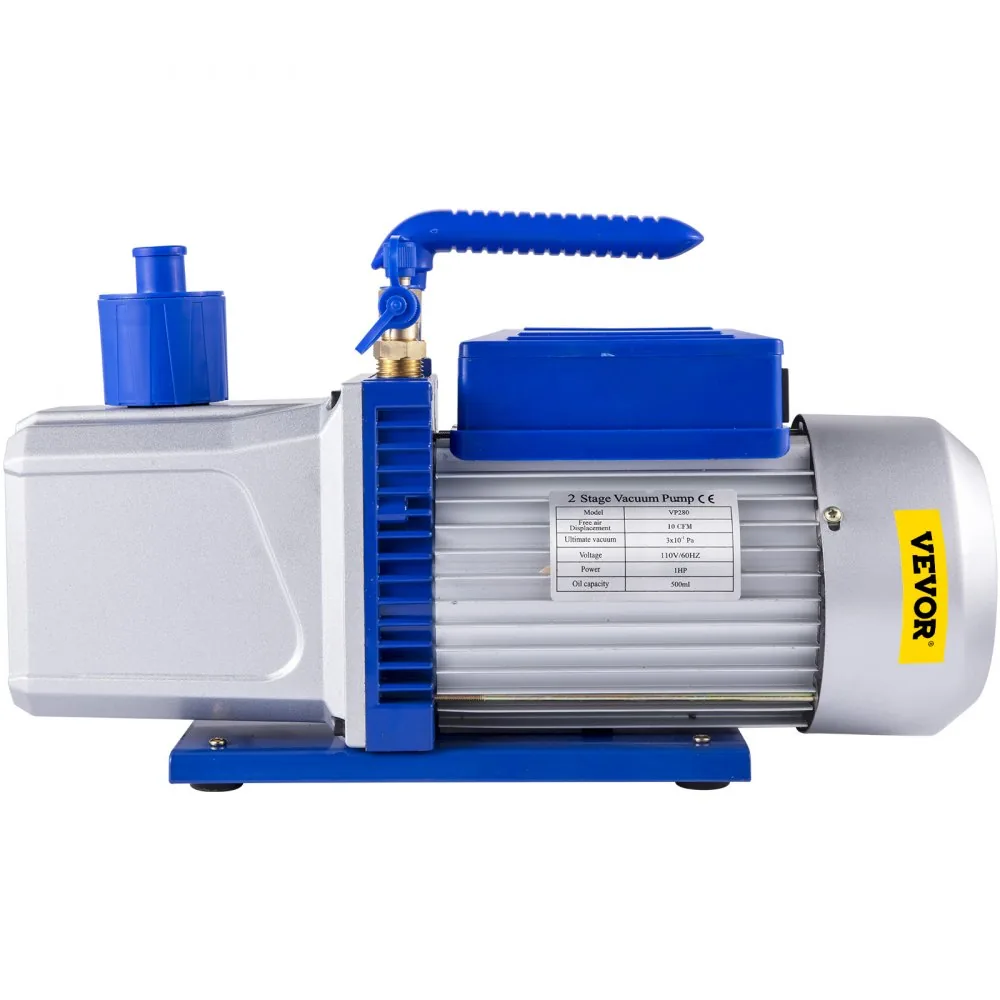
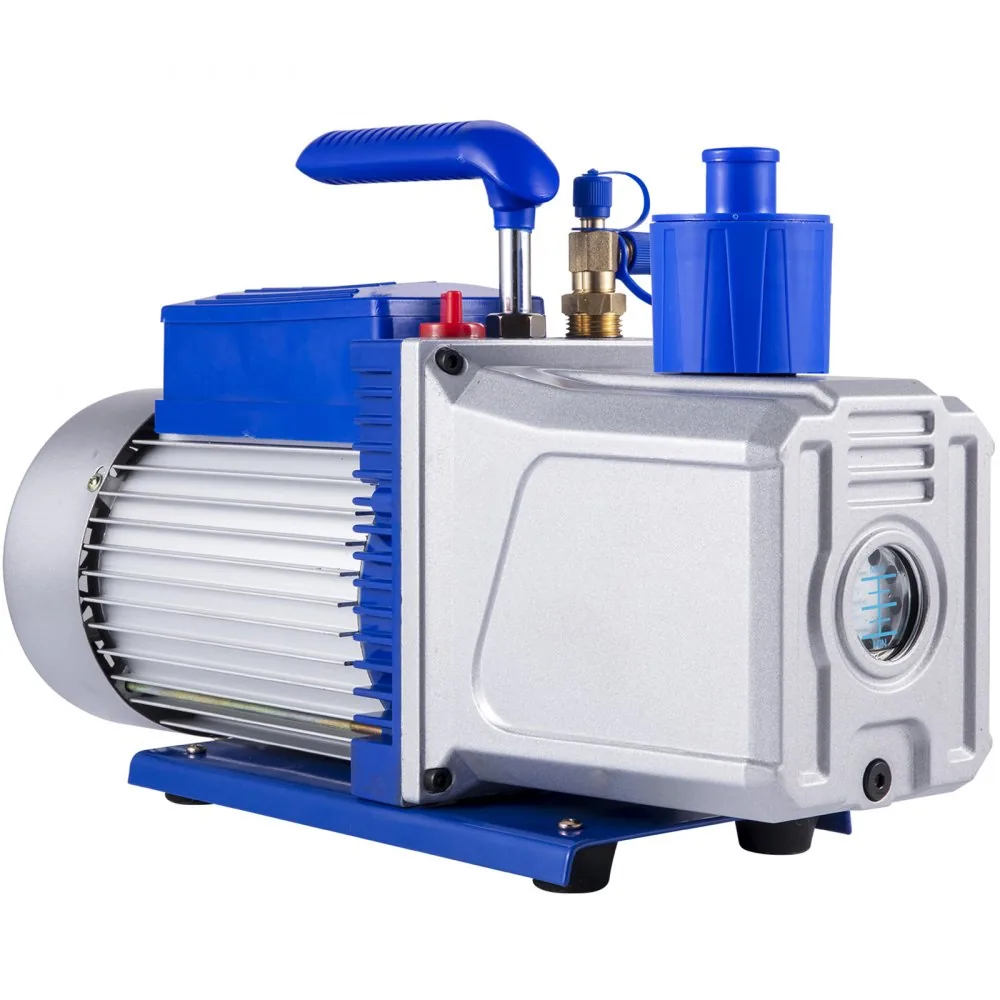
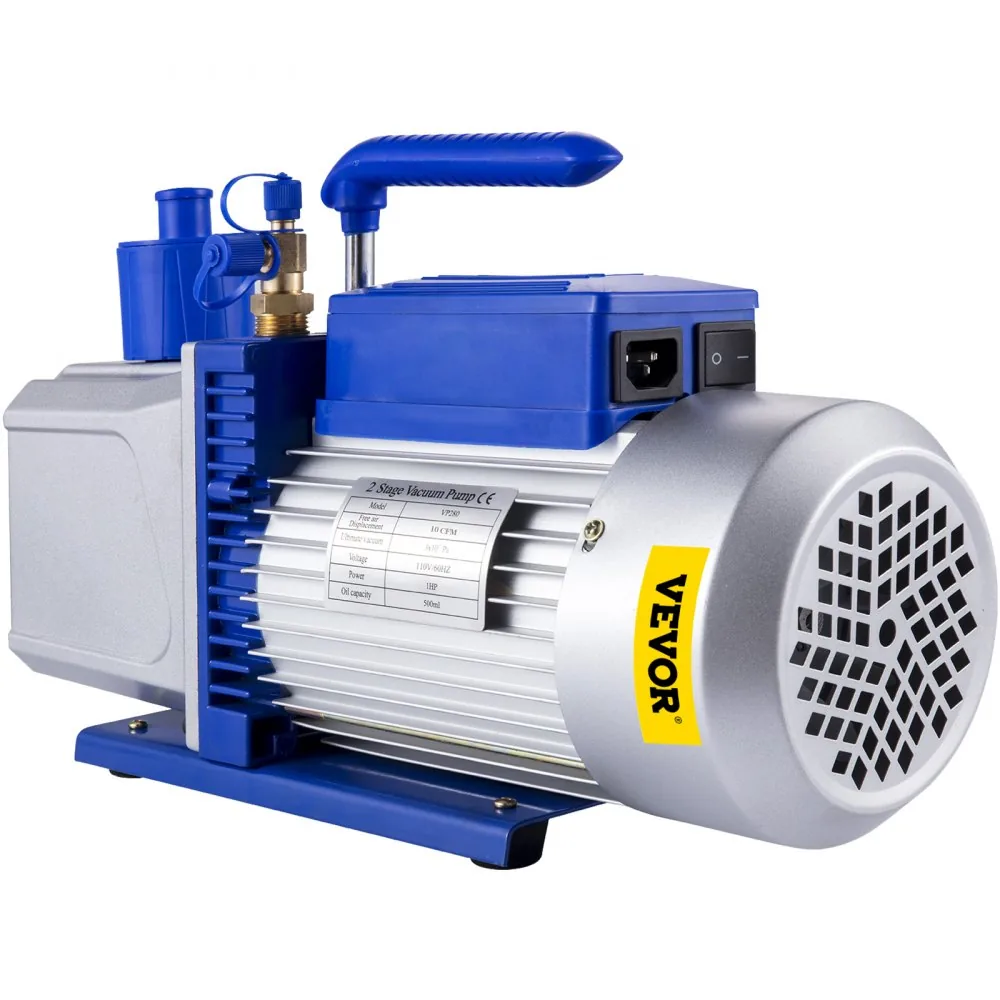
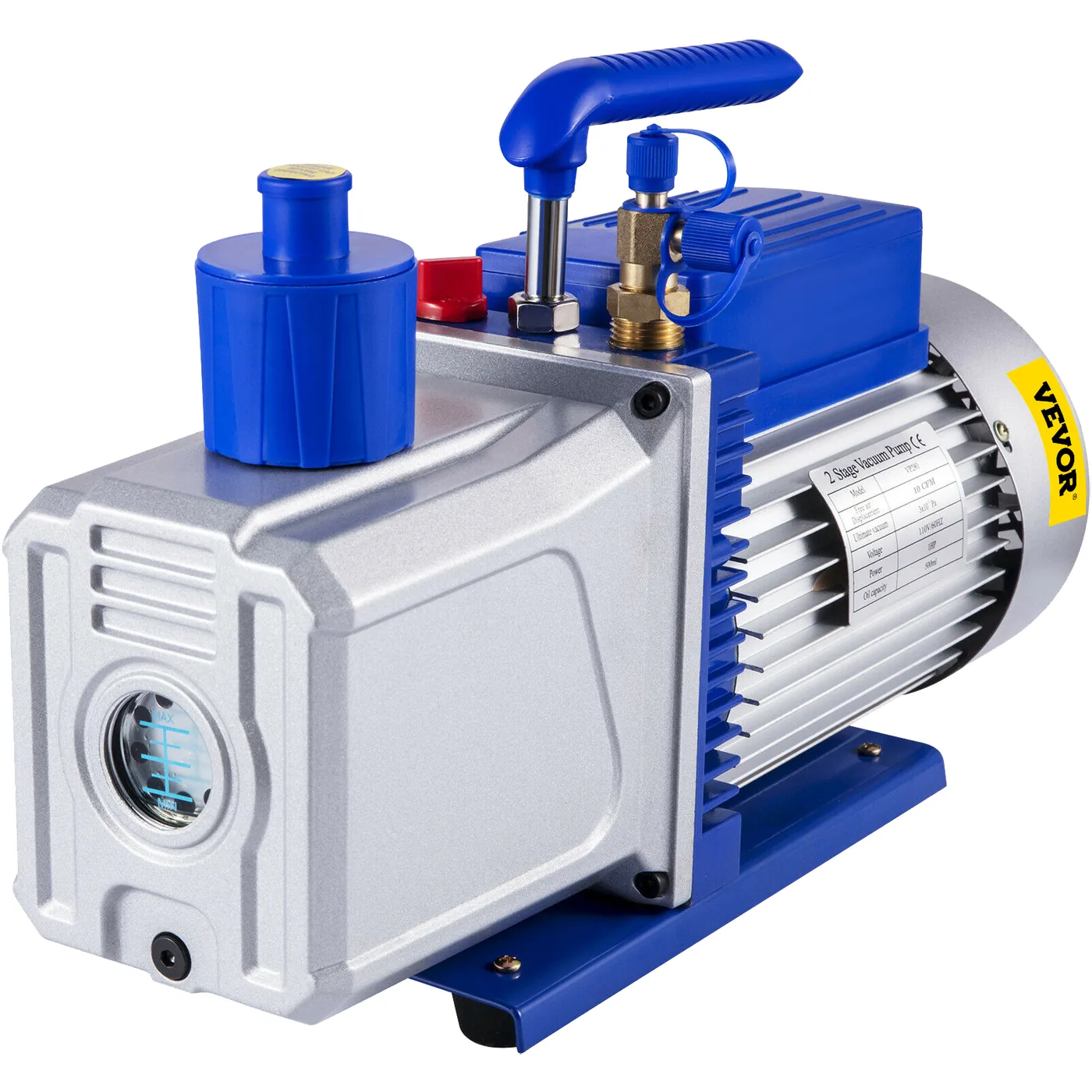
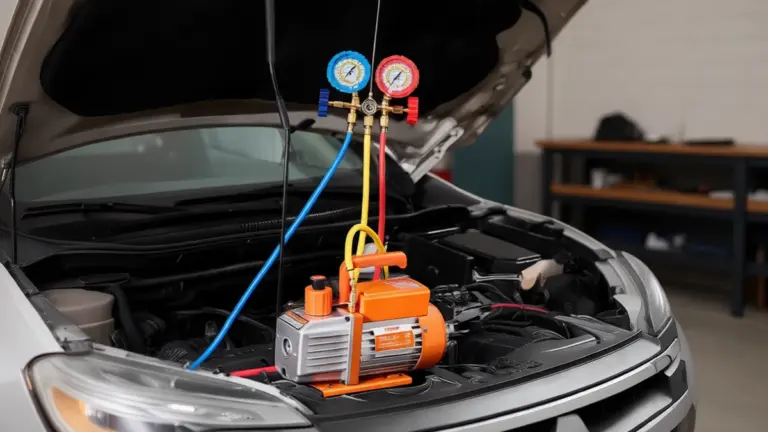
VEVOR Vacuum Pump 12CFM 1HP Vane Vacuum Pump Two Stage 3 x 10⁻¹ Pa Ultimate HVAC Rotary Auto AC Refrigerant Vacuum Pump
$175.90Wholesale price, no minimum order
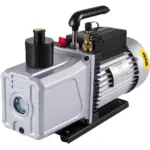
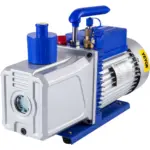
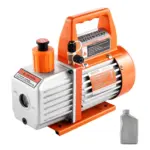
Key Features
Two-stage rotary vane design with a 3 x 10^-1 Pa (25 micron) ultimate vacuum
10 CFM / 254 L/min free air displacement in the specification table
1 HP motor at 2,000 rpm
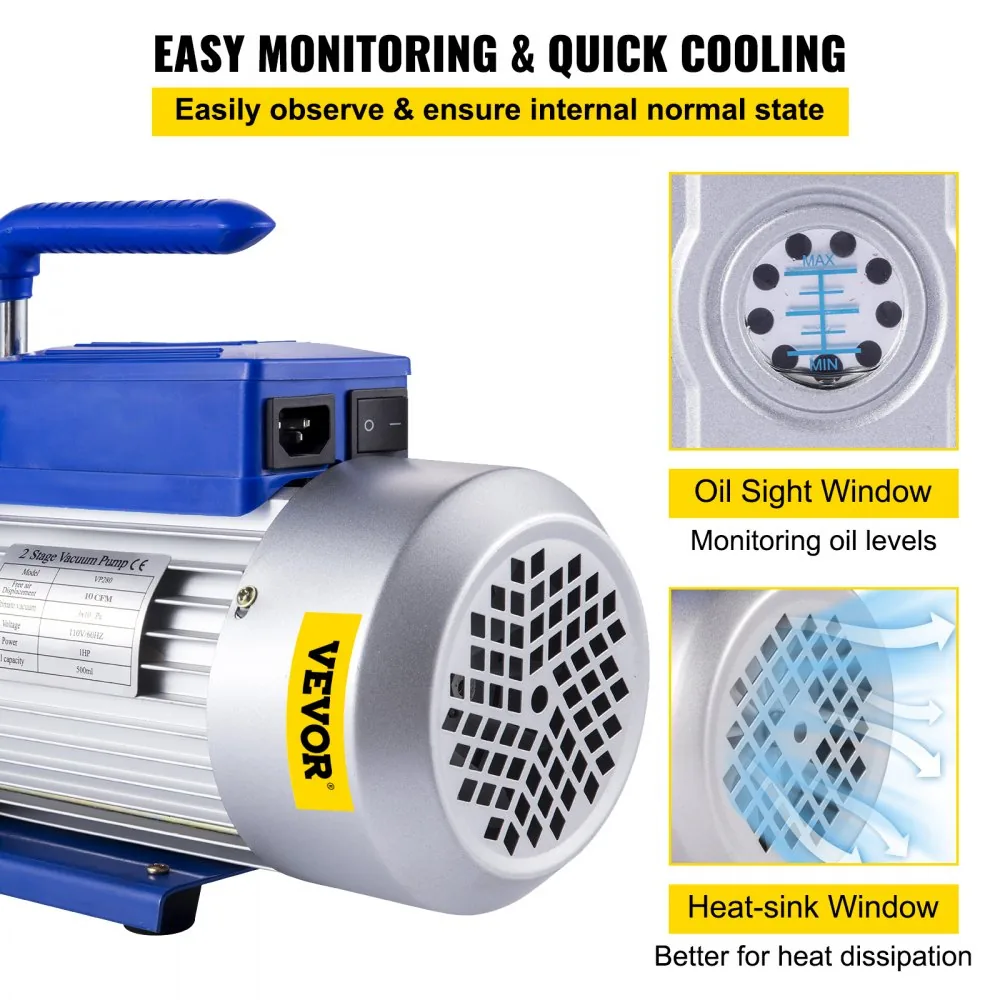
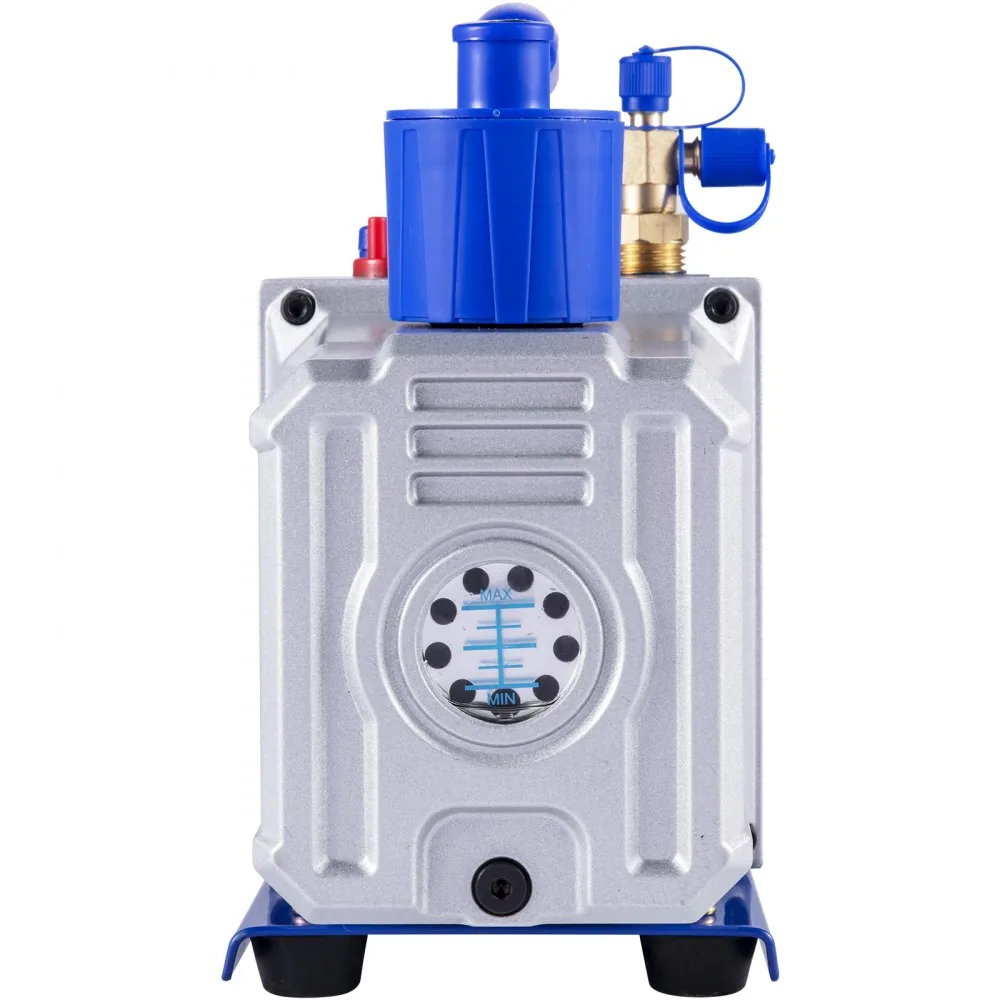
500 ml oil reservoir with a sight window
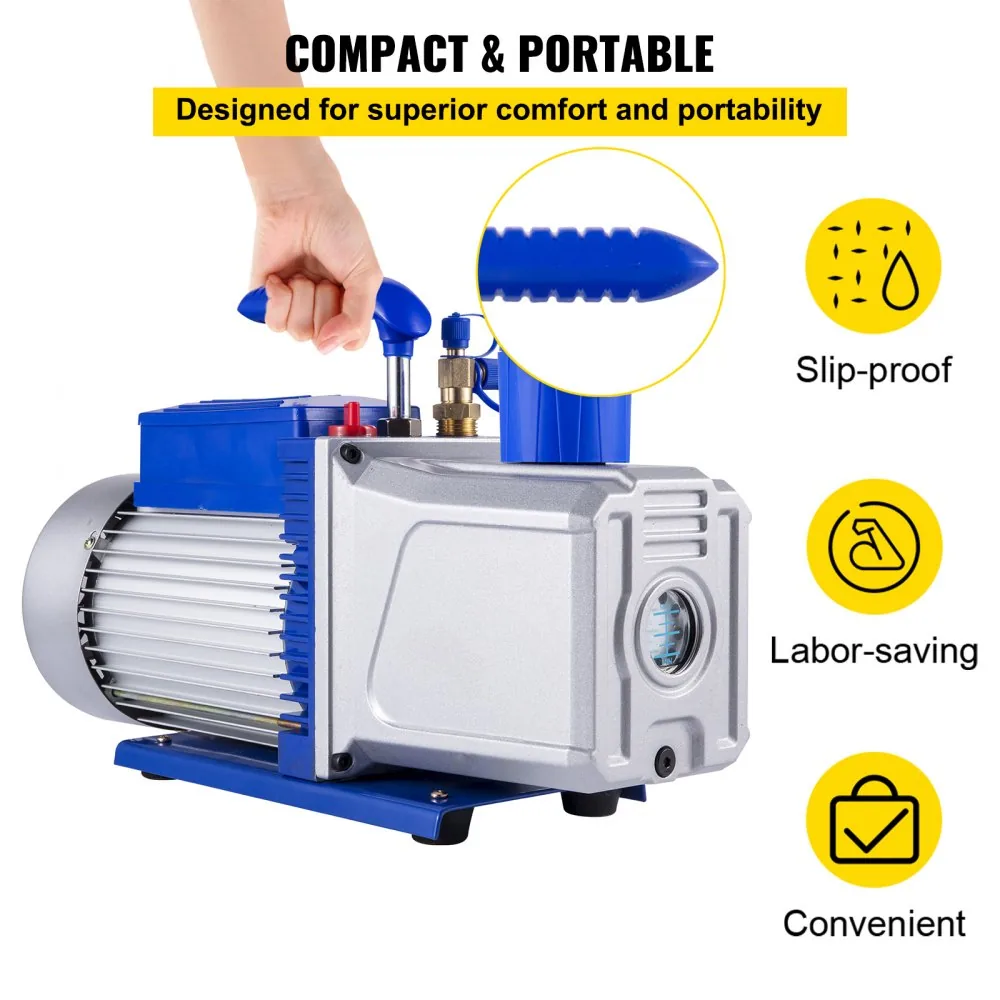
Backflow prevention and a carry handle
In stock
Quick Answer
A 1 HP two-stage rotary vane vacuum pump rated to 3 x 10^-1 Pa (25 microns) ultimate vacuum, with a 500 ml oil reservoir and a pump speed of 2,000 rpm. The specification table lists 10 CFM / 254 L/min free air displacement. It is built for HVAC and automotive air-conditioning service work, and pump oil is not included.
Description
At a Glance
A two-stage vane pump for evacuating air and moisture from air-conditioning and refrigeration systems. The second stage pulls on the exhaust of the first, which is how the pump reaches a 25 micron ultimate vacuum. The oil reservoir holds 500 ml, the body has a sight window for checking oil condition, and backflow prevention keeps oil out of the inlet when the pump stops.
A Two-Stage Pump for AC and HVAC Evacuation
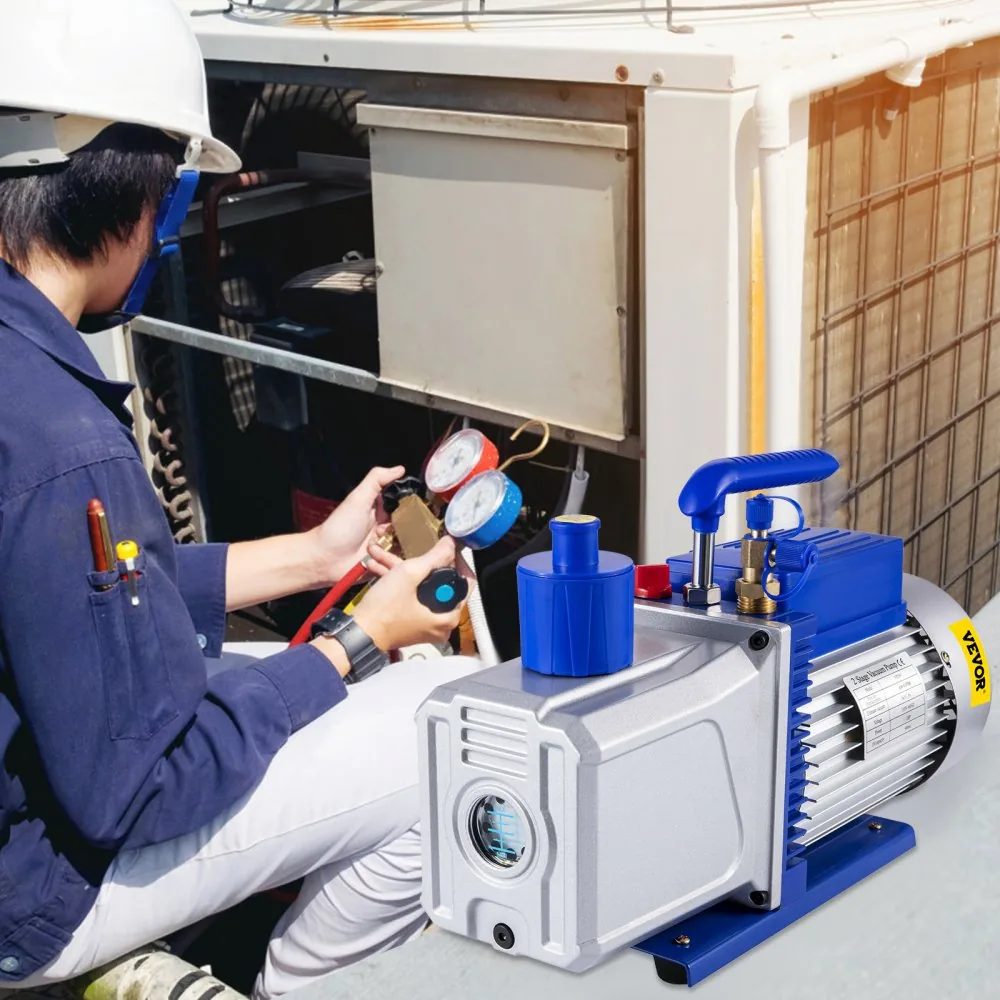
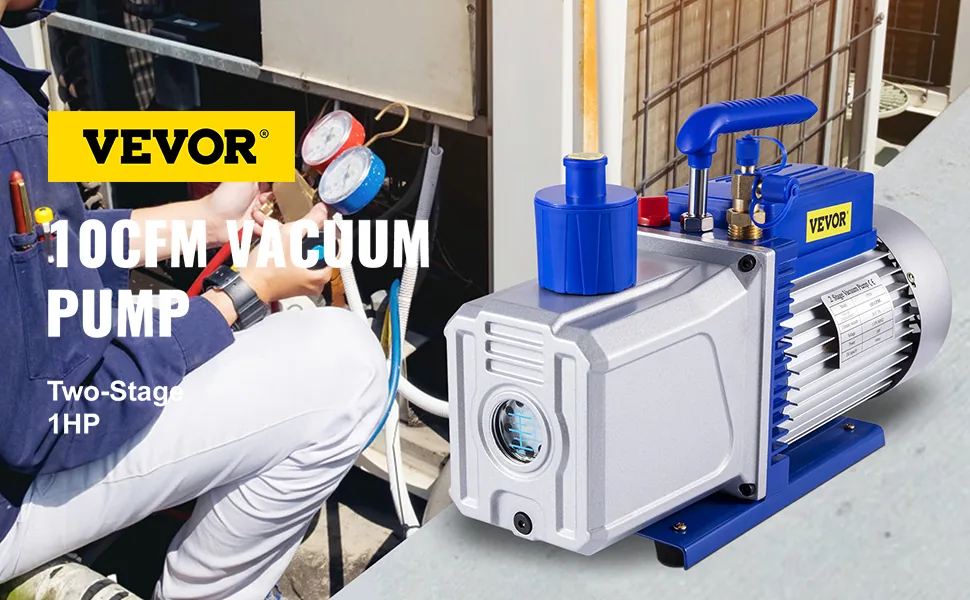
Before a system can be charged, the line set, evaporator and condenser have to be emptied of air and moisture. This 1 HP rotary vane pump is built for that job: two stages in series, a 2,000 rpm pump speed and an ultimate vacuum of 3 x 10^-1 Pa, which is the same as 25 microns. The lower the ultimate pressure, the more moisture vapor the pump can pull out of a system before it stops making progress.
Reading the Two CFM Numbers
The product name carries a 12 CFM label, while the specification table on this page lists 10 CFM / 254 L/min free air displacement. Those figures are not interchangeable. For planning evacuation time, hose sizing or comparing pumps, use the 10 CFM number. If a job sits close to the limit of what this pump can handle, size it on 10 CFM and leave margin.
Why Two Stages Matter
A single-stage pump compresses from atmosphere to its ultimate pressure in one step. A two-stage pump uses two rotors in series: the first stage does the bulk of the moving, and the second stage pulls on the first stage exhaust to reach a lower final pressure. In practice the pump keeps removing moisture deeper into the evacuation instead of plateauing early, which matters on systems that have been open to the air or have held a charge for years.
Oil, Sight Window and Backflow Protection
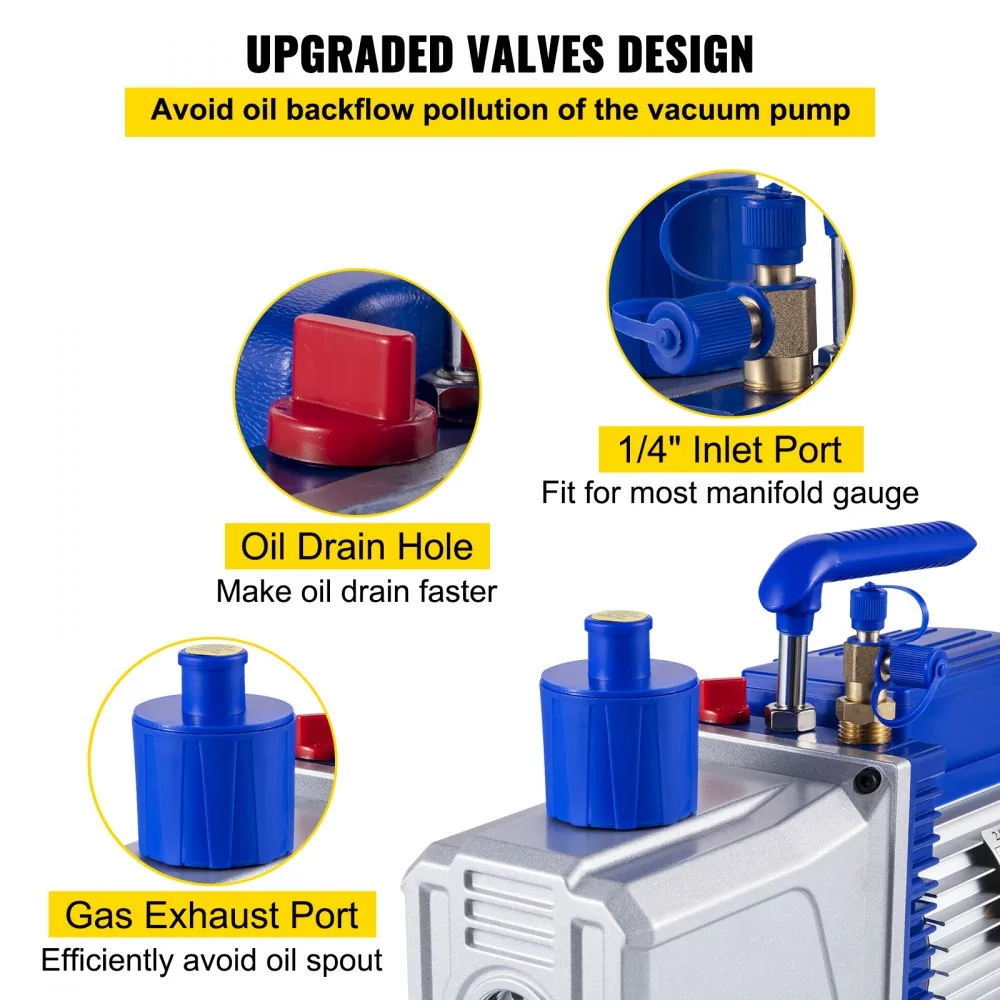
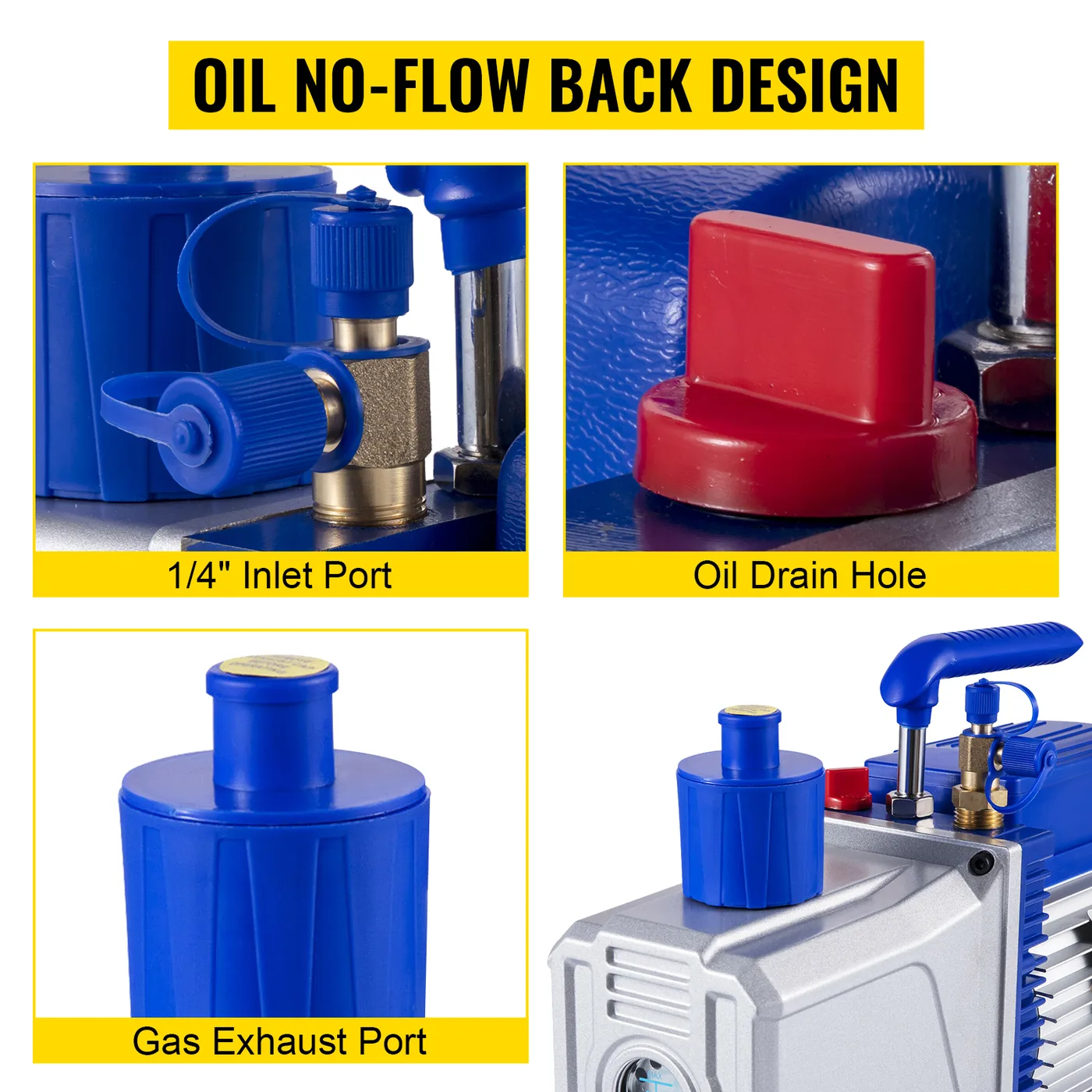
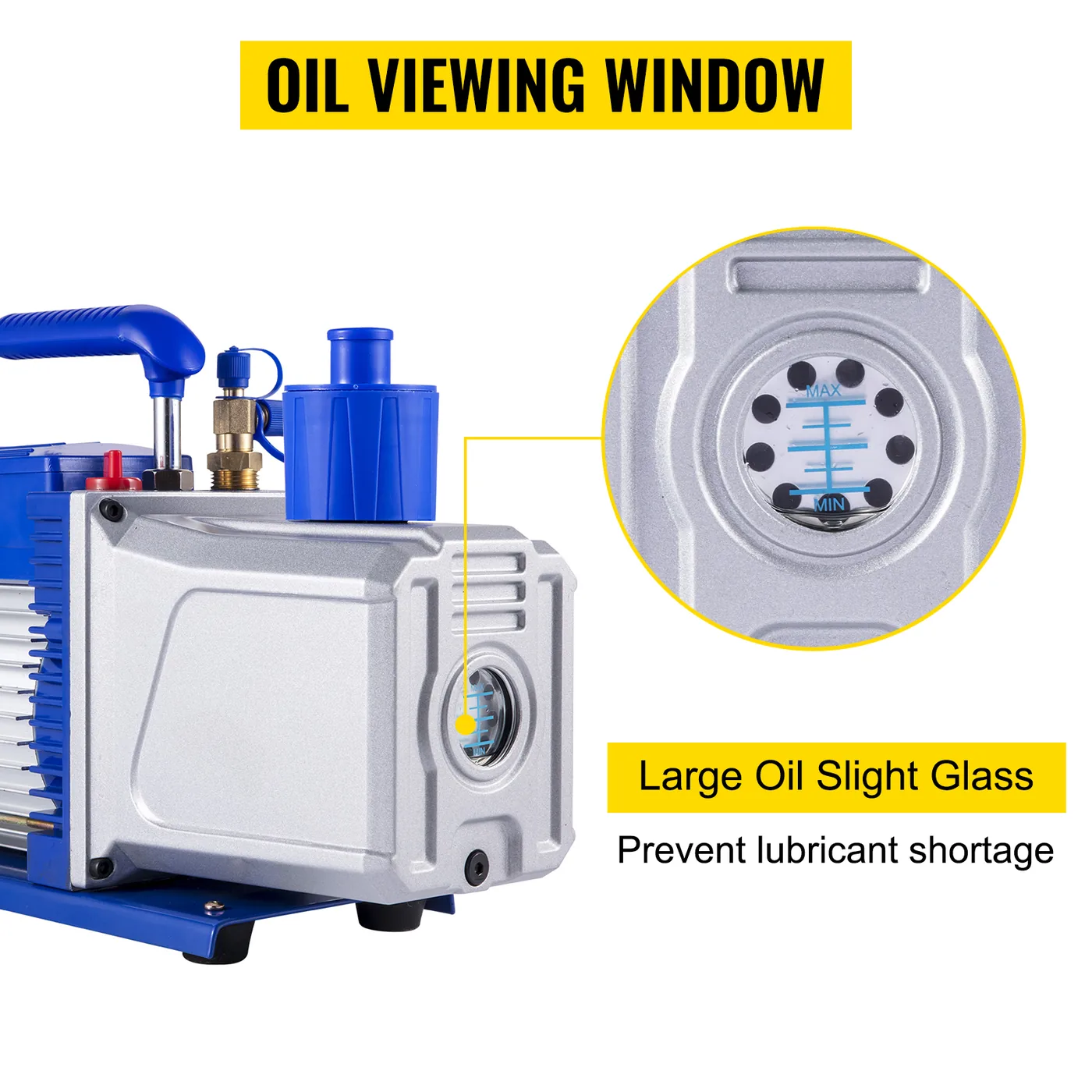
The pump holds 500 ml of oil. Oil is not included, so plan for a bottle of proper vacuum pump oil before the first use. A sight window lets you check the level and condition without opening anything. The 1/4 in fill port is reachable from the front or either side, and a drain hole at the base makes changes quicker. Fill to the marked level rather than to the top; overfilling can push oil out through the exhaust.
Backflow prevention is built in. When the pump stops, the design keeps oil from being drawn back into the system through the inlet, which is the failure that contaminates lines and gauges. It does not replace closing the valve on your manifold set, but it adds a second line of defense.
Build and Placement
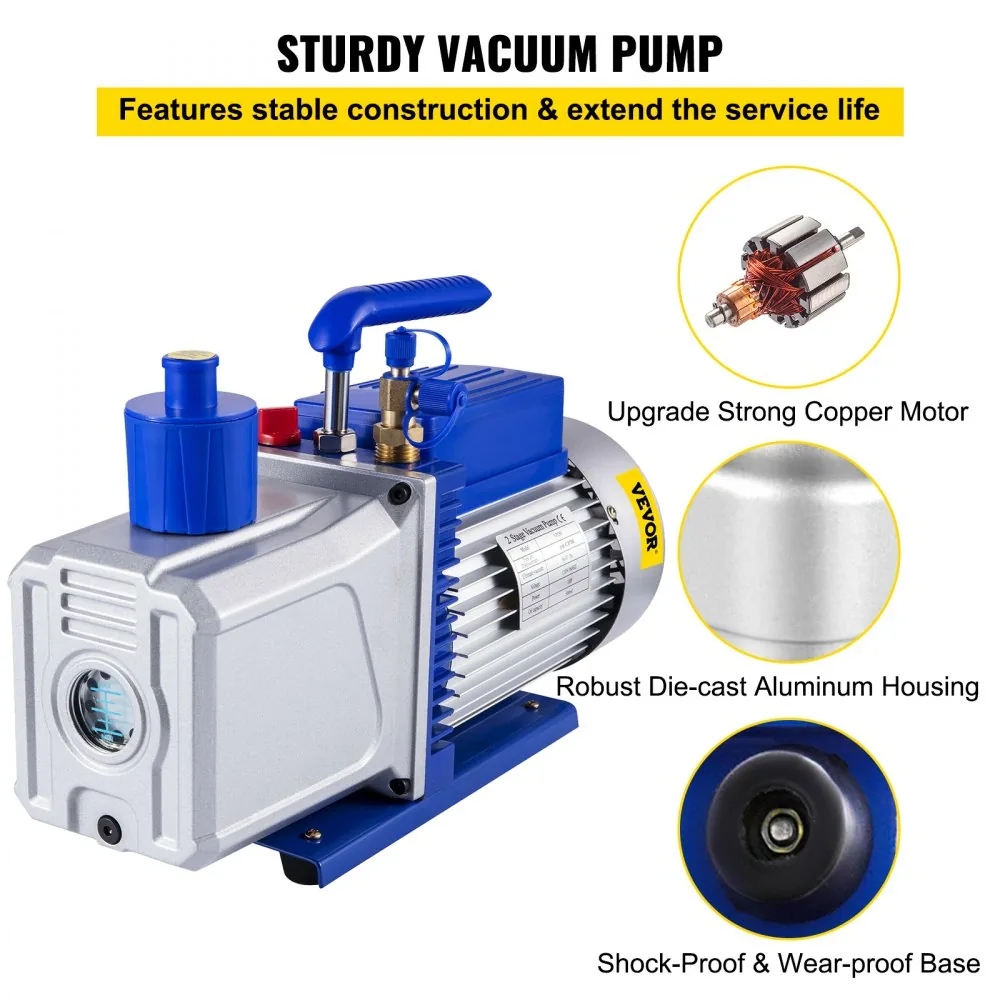
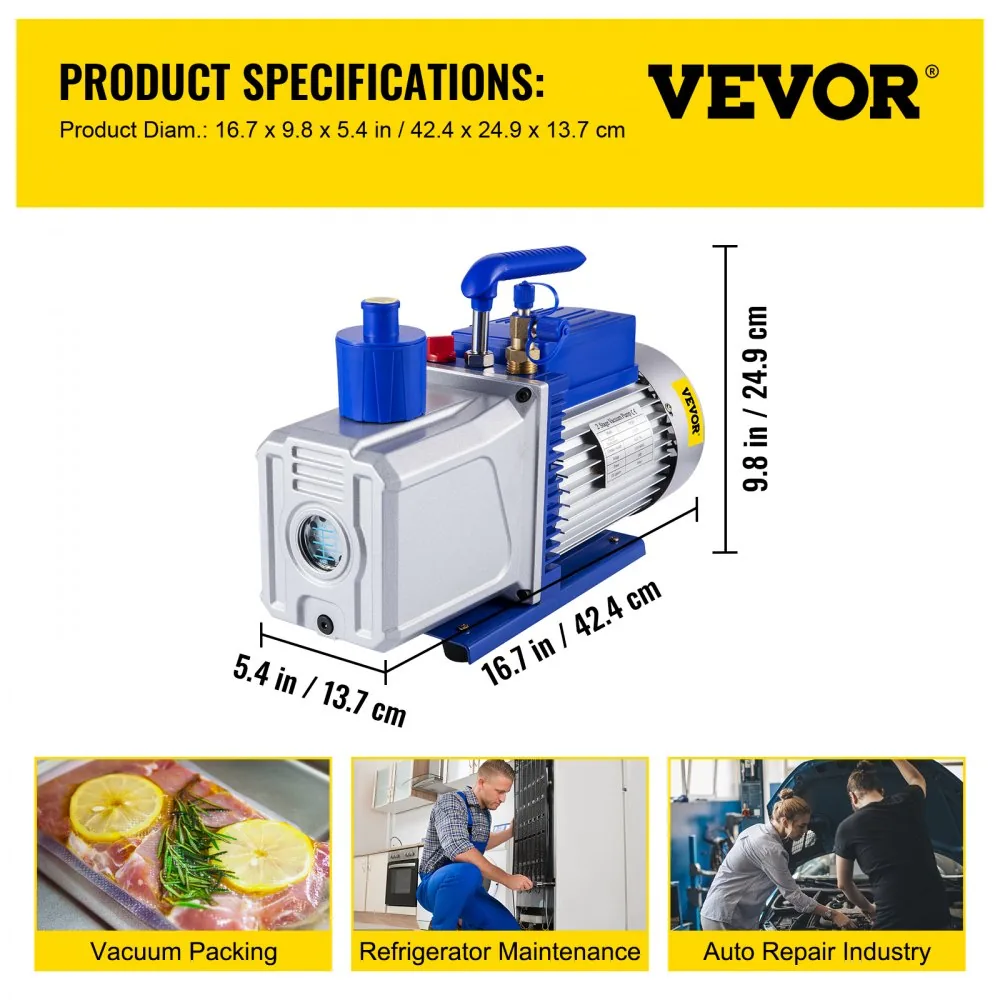
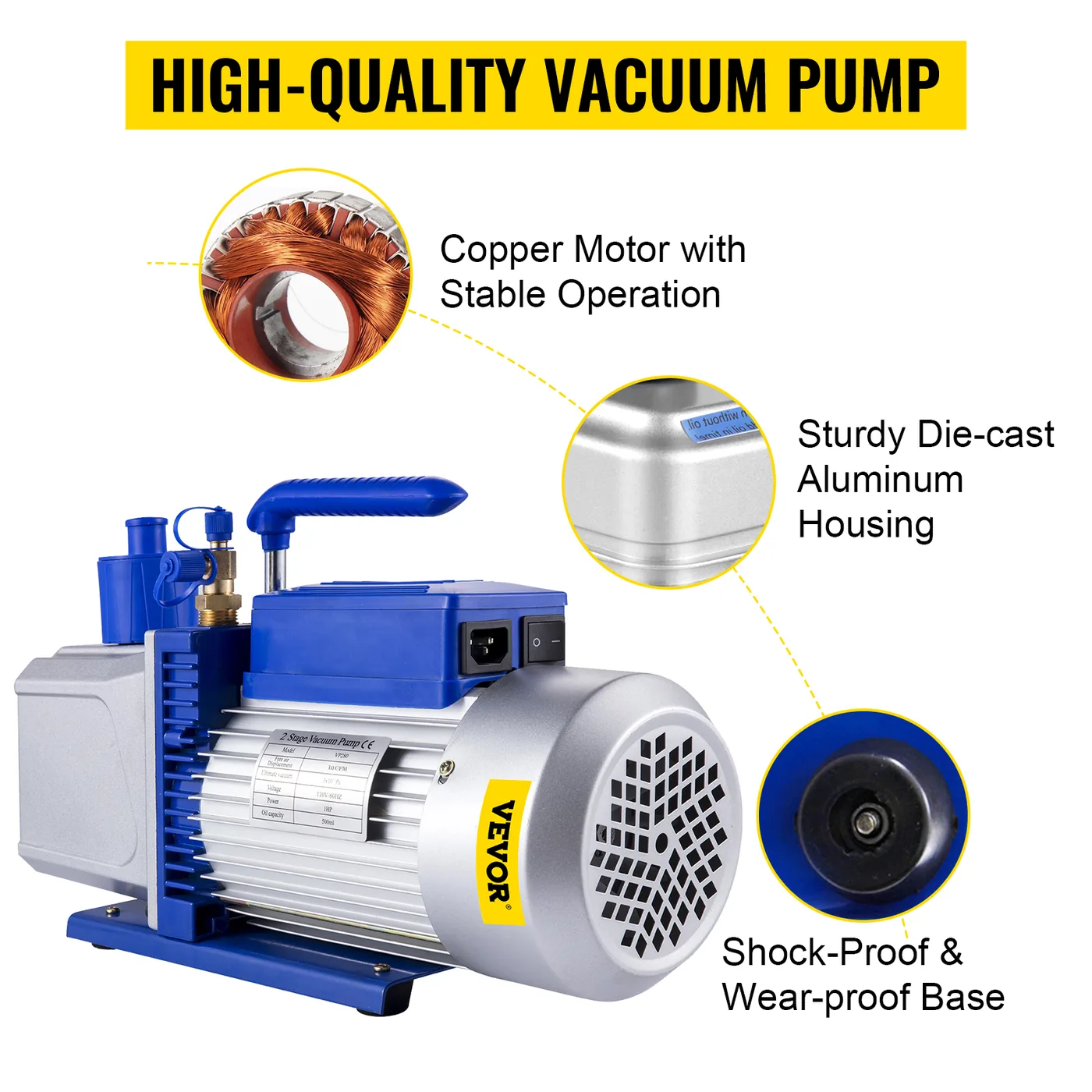
The body is aluminum alloy with a copper motor, and the base is isolated to reduce vibration while the pump is running. Set it on a flat, stable surface with the exhaust pointing away from you and away from anything that oil mist could settle on. Keep the intake clear and use the carry handle when moving it.
Practical Evacuation Notes
Use short, large-diameter hoses and remove Schrader cores where the service valves allow it. A restrictive hose can dominate evacuation time no matter how capable the pump is. Change the oil when it turns dark or milky, and after any job where the system carried a lot of moisture. Moisture-loaded oil loses ultimate vacuum quickly.
What It Is Not For
This is a vacuum pump for refrigerant and HVAC service, not a transfer pump. Do not use it to move liquids, and do not pull flammable, corrosive or explosive gases through it. Those uses require different equipment and different seals.
Performance & Applications
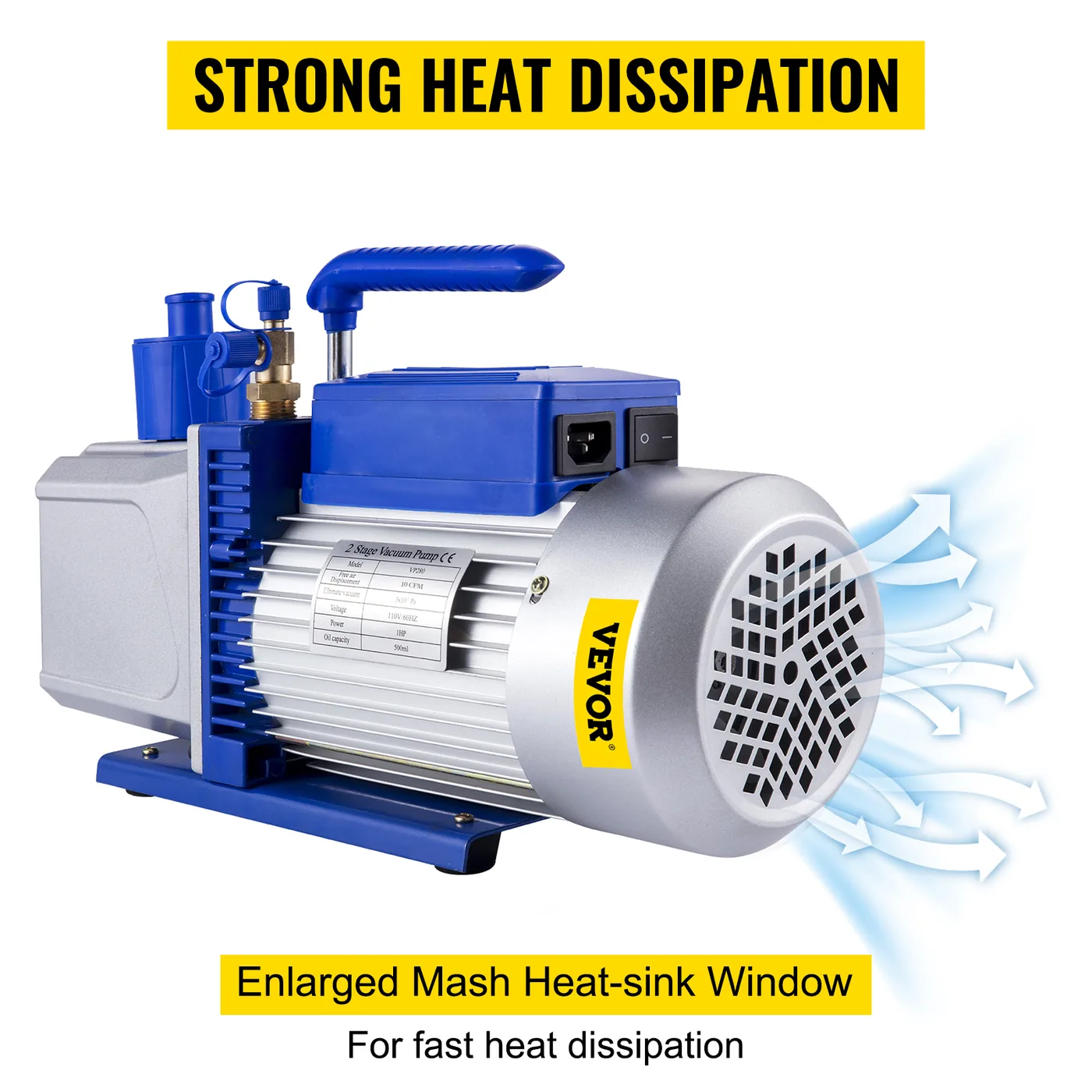
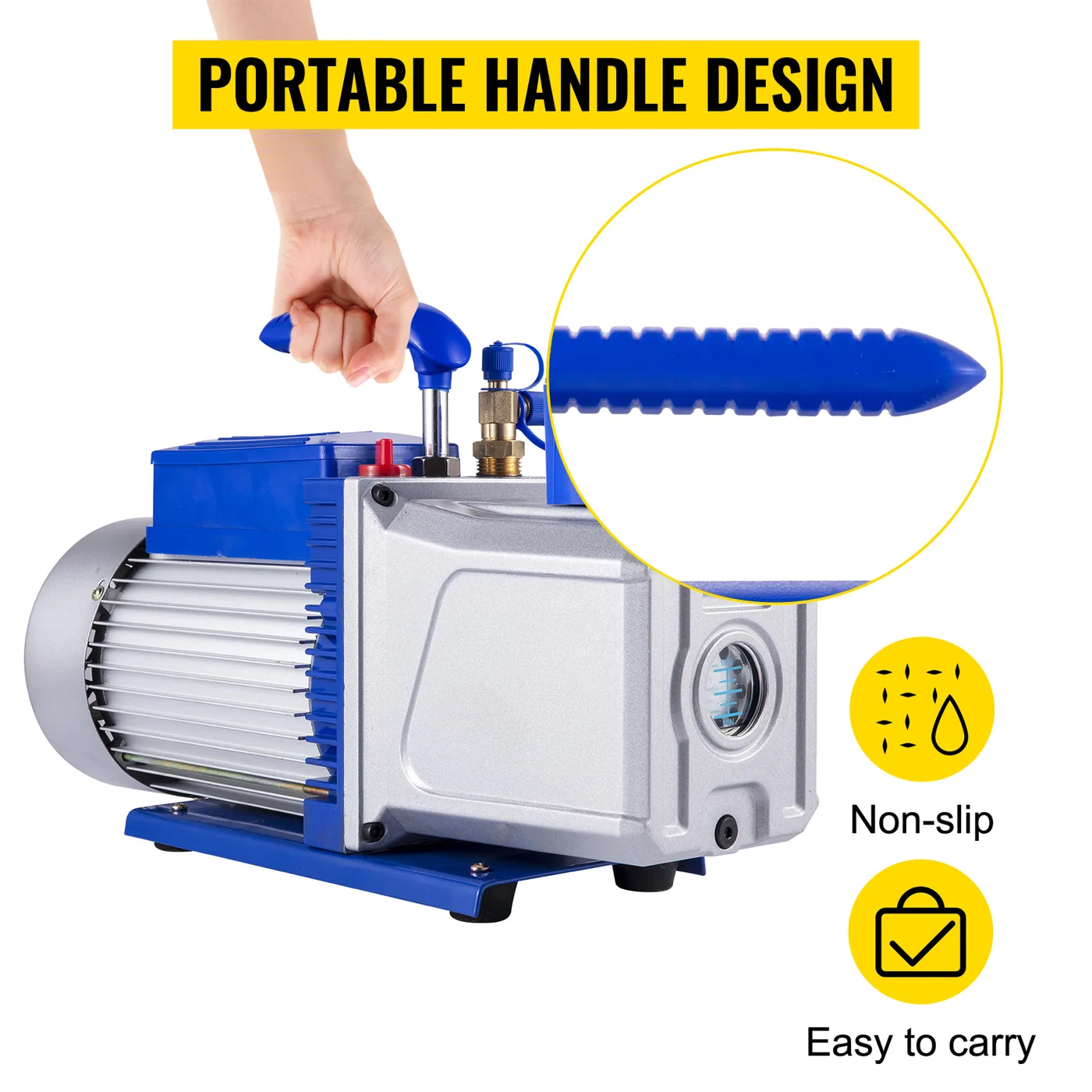
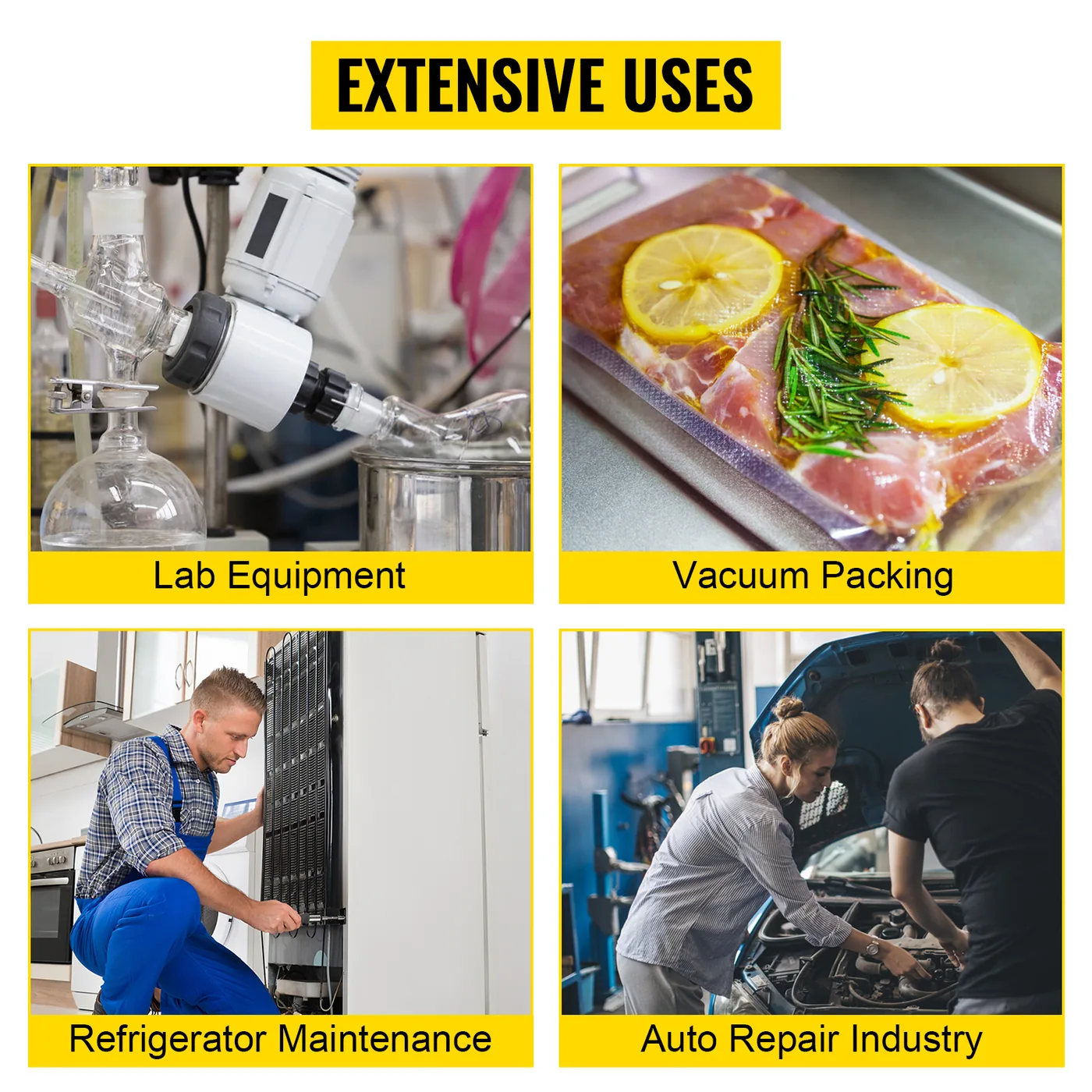
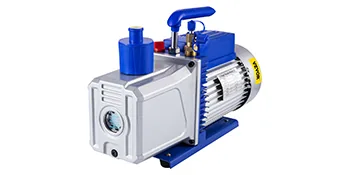
Specifications
| Brand | VEVOR |
| Ultimate vacuum | 3x10⁻¹Pa, 25 microns |
| Pump rotating speed | 2000 r/min |
| Type | 2-stage vacuum pump |
| Oil capacity of Pump | 500 ml |
| Free air displacement | 10 CFM, 254 L/M |
| Note | Oil are not included |
Be the first to review “VEVOR Vacuum Pump 12CFM 1HP Vane Vacuum Pump Two Stage 3 x 10⁻¹ Pa Ultimate HVAC Rotary Auto AC Refrigerant Vacuum Pump”
Frequently Asked Questions
Q: What ultimate vacuum does this pump reach?
A: The specification table lists 3 x 10^-1 Pa, which is 25 microns. Ultimate vacuum is the lowest pressure the pump can reach under ideal conditions; hose diameter, connection leaks and oil condition all affect the vacuum you actually see at the system.
Q: Is vacuum pump oil included?
A: No. The pump has a 500 ml oil capacity and ships without oil. Use a proper vacuum pump oil rather than motor oil, and fill to the level shown in the sight window rather than to the top of the reservoir.
Q: The name says 12 CFM but the specification table says 10 CFM. Which one applies?
A: Use 10 CFM / 254 L/min from the specification table when planning a job. That is the free air displacement listed for this unit, and it is the figure to compare against hose size, system volume and expected evacuation time. The 12 CFM figure is part of the product name.
Q: What does two-stage mean, and why does it matter?
A: A two-stage pump uses two rotors in series. The first stage moves most of the air, and the second stage pulls on the first stage exhaust to reach a lower final pressure. Compared with a single-stage pump of similar size, that generally means a lower ultimate vacuum and better moisture removal late in the evacuation.
Q: Does it prevent oil from flowing back into the system?
A: Yes. Backflow prevention is built into the design to keep oil out of the inlet when the pump stops. It is still good practice to close the manifold valve before switching the pump off, so the protection is a second line of defense rather than the only one.
Q: How do I check and change the oil?
A: Look at the sight window on the body to check level and color. Fill through the 1/4 in port, which can be reached from the front or either side, and drain through the hole at the base. Change the oil when it turns dark or milky, and after any job where the system carried a lot of moisture.
Q: What kind of work is this pump intended for?
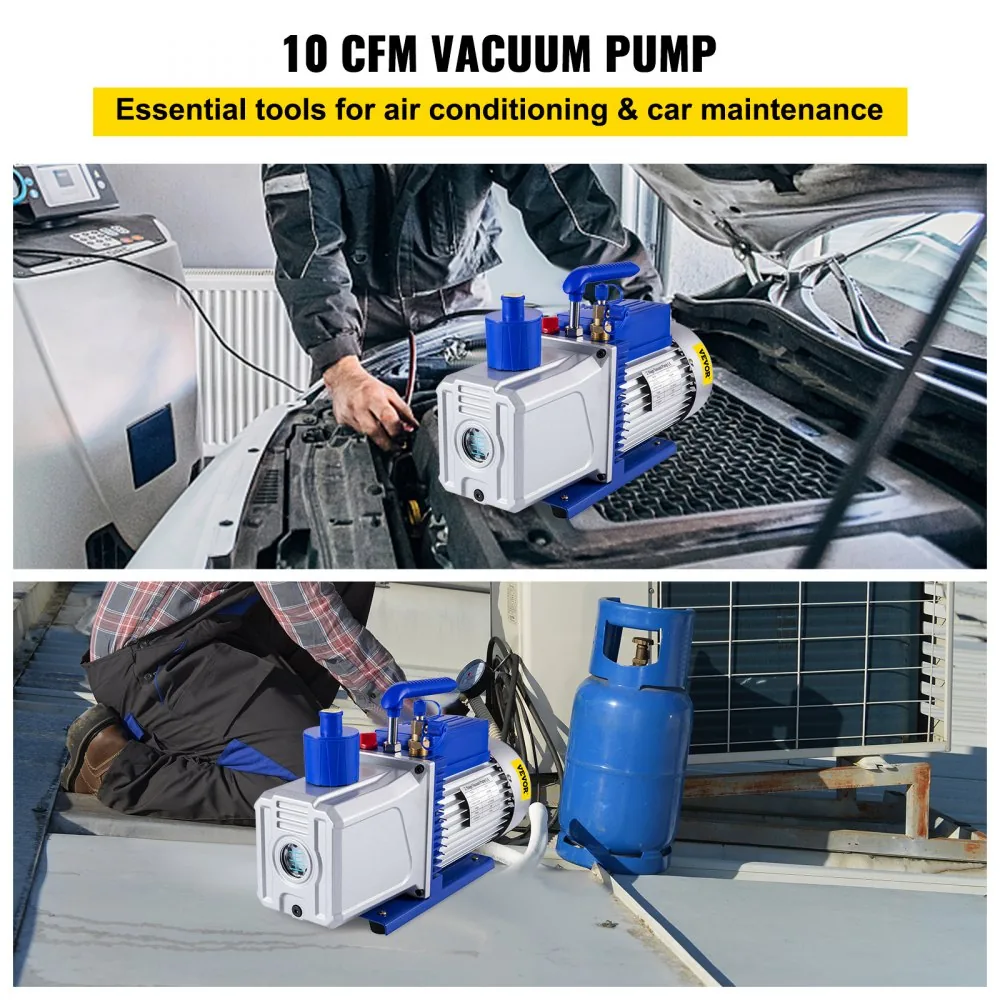
A: Evacuating HVAC and automotive air-conditioning systems before charging, and related refrigerant service work. It is not a transfer pump: do not use it to move liquids, and do not pull flammable, corrosive or explosive gases through it.
Q: Why is evacuation slower than expected?
A: Restrictive hoses, Schrader cores left in service valves, leaking connections and moisture-loaded oil are the usual causes. Use short, large-diameter hoses, remove cores where the valves allow it, and change the oil if it has absorbed moisture. A pump cannot overcome a leaking manifold set.
Questions & Answers
Related products
-
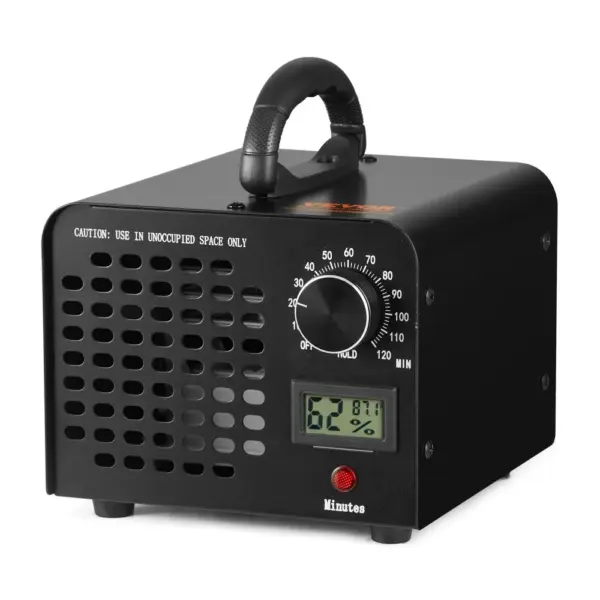
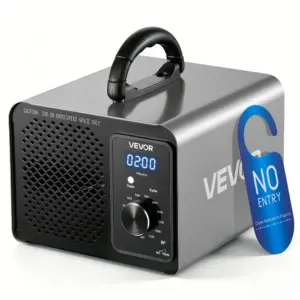
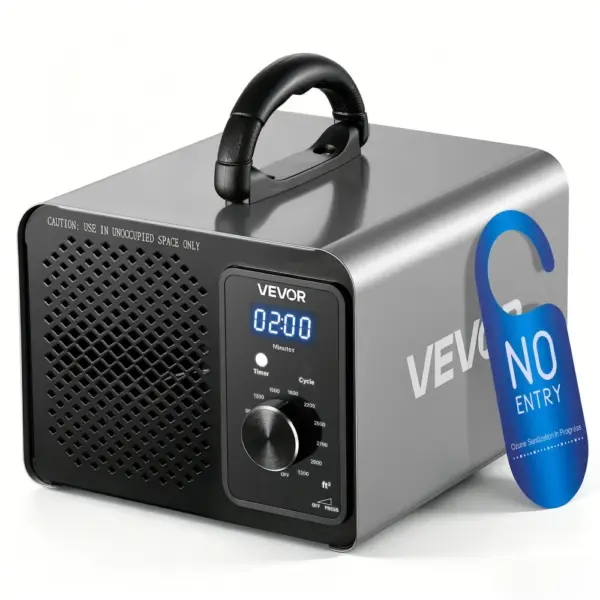
VEVOR Ozone Generator, 36000mg/h Commercial Ozone Machine, 15s Delayed Start & Timer & Rotary Encoder Knob & Odor-Treatment Cycle Mode
Original price was: $48.90.$46.46Current price is: $46.46.
Top Rated in HVAC & Ductwork
-
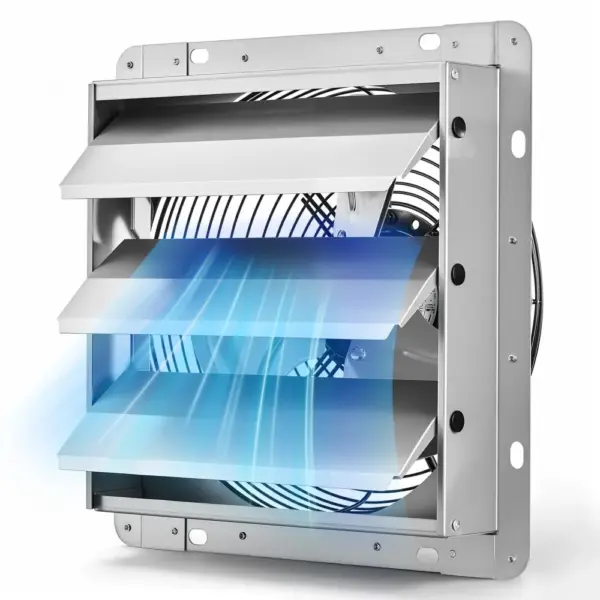
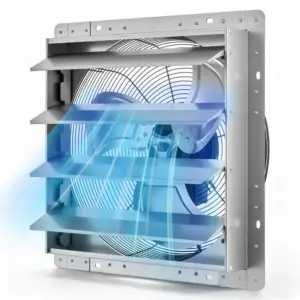
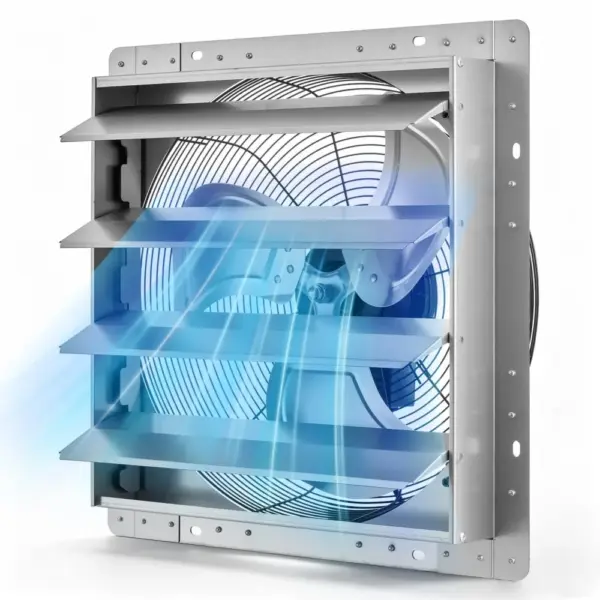
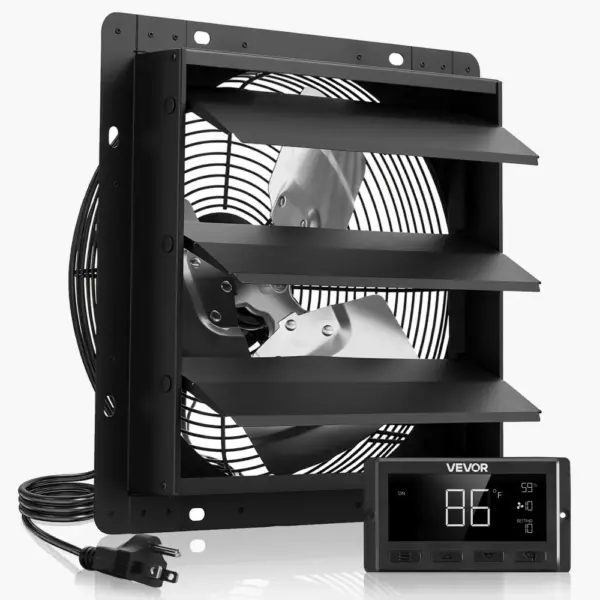
VEVOR 10 inch Shutter Exhaust Fan, Wall Mounted Attic Vent Fan with Smart Programming Variable Speed Temperature Control, 1000 CFM, EC Motor, Timer
Original price was: $85.90.$73.44Current price is: $73.44. -
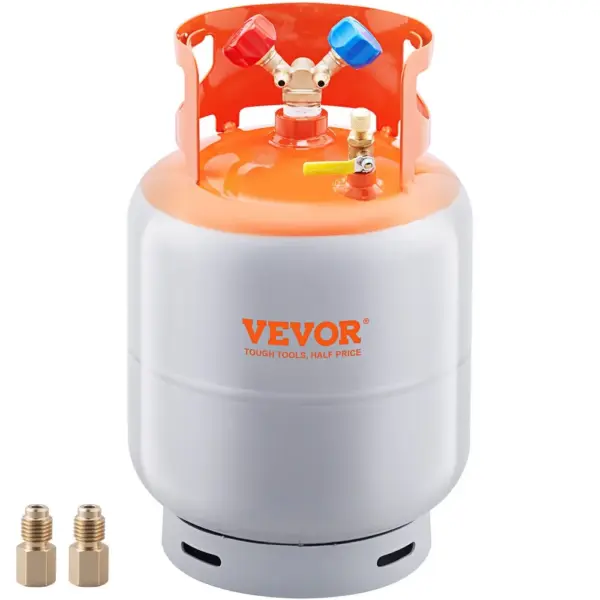
VEVOR Refrigerant Recovery Tank, 50 LBS Capacity, 400 psi Portable Cylinder Tank with Y-Valve for Liquid/Vapor
Original price was: $86.90.$73.90Current price is: $73.90. -
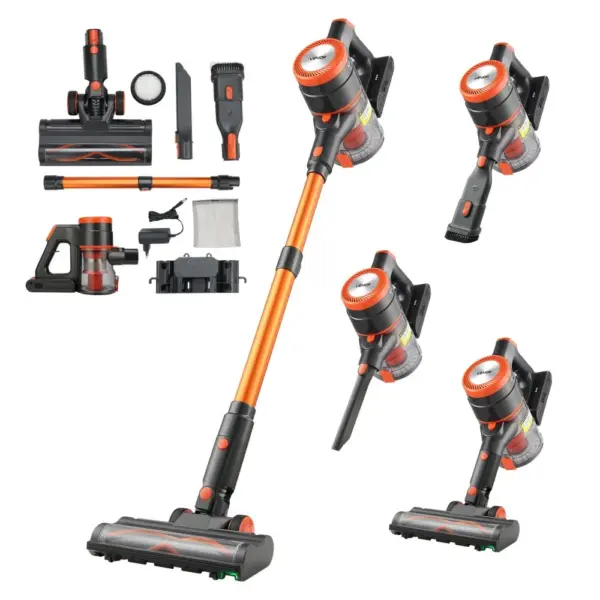
VEVOR Cordless Vacuum Cleaner, 40KPA Max Suction, Rechargeable Anti-Tangle Stick Vacuum with LED Display Screen
Original price was: $96.90.$92.05Current price is: $92.05.
New Arrivals in HVAC & Ductwork
-
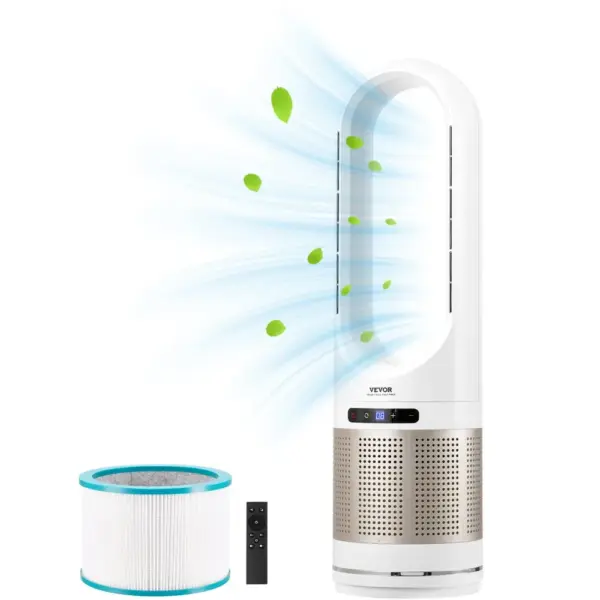
VEVOR Tower Fan Bladeless, 16.4ft/s Velocity Floor Fan that Blows Cold Air, 80° Oscillating 8-Speed Fans, 8H Timer
Original price was: $123.90.$93.99Current price is: $93.99.




0 reviews for VEVOR Vacuum Pump 12CFM 1HP Vane Vacuum Pump Two Stage 3 x 10⁻¹ Pa Ultimate HVAC Rotary Auto AC Refrigerant Vacuum Pump
Customer reviews
No reviews found